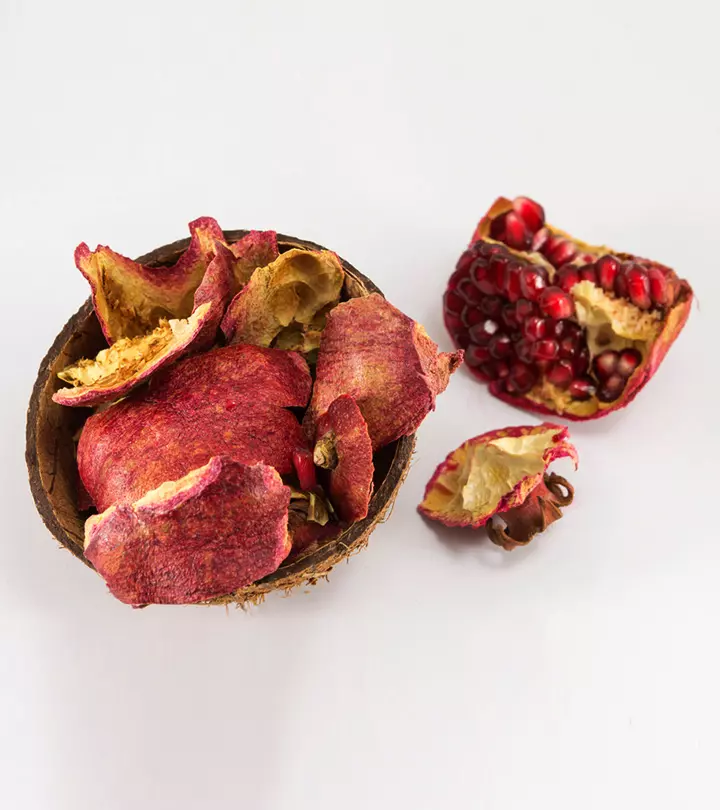
The production of pomegranate juice generates a significant quantity of waste, with peels constituting approximately 26–30% of the overall fruit weight. This biowaste presents an environmental challenge but also a potential resource. Pomegranate peels have been identified as a rich source of biologically active compounds, making them a valuable by-product for various sectors, including food, pharmaceutical, and cosmetic industries.
In the realm of skin health, there is a growing interest in natural ingredients that can offer protective and therapeutic benefits. Recent studies have demonstrated that bioactive components found in pomegranates are effective in the treatment and prevention of skin diseases. Specifically, pomegranate polyphenols can prevent ultraviolet (UV)-induced oxidative stress by absorbing UVA (320–400 nm) and UVB (290–320 nm) photons, thereby delaying skin alterations such as erythema, skin burn, DNA fragmentation, and depigmentation. These compounds also show efficacy in treating skin aging and hyperpigmentation. Given their high antioxidant potential and reported UV protection capacity, pomegranate peels emerge as a promising natural solution for developing value-added skin health products, including sunscreens and other skincare formulations. This study aimed to investigate the phytochemical composition, antioxidant and antimicrobial activity, photoprotective effects, and application of pomegranate peel extracts in cosmetic emulsions to explore their potential in these areas.
Methods
Pomegranate peels were obtained, air-dried, and finely ground. Four types of extracts were prepared using different solvents—water, 70% ethanol, methanol, and dimethyl sulphoxide (DMSO). The phytochemical composition was thoroughly analyzed for total phenolic content (TPC), total flavonoid content (TFC), total proanthocyanidin content (TPAC), and individual phenolic compounds using High-Performance Liquid Chromatography (HPLC). Antioxidant activity was evaluated using DPPH, FRAP, and ABTS assays. Antimicrobial screening was performed against twenty test microorganisms using the agar well diffusion method. The ultraviolet (UV) protection effect, including Sun Protection Factor (SPF), critical wavelength, and UVA/UVB ratio, was assessed spectrophotometrically for both extracts and a prepared cosmetic emulsion (body lotion) containing the 70% ethanolic extract. The stability of the cosmetic emulsions was also assessed using a centrifugation test.
Key Findings
• Rich Phytochemical Profile: HPLC analysis identified fourteen phenolic compounds in pomegranate peel extracts, including four phenolic acids (ellagic, gallic, p-coumaric, ferulic), two tannins (pedunculagin, punicalagin), six flavonoids (myricetin, hesperidin, quercetin, luteolin, kaempferol, apigenin), and two quercetin glycosides (rutin, hyperoside). Ellagic acid was detected in high concentrations across most extracts, and gallic acid was most abundant in the water extract. Punicalagin and pedunculagin were dominant in the methanolic extract.
• High Total Phenolic, Flavonoid, and Proanthocyanidin Content: The DMSO pomegranate peel extract consistently showed the highest TPC, TFC, and TPAC, followed by the 70% ethanolic and methanolic extracts, with the aqueous extract exhibiting the lowest values. This indicates that the solvent type significantly impacts the extraction yield of bioactive compounds.
• Potent Antioxidant Activity: The extracts displayed high antioxidant potential, aligning with their TPC, TFC, and TPAC values. The DMSO extract exhibited the highest antioxidant activity (determined by DPPH, ABTS, and FRAP assays) and the lowest IC50 values, followed by the 70% ethanolic and methanolic extracts.
• Significant Antimicrobial Activity: The 70% ethanolic, methanolic, and DMSO extracts demonstrated higher antimicrobial activity against most tested bacteria and fungi compared to the aqueous extract. These extracts showed high inhibitory activity against B. subtilis, B. cereus, S. aureus, P. vulgaris, A. flavus, P. chrysogenum, and Mucor sp.. The high antimicrobial potential is attributed to various phenolic compounds, especially tannins, which exert their effects through multiple mechanisms.
• Remarkable UV Protection Effect: All four pomegranate peel extracts exhibited a remarkable UV protection effect. At a concentration of 1 mg/mL, SPF values ranged from 22.00 (aqueous) to 25.80 (DMSO). All extracts demonstrated a critical wavelength (λc) of 380–385 nm and a UVA/UVB ratio above 0.8, categorizing them as providing maximum protection (“****”) according to the Boots Star Rating System.
• Successful Integration into Cosmetic Emulsion: When incorporated into a cosmetic emulsion (body lotion), the 70% ethanolic extract significantly enhanced sun protection. SPF values increased proportionally with the extract concentration, ranging from 13.59 (at 0.5 mg/g) to 50.65 (at 5 mg/g), compared to a control SPF of 4.62. These cosmetic emulsions (excluding the control) also achieved the maximum protection category (“****”) for UVA/UVB ratio.
• High Emulsion Stability: The developed cosmetic emulsions with the addition of pomegranate peel extract showed 100% emulsion stability in the centrifugation test, with no observed phase separation.
The findings have significant future implications, particularly in the development of natural and effective sunscreen products, offering an alternative or supplement to synthetic UV filters. The strong antimicrobial activity also suggests that these extracts could serve as natural preservatives in cosmetic formulations, potentially reducing the reliance on chemical preservatives. Furthermore, considering the abundant and often discarded nature of pomegranate peels as a by-product of fruit processing, their utilization in high-value skincare products aligns with principles of sustainability and circular economy. This research provides a robust foundation for future product development in dermatology and cosmetology, offering natural ingredients for both healthy skin maintenance and the treatment of various dermatological issues.
Link to the study: https://www.mdpi.com/2079-9284/12/4/169