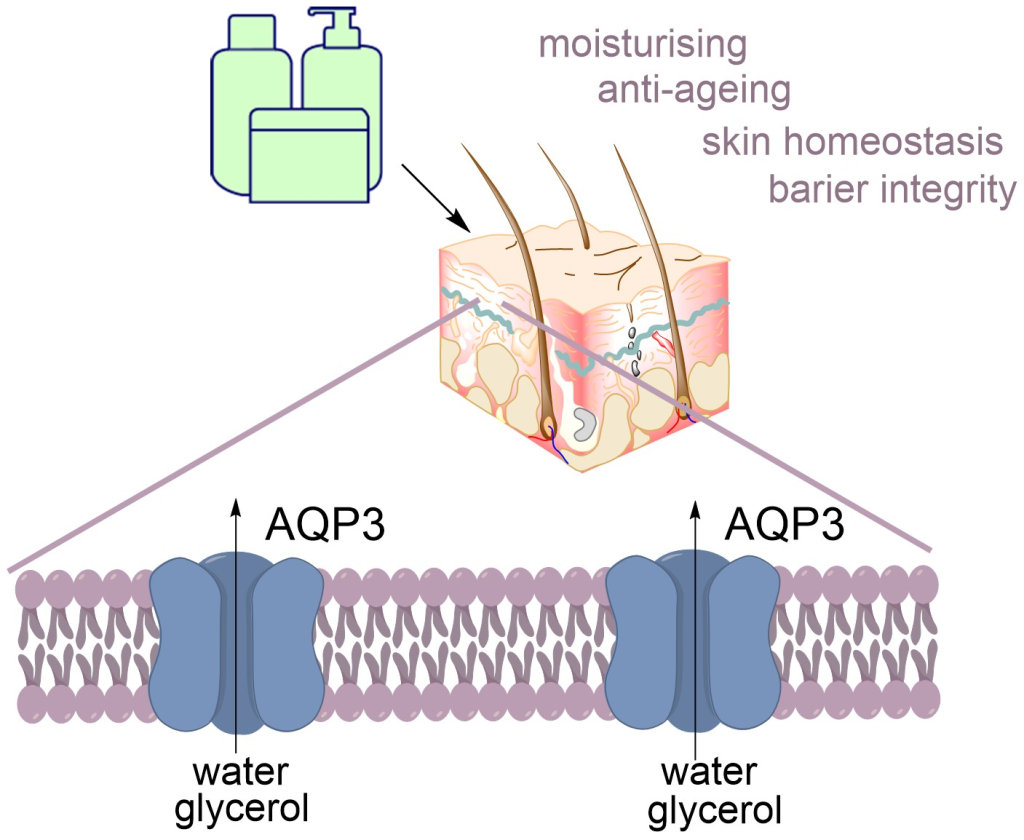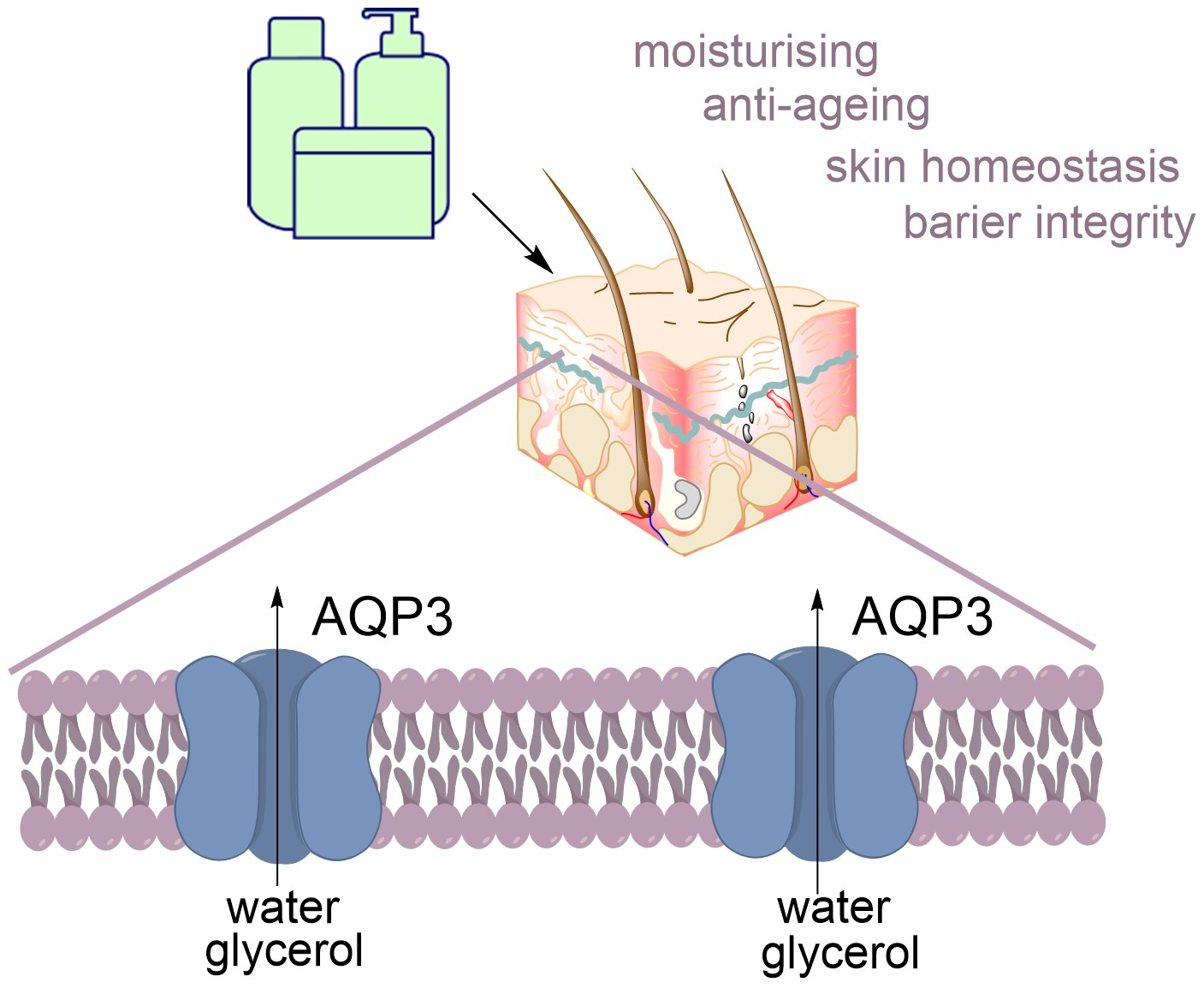

Skin hydration is fundamental for maintaining epidermal barrier integrity and overall skin homeostasis. Insufficient hydration compromises the skin barrier, potentially leading to microfissures and barrier disruption of clinical significance. Beyond being merely a cosmetic concern, dehydration contributes to issues like dullness, fine lines, wrinkles, and is associated with dermatological conditions such as xerosis and atopic dermatitis. Traditional strategies for maintaining hydration rely on factors like the natural moisturizing factor (NMF) and ceramides.
The potential solution explored by modern dermatological and cosmetic research involves understanding the deeper biological mechanisms of water transport. Aquaporins (AQPs), transmembrane water channels, have been highlighted for their role in regulating epidermal hydration, barrier function, and cellular signaling. Among the identified skin aquaporins (AQP1, AQP3, AQP5, AQP7, AQP9, and AQP10), aquaporin-3 (AQP3) has attracted particular attention. AQP3, predominantly expressed in keratinocytes, facilitates the transport of water and glycerol. Because dysregulation of AQP expression is linked to impaired barrier function, inflammatory skin disorders, and aging, AQPs represent promising molecular targets for innovative cosmetic strategies aimed at enhancing resilience, hydration, and counteracting photoageing.
Methods
The literature search was primarily conducted using the PubMed database. The search terms applied included “aquaporin skin,” “aquaporin skin hydration,” and “aquaporin cosmetic”. The search was initially limited to articles published within the last five years. Complementary searches were also performed to gather information on well-established cosmetic ingredients and safety considerations, such as aquaporin structure and involvement in skin cancer.
Key Findings
• AQP3 Function and Location: AQP3 is considered the most functionally relevant aquaporin in the skin, localized primarily in keratinocytes in the basal layer and stratum spinosum of the epidermis. Its key physiological role is related to the transport of glycerol into superficial layers, where glycerol acts as an endogenous humectant.
• Role in Pathology and Aging: Altered AQP expression is implicated in skin diseases; AQP3 is upregulated in Atopic Dermatitis lesions but reduced in psoriatic lesions. Additionally, AQP3 levels decrease in both chronologically aged and UVA-exposed skin. Experimental modulation shows that AQP3 overexpression can prevent UVA-induced senescence, suggesting a protective role against photoageing.
• Cosmetic Modulation: A diverse range of cosmetic ingredients and bioactive compounds—including retinol, urea, glycerol, isosorbide dicaprylate, glyceryl glucoside, peptides, and plant extracts—have demonstrated the ability to modulate AQP3 expression, particularly its upregulation.
• Clinical Evidence: The strongest evidence supporting aquaporin modulation comes from human studies, although these reports are limited. Glyceryl glucoside, applied topically, resulted in increased AQP3 expression, statistically significant improvement in skin hydration, and reduced transepidermal water loss (TEWL). Similarly, hyaluronic acid mask application led to an upregulation of aquaporin expression.
• Molecular Mechanisms: For most ingredients, the precise molecular mechanism for AQP3 modulation remains unknown. However, some compounds, such as astaxanthin, act as PPARγ agonists and induce LXR expression, contributing to AQP3 upregulation.
The investigation into aquaporins highlights a novel molecular target in cosmetology for enhancing skin hydration and promoting regeneration. This approach moves beyond traditional strategies by leveraging the biological role of transmembrane water channels. AQP3 modulation presents a promising and validated target, suggesting multiple potential pathways—through humectants, peptides, or plant extracts—to improve skin barrier function.
The future implications of this research are focused on bridging the gap between abundant in vitro molecular findings and the scarce in vivo clinical data. Future studies are crucial for elucidating the precise molecular mechanisms of AQP regulation and validating these findings in rigorous human clinical models. Furthermore, AQP modulation may improve dermal delivery of active substances, offering new perspectives for advanced skincare formulation design.
However, the safety of these strategies requires careful consideration, as the role of aquaporins is ambiguous. Emerging data link enhanced AQP3 expression to tumor formation, as its overexpression can facilitate cell proliferation in cancer cells (like melanoma and squamous cell carcinoma) and contribute to oxidative stress. Therefore, careful evaluation of the long-term effects of AQP-upregulating cosmetic ingredients is essential to ensure consumer protection.
Link to the study: https://www.mdpi.com/2079-9284/12/6/263