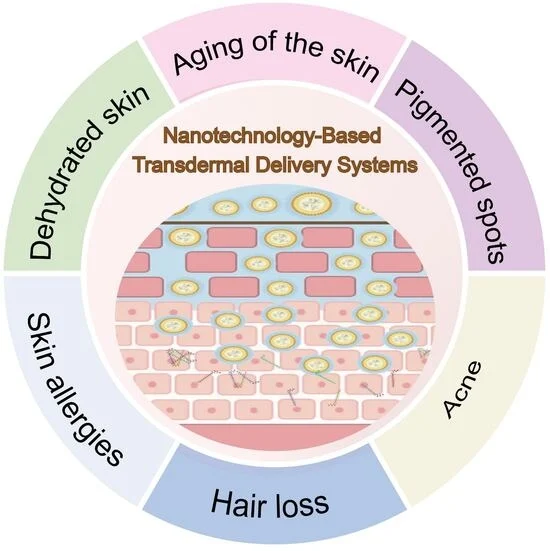
The human skin serves as a vital biological barrier, with the outermost layer, the stratum corneum (SC), primarily responsible for protecting the body and regulating the absorption of external substances. While this barrier is essential for health, it presents a significant challenge for traditional skincare products, often preventing active ingredients from reaching the deeper dermal layers where they are most effective. Furthermore, many potent cosmetic agents, such as Vitamin C and retinol, are limited by instability, poor solubility, and potential skin irritation. To overcome these issues, nanocarrier-based topical delivery systems have been introduced as a transformative solution. These systems utilize particles ranging from 10 to 1000 nm to stabilize sensitive ingredients, enhance skin penetration, and enable the controlled release of actives, thereby significantly improving the efficacy and safety of modern cosmetic formulations.
Methods
The research for this review was primarily conducted using the PubMed, Web of Science, and Scopus databases, focusing on literature published within the last five years. The search strategy combined key terms such as “nanocarrier,” “topical delivery,” and “skin penetration” to identify relevant studies. Researchers prioritized peer-reviewed original research and authoritative reviews that provided clear mechanistic insights or demonstrated practical strategies for addressing dermatological concerns. This systematic approach ensured the inclusion of both foundational principles and the most recent technological advancements in the field.
Key Findings
• Enhanced Performance: Nanocarriers significantly improve the permeability and bioavailability of active ingredients by reducing particle size and increasing carrier deformability, allowing them to bypass the skin’s natural barriers.
• Diverse Platforms: Multiple nano-based delivery systems are utilized, including vesicular nanocarriers (liposomes), lipid-based carriers (SLNs and NLCs), and polymeric nanoparticles, each tailored for specific functional needs like hydration or targeted delivery.
• Targeted Efficacy: Specialized nanocarriers address specific skin disorders; for example, lipid-based carriers excel at barrier repair and moisturizing, while surface-modified polymeric systems are ideal for follicular targeting in acne and hair loss treatments.
• Stability and Protection: By encapsulating active ingredients, these systems protect them from degradation and oxidation, ensuring that sensitive components like Vitamin C and astaxanthin remains effective during application.
• Safety and Regulation: While promising, nanocarriers raise concerns regarding high surface reactivity and potential environmental toxicity, necessitating the development of globally harmonized regulatory frameworks and advanced safety assessments.
The novelty of this research lies in its systematic integration of nanocarrier design principles with practical clinical strategies to address specific skin concerns such as acne, aging, and pigmentation. Unlike previous studies, it provides a critical examination of the persistent gaps in current regulatory frameworks and emphasizes the ethical shift toward New Approach Methodologies (NAMs) that replace animal testing with advanced 3D human skin models. Moving forward, the future of the field will likely be shaped by personalized skincare solutions, green synthesis of biodegradable materials, and the optimization of large-scale production to ensure that these high-performance, science-driven cosmetic products are both safe and accessible to the global market.
Link to the study: https://www.mdpi.com/1999-4923/18/1/63