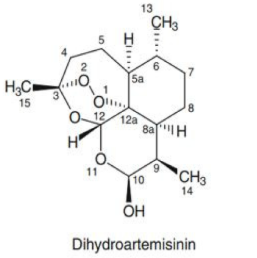
In contemporary society, there is a burgeoning demand for cosmetics that are both safe and highly effective, leading to a mainstream trend of developing innovative functional products. Traditional Chinese herbal medicine has provided a rich source of bioactive monomers that can simultaneously regulate multiple skin-related signaling pathways, such as those involved in whitening and anti-aging. Dihydroartemisinin (DHA), a semi-synthetic derivative of artemisinin originally discovered for its antimalarial properties, was considered a potential solution for cosmetic challenges due to its established anti-inflammatory and antibacterial effects in treating skin diseases like psoriasis and dermatitis. Despite its success in the pharmaceutical realm, systematic research into its broader application as a multi-functional cosmetic ingredient had been lacking until this study.
Methods
Researchers evaluated DHA’s potential using MTT assays to determine safe concentration ranges for human dermal fibroblasts (HDF), dermal papilla cells (DPC), and melanocytes. The study utilized ELISA to quantify collagen I synthesis for anti-aging analysis and qRT-PCR to measure the expression of VEGF and DKK1 genes related to hair loss. Antibacterial efficacy against Malassezia furfur was measured via the well diffusion method and Minimum Inhibitory Concentration (MIC) tests, while whitening and anti-glycation activities were assessed through melanin content analysis and AGEs inhibition assays, respectively.
Key Findings
• Anti-Aging Activity: DHA effectively promotes collagen I synthesis in HDF cells; at a concentration of 0.3125 µM, its performance was superior to the positive control TGF-β1, reaching a promotion rate of 65.57%.
• Anti-Hair Loss Effects: The compound significantly upregulates VEGF (promoting blood vessel formation for nutrient supply) and downregulates DKK1 (supporting follicle growth) in DPC cells.
• Antibacterial Properties: DHA demonstrates significant inhibitory effects against M. furfur, a yeast associated with dandruff and scalp inflammation, with an MIC of approximately 4.5 mM.
• Whitening Efficacy: In human melanocytes, DHA suppresses melanin synthesis more effectively than the well-known whitening agent glabridin at a concentration of 6.25 µM.
• Anti-Glycation Potential: High-concentration DHA (100 µM) significantly inhibits the formation of advanced glycation end-products (AGEs), which are responsible for protein impairment and skin aging.
The novelty of this research lies in its role as the first systematic evaluation of DHA across a comprehensive range of cosmetic functions, moving beyond its traditional pharmaceutical use. These findings suggest that DHA could be a revolutionary multi-functional additive for the beauty industry. However, future implications depend on clinical trials and formulation optimization to address DHA’s poor water solubility and limited stability, as well as navigating varying global regulatory requirements for pharmaceutical-derived cosmetic ingredients.
Link to the study: https://www.mdpi.com/1420-3049/31/2/228