
The Science of Thermal Stress Adaptation
Most people think showers are neutral. Clean in. Clean out.
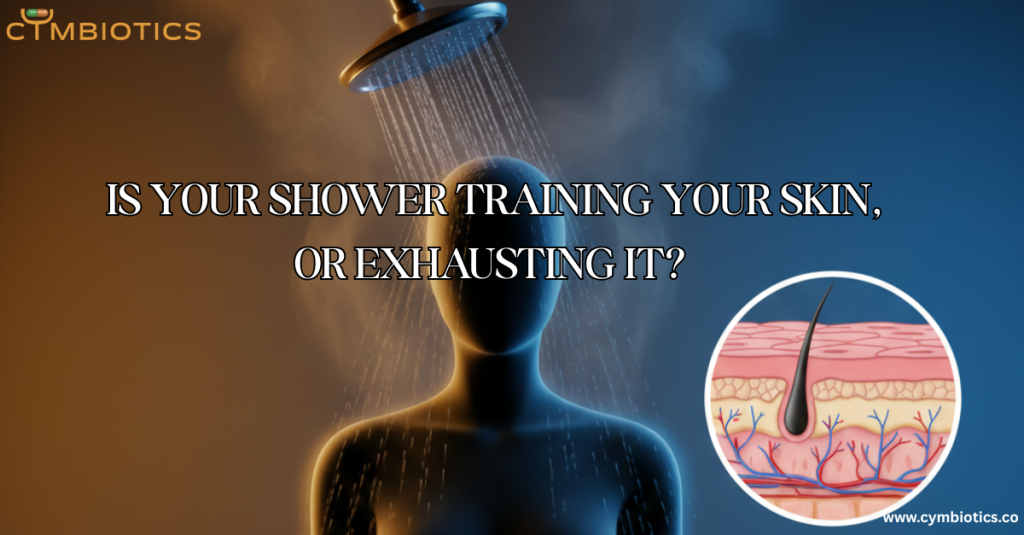
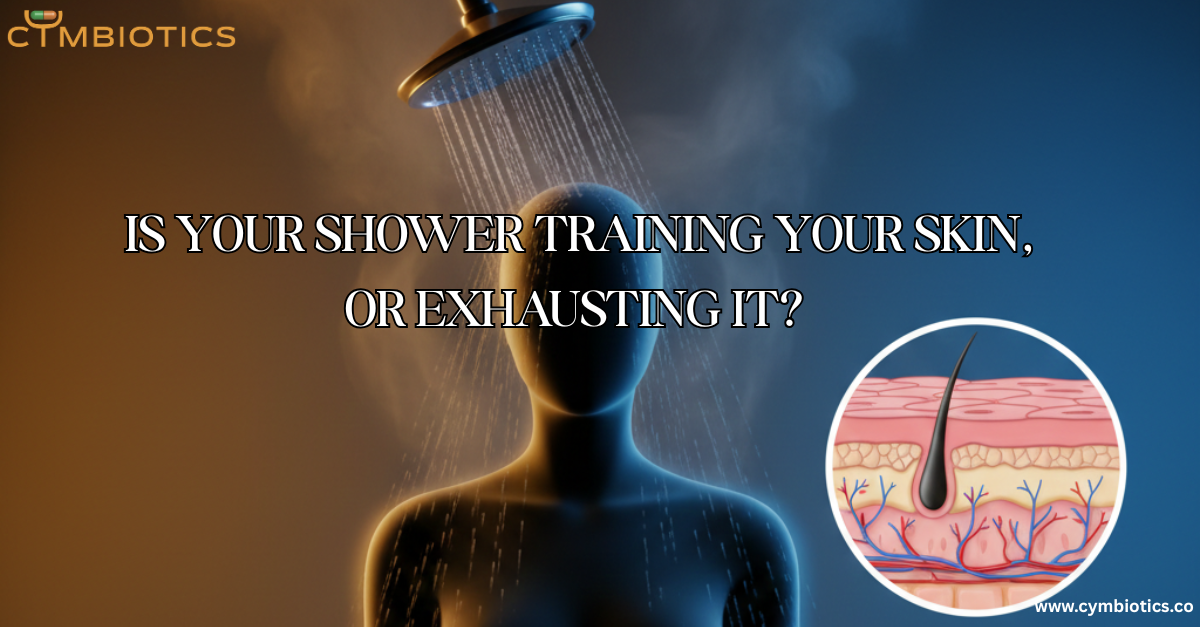
But every time you step under hot or cold water, you are applying a thermal stressor to your largest organ. Temperature isn’t just a sensory input. It’s a biological signal that affects barrier chemistry, microcirculation, immune activity, and lipid organization.
Our skin is adaptive, not static, and it responds differently to short, mild stress than to chronic, intense stress. The question isn’t whether temperature affects skin. It’s whether repeated exposure is helping your skin adapt or quietly exhausting it.
Skin as a Thermoregulatory Organ
Skin isn’t passive. It is a thermoregulatory interface that helps maintain core temperature, fluid balance, and vascular dynamics. When exposed to heat, blood vessels dilate and sweat glands activate. Cold stimulus leads to vasoconstriction and adjustments in lipid fluidity and enzyme activity. These responses are survival mechanisms, not cosmetic events.
Thermal Stress Response, Heat First
Prolonged exposure to high temperatures particularly above ~40 °C, has measurable impacts on skin structure:
- Increased transepidermal water loss (TEWL)
- Altered intercellular lipid packing
- Compromised natural moisturizing factors
- Elevated inflammatory signaling pathways
These changes do not require visible burning to be biologically significant; they are detectable at the level of barrier function and cellular metabolism.
Cold Exposure Isn’t Automatically Beneficial
Cold water causes acute vasoconstriction followed by reactive vasodilation. While short cold exposures trigger sympathetic activation and may transiently increase vascular responsiveness, chronic or extreme cold can:
- Reduce lipid flexibility
- Slow enzyme activity in the barrier
- Increase dryness in exposed tissue
Cold is not inherently beneficial. It is another form of stress.
Adaptation vs Exhaustion: The Biology of Stress Load
Biological systems adapt to stress, but only within limits. This concept is known as hormesis, where mild, controlled stress can strengthen systems, but chronic or intense stress leads to fatigue and functional decline.
Repeated thermal cycling increases the demand on:
- Barrier repair mechanisms
- Lipid synthesis pathways
- Vascular responsiveness
- Immune regulation
Without adequate recovery (sleep, nutrition, barrier support), thermal exposure shifts from training to wear and tear.
Sensitive Skin and Thermal Reactivity
Some skin types, such as rosacea-prone, atopic, or chronically sensitized skin have heightened vascular reactivity. Repeated heat/cold exposure can amplify conditions like:
- Persistent redness
- Flushing episodes
- Stinging and burning sensations
- Barrier fragility
What feels “refreshing” may in fact mask ongoing microvascular stress.
Energy Cost of Temperature Stress
Skin repair isn’t free; it’s ATP–dependent. Lipid synthesis, cell turnover, and structural protein renewal all consume energy. Frequent thermal stress reallocates cellular resources, potentially diverting them from optimization to maintenance, a concept like how metabolic load affects recovery in other organ systems.
A Smarter Thermal Strategy
Thermal stress doesn’t have to be detrimental if managed correctly:
- Avoid prolonged exposure to very hot water
- Keep showers warm rather than scalding
- Limit duration to ~5–10 minutes
- Support barrier lipids immediately after bathing
- Maintain consistent sleep for repair processes
Temperature can stimulate but not destabilize, when applied within biological limits.
The Cymbiotics Perspective
At Cymbiotics, we view skin biology holistically: as an adaptive, metabolically active organ that functions within defined physiological boundaries. Thermal stress is a real biological influence, not a cosmetic abstraction. Our approach emphasizes systems that support barrier repair and functional homeostasis rather than overriding natural processes.
Proper formulation respects how skin responds to environmental stimuli: heat, dryness, humidity, and cold alike. By aligning topical delivery with biology instead of forcing artificial disruption, we help skin maintain resilience and reduce unnecessary strain.
References
- “Impact of Water Exposure and Temperature Changes on Skin Barrier Function”– Herrero-Fernandez M, Montero-Vilchez T, Diaz-Calvillo P, Romera-Vilchez M, Buendia-Eisman A, Arias-Santiago S. Journal of Clinical Medicine, 2022.
- “Breaching the Skin Barrier Through Temperature Modulations” – Shahzad Y, Louw R, Gerber M, et al. Journal of Controlled Release, 2015.
- “Cutaneous Barrier Function After Cold Exposure” – Halkier-Sørensen L, Menon GK, Elias PM, Thestrup-Pedersen K, Feingold KR. British Journal of Dermatology, 1995.
- “Skin Temperature: Its Role in Thermoregulation” – Romanovsky AA. Acta Physiologica, 2014.
- “The Effects of Skin Temperature Changes on Tissue Integrity” – Systematic Review, 2022.