
Puffiness is often explained in simple terms.
Too much salt. Not enough sleep. Temporary fluid retention.
But beneath the surface of the skin lies a drainage network quietly responsible for maintaining tissue balance, the lymphatic system.
Unlike blood circulation, which is powered by the heart, lymphatic flow relies on subtle pressure gradients, tissue movement, and microvascular exchange. Its role is less visible but no less essential.
When this system slows, the effects are often first noticed in the skin.
Swelling persists longer. Inflammation resolves more slowly. Tissue fluid accumulates.
Puffiness, in many cases, is not simply about water, it is about how efficiently the skin drains it.
The Hidden Drainage Network Beneath the Skin
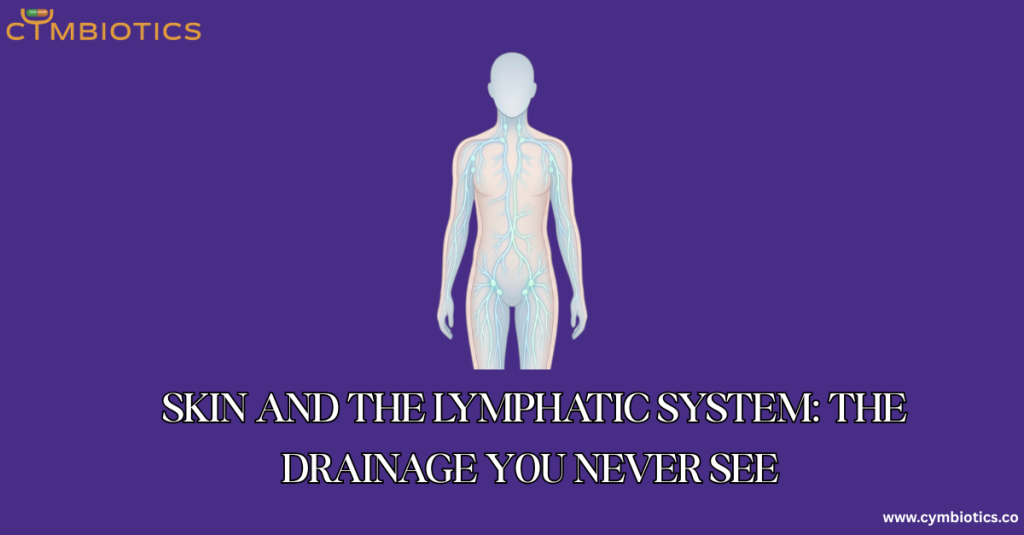
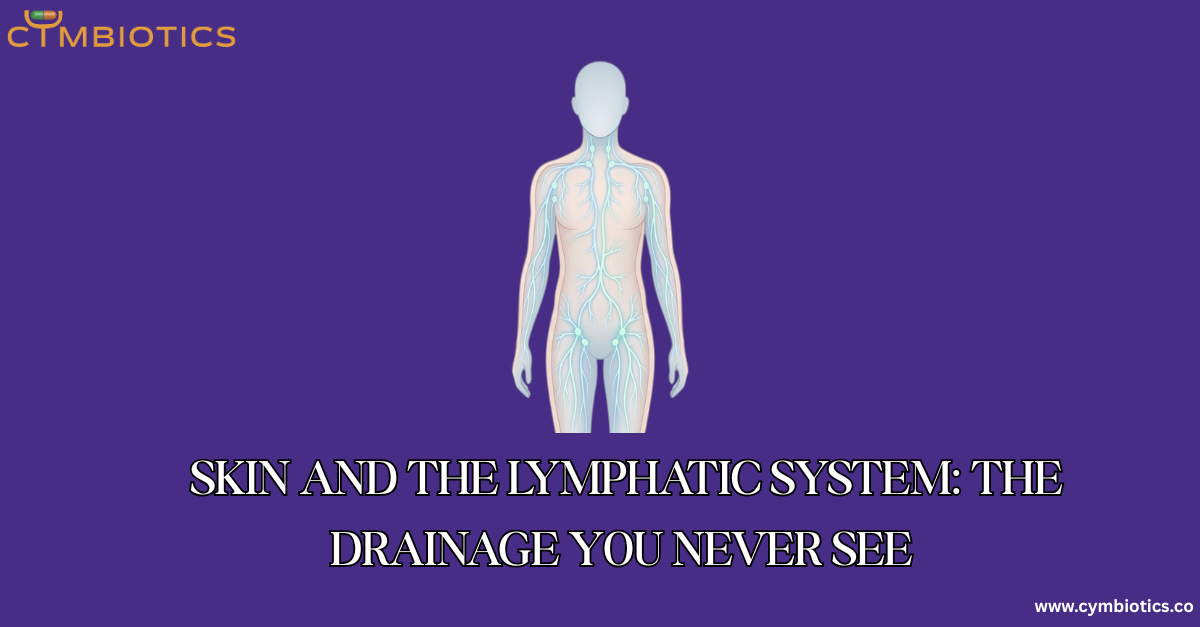
The lymphatic system forms an extensive network of vessels that run parallel to blood circulation.
Its primary functions include:
- Removing excess interstitial fluid from tissues
- Transporting immune cells
- Clearing cellular debris and inflammatory mediators
Within the skin, lymphatic capillaries begin in the dermis as blind-ended vessels that collect fluid escaping from blood capillaries. This fluid, known as lymph, contains proteins, metabolites, immune cells, and signaling molecules.
Once collected, lymph moves slowly through progressively larger vessels and eventually returns to the bloodstream.
This process maintains fluid equilibrium within tissues.
Without efficient lymphatic drainage, fluid accumulates in the extracellular space.
The skin, being highly vascularized, is particularly sensitive to these shifts.
Microcirculation and Fluid Balance
Skin microcirculation constantly exchanges fluid between blood vessels and surrounding tissues.
Plasma components move out of capillaries to nourish cells and support metabolic activity. Most of this fluid returns through venous circulation.
The remainder is cleared by lymphatic vessels.
This balance is delicate.
When lymphatic clearance slows, even slightly, excess interstitial fluid can remain in the dermis longer than intended.
The result can appear as:
- Facial puffiness
- Periorbital swelling
- Tissue heaviness
- Slower resolution of inflammation
These changes are not always dramatic, but they reflect subtle alterations in tissue fluid dynamics.
Lymphatics and Inflammation Resolution
One of the most important and often overlooked roles of the lymphatic system is resolving inflammation.
During inflammation, immune cells release cytokines, enzymes, and signaling molecules into surrounding tissue.
These mediators are necessary for defense and repair, but they must eventually be cleared for tissue homeostasis to return.
Lymphatic vessels perform this clearance function.
They transport inflammatory mediators away from the skin and deliver immune cells to lymph nodes where immune responses are coordinated.
If lymphatic flow becomes impaired, inflammatory signals can persist longer than necessary.
Prolonged exposure to these mediators may contribute to:
- Delayed healing
- Persistent redness
- Tissue swelling
- Increased skin sensitivity
The skin may appear reactive not because inflammation is excessive, but because its resolution is delayed.
Why the Eye Area Shows It First
The periorbital region is one of the most common places where lymphatic congestion becomes visible.
Several anatomical features contribute to this:
- Extremely thin dermal tissue
- Dense microvascular networks
- Limited structural support from underlying fat
Even small increases in interstitial fluid can produce visible swelling around the eyes.
Sleep position, reduced facial movement, seasonal allergies, and fluid shifts during the night can temporarily influence lymphatic drainage in this region.
When the lymphatic system restores flow, puffiness gradually subsides.
Aging and Lymphatic Efficiency
As tissues age, structural changes occur not only in collagen and elastin but also in microvascular and lymphatic networks.
Research suggests that aging can influence:
- Lymphatic vessel density
- Contractile function of lymphatic vessels
- Microcirculatory efficiency
These changes may contribute to slower removal of tissue fluid and inflammatory mediators.
The result is a gradual shift in how the skin responds to stress, injury, and environmental exposure.
Inflammation may linger longer, and swelling may resolve more slowly.
Skin Health Is Also About Drainage
Much attention in skincare focuses on barrier repair, hydration, and structural proteins.
These are essential components of healthy skin.
But tissue health also depends on how effectively the skin clears metabolic byproducts, inflammatory signals, and excess interstitial fluid.
The lymphatic system performs this quiet but essential function.
When it works well, it is rarely noticed.
When it slows, the skin reveals subtle signs of imbalance.
The Cymbiotics Perspective
At Cymbiotics, skin is viewed as an interconnected biological system rather than an isolated surface.
Barrier integrity, microcirculation, immune balance, and cellular signaling all interact to maintain tissue health.
Supporting skin resilience involves respecting these underlying physiological processes including the less visible systems that regulate fluid balance and inflammation resolution.
Because beneath the surface of the skin lies not only structure, but movement, communication, and clearance.
And sometimes, the health of the skin depends on how efficiently it drains what it no longer needs.
References
- “Inflammation and lymphatic function” – Schwager S, Detmar M. Frontiers in Immunology, 2019.
- “Lymphatic vessels, inflammation, and immunity in skin cancer” – Lund AW, Medler TR, Leachman SA, Coussens LM. Cancer Discovery, 2016.
- “Inflammation and lymphatic function” – Schwager S, Detmar M. Frontiers in Immunology, 2019.
- “The cutaneous vascular system in chronic skin inflammation” – Huggenberger R, Detmar M. Journal of Investigative Dermatology Symposium Proceedings, 2011.
- “Lymphangiogenesis: novel strategies to promote cutaneous wound healing” – Jian Y, Li Y, Zhang Y, et al. Burns & Trauma, 2024.
- “An update on the role of lymphatic function in skin inflammatory disorders1” – Ter-Ovanesyan I, Tashjian M, Escruceria S, et al. Cureus, 2025.