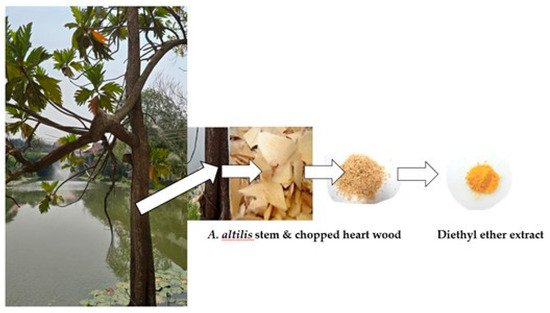
Ultraviolet (UV) radiation is recognized as the predominant cause of extrinsic skin aging, also known as photoaging, which manifests as wrinkles, loss of elasticity, and irregular hyperpigmentation. Exposure to UV radiation triggers a cascade of damage, including oxidative stress, the activation of inflammatory pathways like NF-κB and MAPK, and the upregulation of matrix metalloproteinases (MMPs) that degrade the dermal collagen network. To combat these complex, interconnected mechanisms, researchers have sought multifunctional natural compounds that can penetrate the skin and restore damage. Artocarpin, a prenylated flavonoid isolated from the heartwood of Artocarpus altilis (breadfruit), emerged as a potential solution because it exhibits high bioactivity and targets multiple pathways involved in photoaging simultaneously.
Methods
This comprehensive review analyzed peer-reviewed literature published between 2012 and 2025 retrieved from PubMed, Scopus, and Web of Science. The study evaluated the molecular mechanisms and photoprotective efficacy of artocarpin across in vitro, in vivo, and clinical research. Furthermore, it assessed various lipid-based delivery strategies designed to overcome the compound’s inherent physicochemical limitations, such as poor water solubility and high lipophilicity.
Key Findings
- Antioxidant Defense: Artocarpin provides protection by directly scavenging free radicals and activating the Nrf2-ARE pathway, which upregulates endogenous antioxidant enzymes like SOD and CAT for sustained cellular defense.
- Anti-Inflammatory Action: It mitigates UV-induced inflammation by inhibiting the NF-κB and MAPK signaling cascades, effectively reducing the production of pro-inflammatory cytokines such as TNF-α and IL-6.
- Dermal Matrix Preservation: The compound maintains skin integrity by inhibiting MMP-1 expression (preventing collagen degradation) while simultaneously enhancing type I collagen production and preserving the mechanical contractile ability of fibroblasts.
- Selective Apoptosis Modulation: Artocarpin acts as a cytoprotective agent in normal keratinocytes by attenuating pro-apoptotic markers like caspase-3 and p-p53, yet it can induce pro-apoptotic activity in damaged or malignant cells.
- Melanogenesis Inhibition: Unlike many whitening agents, artocarpin reduces hyperpigmentation primarily through anti-inflammatory mechanisms and the disruption of pro-melanogenic signaling rather than through potent direct tyrosinase inhibition.
- Advanced Delivery Systems: To bypass the stratum corneum barrier, artocarpin can be successfully incorporated into liposomes, transfersomes, ethosomes, and nanostructured lipid carriers (NLCs), which enhance its skin penetration and bioavailability.
The novelty of artocarpin lies in its multi-targeted approach, addressing photoaging through interconnected molecular mechanisms affecting oxidative stress, inflammation, and cellular renewal all at once. Its unique dual nature—acting as an antioxidant in healthy cells while exhibiting pro-oxidative anticancer effects in malignant cells—makes it a rare and valuable candidate for dermatological health. Future implications for research should prioritize the long-term safety of artocarpin within specific delivery systems and explore synergistic co-encapsulation with other natural antioxidants to maximize its efficacy in the cosmeceutical industry.
Link to the study: https://www.mdpi.com/2079-9284/13/2/61