
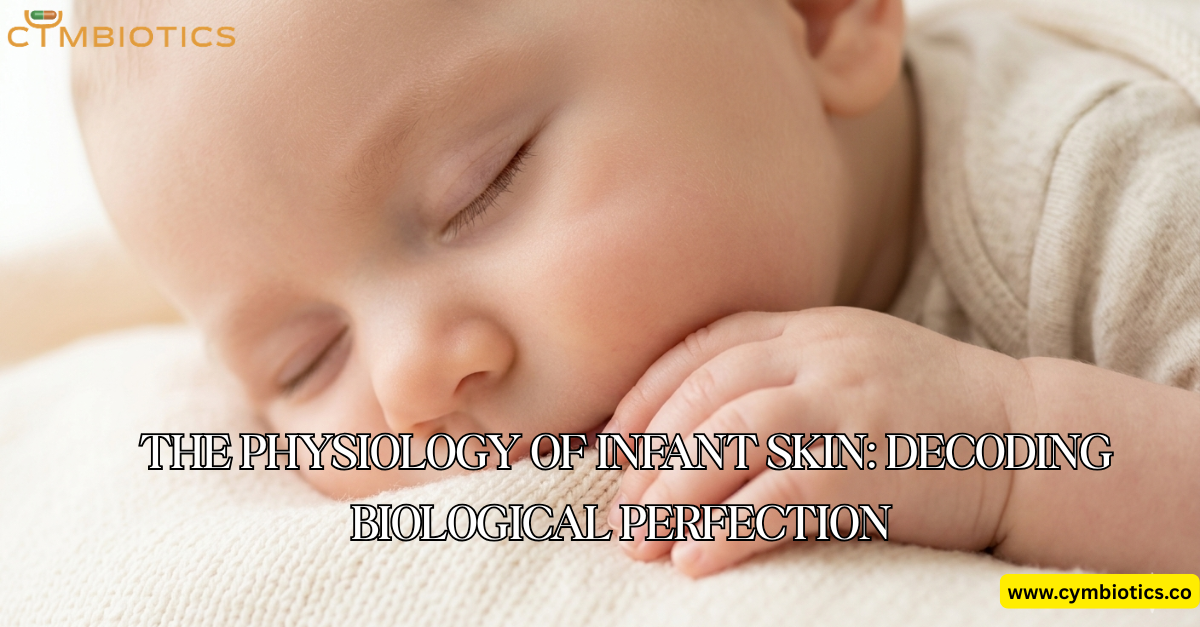

The visual characteristics of infant skin marked by an exceptionally smooth topography, uniform tone, and profound elasticity are universally recognized as the physiological ideal. However, reducing this state to mere aesthetic “perfection” obscures the complex developmental biology at play. Infant skin is not simply an unblemished version of adult tissue; it is a distinct morphological and functional system undergoing rapid maturation. Understanding the cellular, structural, and chemical mechanisms driving this transient state reveals fundamental principles of epidermal homeostasis, barrier function, and dermal integrity.
What appears externally as perfect skin is, biologically, the visual manifestation of cellular processes functioning at their absolute peak efficiency, free from the cumulative degradation of environmental exposure and chronological aging.
Cellular Turnover and Epidermal Renewal
The infant epidermis operates at an accelerated metabolic rate. The basal layer of the epidermis exhibits highly active and synchronized keratinocyte proliferation. As these cells migrate upward to form the stratum corneum, the desquamation process (the shedding of dead cells) is exceptionally efficient. Unlike mature skin, where cellular turnover slows down and corneocytes can accumulate unevenly on the surface, infant skin maintains a rapid, continuous cycle of renewal. This biological mechanism ensures that the outermost barrier is constantly composed of newly matured, structurally intact cells. The visible outcome is a clinically smooth micro-topography, a lack of textural irregularities, and high light reflectance.
Dermal Matrix and Collagen Composition
The structural foundation of the dermis in infants differs profoundly from that of adults. The infant dermal matrix is characterized by a significantly higher proportion of Type III collagen relative to Type I collagen. Type III collagen, often referred to as the collagen of early development, forms a fine, highly compliant, and flexible reticular network. Furthermore, infant fibroblasts are hyper-productive, continuously synthesizing a dense extracellular matrix (ECM). This specific biochemical composition creates a tissue architecture that is highly elastic and mechanically resilient. Because this structural network is tightly woven and newly synthesized, the tissue presents characteristic plumpness, firmness, and a complete absence of structural folding or rhytides (wrinkles).
The Integrity of the Dermo-Epidermal Junction
The interface between the epidermis and the dermis, known as the dermo-epidermal junction (DEJ), is characterized by deep, undulated rete ridges. In developing infant tissue, this structural anchoring is highly pronounced, maximizing the surface area for nutrient exchange and mechanical cohesion between the two layers. This optimized interface prevents shear stress and supports robust epidermal nourishment from underlying dermal capillary beds. The biological mechanism of a highly convoluted DEJ translates visually to extreme skin resilience, preventing laxity and maintaining a tightly bound, structurally sound tissue profile.
Hydration Dynamics and Hyaluronic Acid
While infant skin possesses a thinner stratum corneum and can exhibit transiently higher rates of transepidermal water loss (TEWL) in the immediate postnatal period, its underlying dermal hydration reservoir is vast. The infant ECM contains an exceptionally high concentration of hyaluronic acid, a glycosaminoglycan capable of binding significant volumes of water. This creates a state of optimal internal turgor pressure. Furthermore, the transition from the in-utero environment establishes a foundational, highly functional lipid bilayer in the stratum corneum. This physiological mechanism ensures sustained interstitial hydration, yielding a visibly translucent, deeply hydrated cutaneous surface.
Melanocyte Regulation and UV Naivety
The uniform coloration of an infant’s skin is a direct result of baseline melanocyte function combined with an absolute absence of environmental degradation. At this developmental stage, melanocytes produce and distribute melanin pigment with perfect homogeneity. More importantly, the tissue is completely naive to cumulative ultraviolet (UV) radiation. Chronic UV exposure induces localized inflammatory cascades and reactive oxygen species (ROS) that permanently disrupt melanogenesis, leading to uneven pigmentation in mature skin. The absence of this environmental stressor allows the melanocyte network to operate without disruption, presenting a perfectly even skin tone devoid of dyschromia or hyperpigmented lesions.
Cymbiotics Perspective
The biological elegance of infant skin lies not in superficial correction, but in the optimized function of its underlying cellular and structural systems. By observing the efficient cellular turnover, precise matrix composition, and balanced hydration dynamics of developing tissue, definitive physiological baselines can be established. R&D at Cymbiotics recognizes that long-term skin health requires understanding these fundamental mechanisms. Emulating the principles of peak biological function rather than artificially forcing cosmetic changes is essential for supporting structural integrity and cellular resilience. Healthy skin relies on the systemic harmony of its foundational biology, an approach central to science-backed innovation.
References
- “Infant skin microstructure assessed in vivo differs from adult skin in organization and at the cellular level” – Stamatas GN, Nikolovski J, Luedtke MA, Kollias N, Wiegand BC. Pediatric Dermatology, 2010.
- “Infant skin physiology and development during the first years of life: a review of recent findings based on in vivo studies” – Stamatas GN, Nikolovski J, Mack MC, Kollias N. International Journal of Cosmetic Science, 2011.
- “Infant skin barrier, structure, and enzymatic activity differ from those of adult skin in an East Asian cohort” – Liu Q, Zhang Y, Danby SG, Cork MJ, Stamatas GN. BioMed Research International, 2018.
- “Biomarkers of neonatal skin barrier adaptation reveal substantial differences compared with adult skin” – Visscher MO, Carr AN, Winget J, Huggins T, Bascom CC, Isfort R, Lammers K, Narendran V. Pediatric Research, 2021.
- “Newborn infant skin: physiology, development, and care” – Visscher MO, Adam R, Brink S, Odio M. Clinics in Dermatology, 2015.
