

Skin aging is a complex biological process characterized by the progressive loss of physiological functions and structural changes in the epidermis and dermis. A critical factor in this process is the degradation of the extracellular matrix (ECM), primarily driven by the overactivation of enzymes such as collagenase, elastase, and hyaluronidase, which break down collagen, elastin, and hyaluronic acid, respectively. Additionally, reactive oxygen species (ROS) generated by UV radiation trigger oxidative stress and stimulate the tyrosinase enzyme, leading to hyperpigmentation and wrinkles. To address these issues, natural plant extracts are increasingly considered as safer, bioactive alternatives to synthetic compounds. Phlomis kurdica (PK) was identified as a potential solution due to its traditional medicinal use in treating inflammation and skin disorders. To optimize delivery, researchers utilized an emulgel formulation, which combines the benefits of emulsions and gels, offering superior delivery for both aqueous and oleaginous ingredients while remaining greaseless and easy to apply.
Methods
The researchers prepared a methanolic extract of P. kurdica through maceration and liquid-liquid extraction, subsequently identifying its chemical profile using LC-MS/MS and HPTLC. A Carbopol-based emulgel was formulated and rigorously characterized for pH, viscosity, and textural properties like spreadability and adhesiveness. The study also involved in vitro release and rheology investigations to model drug kinetics and structural stability at physiological temperatures. Finally, the extract’s biological activity was evaluated through specialized antioxidant assays and inhibition tests against skin-related enzymes.
Key Findings
- Phytochemical Profile: LC-MS/MS analysis identified quinic acid (85.396 µg/g) as the most abundant component, followed by chlorogenic acid and luteolin 7-O-glucoside.
- Formulation Characteristics: The loaded emulgel (PKF) exhibited a pH of 6.03, which is compatible with topical application, and displayed shear-thinning (pseudoplastic) behavior, facilitating easy spreading on the skin.
- Controlled Release: In vitro studies showed that the emulgel provided a regulated release of chlorogenic acid over 12 hours, following the Korsmeyer–Peppas and Higuchi kinetic models.
- Antioxidant Power: The ethyl acetate and n-butanol fractions demonstrated the highest antioxidant potential, largely attributed to their high phenolic content.
- Enzyme Inhibition: P. kurdica extracts successfully inhibited collagenase, elastase, hyaluronidase, and tyrosinase, indicating its effectiveness in preventing ECM degradation and hyperpigmentation.
- Thermal Response: Rheology tests revealed that the emulgel maintains elastic-dominant (solid-like) characteristics even at physiological temperatures, which may extend its residence time at the application site.
This research highlights the novelty of Phlomis kurdica as a potent natural agent for dermatological health, representing one of the first comprehensive studies to integrate its phytochemical profile with an advanced emulgel delivery system. The findings suggest that this bioactive emulgel is a promising candidate for cosmeceutical products aimed at anti-aging and skin regeneration. Future implications of this work include the need for advanced in vivo studies and clinical trials to confirm the safety and therapeutic efficacy of PK-loaded formulations in human subjects, potentially leading to new treatments for photoaging and oxidative skin damage.
Link to the study: https://www.mdpi.com/2310-2861/12/3/240
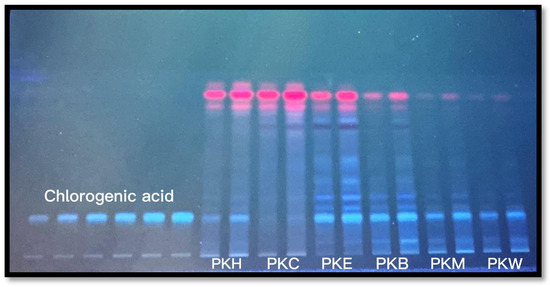
HPTLC chromatograms of: PKH: hexane fraction of PK, PKC: chloroform fraction of PK, PKE: ethyl acetate fraction of PK, PKB: n-butanol fraction of PK, PKM: methanolic extract of PK, PKW: remaining water fraction of PK. Mobile phase: toluene: ethyl acetate: formic acid (7:5:0.5). Derivatization: NPR reagent. Visualization: 366 nm.