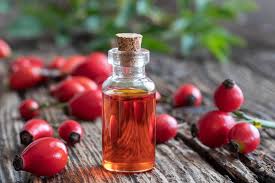
Skin aging is a multifaceted biological process influenced by factors such as ultraviolet (UV) exposure, environmental stressors, and lifestyle choices, leading to visible signs like wrinkles, UV spots, and changes in skin texture. There is a growing demand for effective, natural skincare products, which has spurred significant research into plant-based oils rich in bioactive compounds. Rosehip oil, extracted from the seeds of Rosa canina, has garnered considerable attention in this context due to its high content of carotenoids, phenolics, and antioxidants, which are recognized for their anti-aging, photoprotective, and skin-rejuvenating properties. Specifically, Rosa canina oil is notable for its exceptionally high vitamin A content and also contains polyphenols and polyunsaturated fatty acids known for their potent antioxidant capabilities. Despite the increasing interest, studies investigating its efficacy on human skin, particularly using advanced imaging technologies, have been limited. This pilot study aimed to address this research gap by systematically evaluating the effects of cold-pressed Rosa canina seed oil on key facial skin characteristics.
Methods
This open-label pilot study selected cold-pressed Rosa canina seed oil, rich in carotenoids and phenolics, for its therapeutic potential. Twenty-seven volunteers, aged 30–65 with normal skin, participated in a five-week treatment protocol where three drops of the oil were applied topically to the entire face daily, avoiding the eye area. The efficacy was assessed using the VISIA analysis system, which utilized multi-spectral and 3D imaging to quantify changes in skin parameters such as wrinkle depth, UV-induced spots, porphyrins, and texture, both before and after the treatment period. Strict inclusion and exclusion criteria were applied to ensure result integrity, eliminating participants with pre-existing skin conditions or recent invasive procedures.
Key Findings
- Chemical Composition and Bioactivities:
The Rosa canina oil used in the study showed a significant total carotenoid content of 28.398 µg/mL, with high levels of zeaxanthin (10.88 µg/mL), β-carotene (4.49 µg/mL), and lutein (4.33 µg/mL). It also contained 2.637 mg gallic acid equivalents (GAEs)/100 g of total phenolic compounds and exhibited an antioxidant potential of 5.572 µmol Trolox/100 g, confirming its rich antioxidant capacity. - Wrinkle Reduction:
The topical application of rosehip oil resulted in a significant reduction in mean wrinkle scores across several age groups, with notable improvements observed in individuals who had deeper baseline wrinkles. For instance, in age group 4 (53–60 years), the mean wrinkle score decreased from 37.059 ± 28.041 to 30.176 ± 13.872. While most experienced benefits, some individuals showed an increase in wrinkle scores, which could be attributed to skin sensitivity to vitamin A or environmental factors. - UV Spots:
Although visible declines were mentioned, the study’s results indicated a slight increase in overall UV spots from 16.53 to 18.85. The general trend showed minor intensification post-treatment, possibly due to sensitivity to components like vitamin A. - Porphyrin Mitigation:
Porphyrin levels, associated with bacterial activity such as Propionibacterium acnes, decreased in most subjects. The overall score dropped from 11.13 to 10.37 post-treatment, suggesting antimicrobial or microbiome-modulatory effects. - Skin Texture Improvement:
A reduction in texture scores was observed across all age groups, decreasing from 6.90 to 5.03, highlighting improved skin smoothness and glossiness. This effect was most pronounced in the youngest (25–35 years) and oldest (53–60 years) participants. - Brown Spots:
Scores decreased from 18.22 to 17.47, indicating reduced pigmentation. However, some fair-complexioned individuals experienced increased scores, possibly due to UV-triggered melanogenesis. - Red Areas:
A slight increase from 12.79 to 13.37 was observed. While some saw reductions, others experienced increased redness or itchiness, potentially due to vitamin A sensitivity. - Pore Reduction:
A slight decrease from 12.51 to 11.23 was noted, although not statistically significant across age groups or timepoints. - True Skin Age:
The youngest age group (25–35 years) showed a significant reduction in perceived age—from 33.5 ± 4.87 to 29.625 ± 6.07. Slight improvements were also noted in older groups.
This pilot study evaluated the effects of Rosa canina oil from the Băișoara region, showing its potential to enhance facial skin characteristics. Improvements were seen in wrinkle depth, porphyrin levels, and skin texture. Using VISIA imaging, the study offered quantitative evidence supporting rosehip oil’s efficacy in managing visible signs of aging.
A key novelty was the comprehensive investigation into the oil’s topical effects across multiple parameters, emphasizing its richness in provitamin A and antioxidant compounds. The findings validate rosehip oil’s role in improving skin smoothness, reducing wrinkles, and potentially modulating the microbiome.
Future studies should focus on larger sample sizes, longer durations, and controlled environments. Research should explore collagen synthesis mechanisms and combine rosehip oil with other actives like vitamin C or ferulic acid for enhanced efficacy. Integration into sunscreen or anti-aging blends could further optimize its cosmeceutical value.
Link to the study: https://chatgpt.com/c/68344861-fd24-8005-8358-63d7769e2bf4