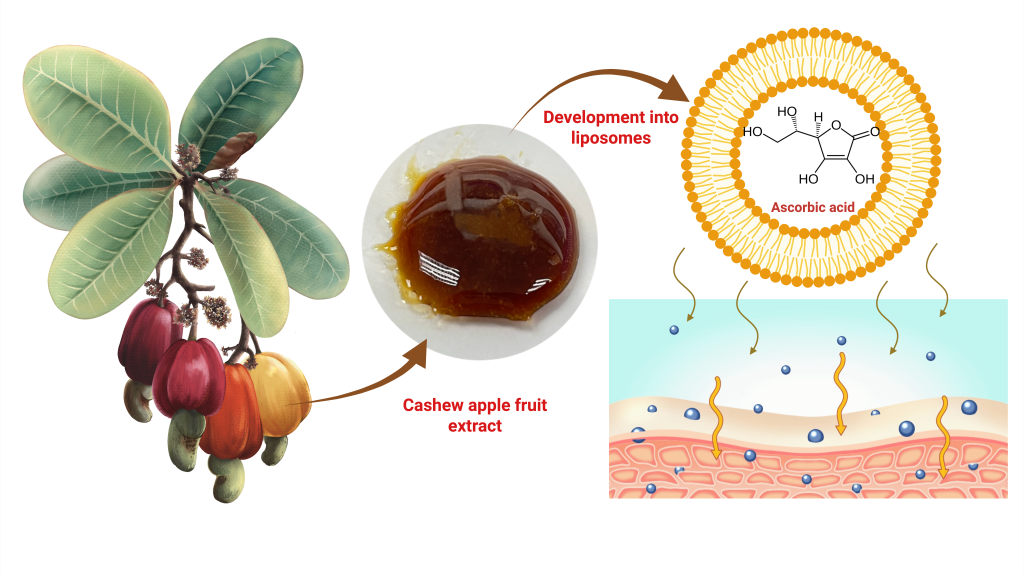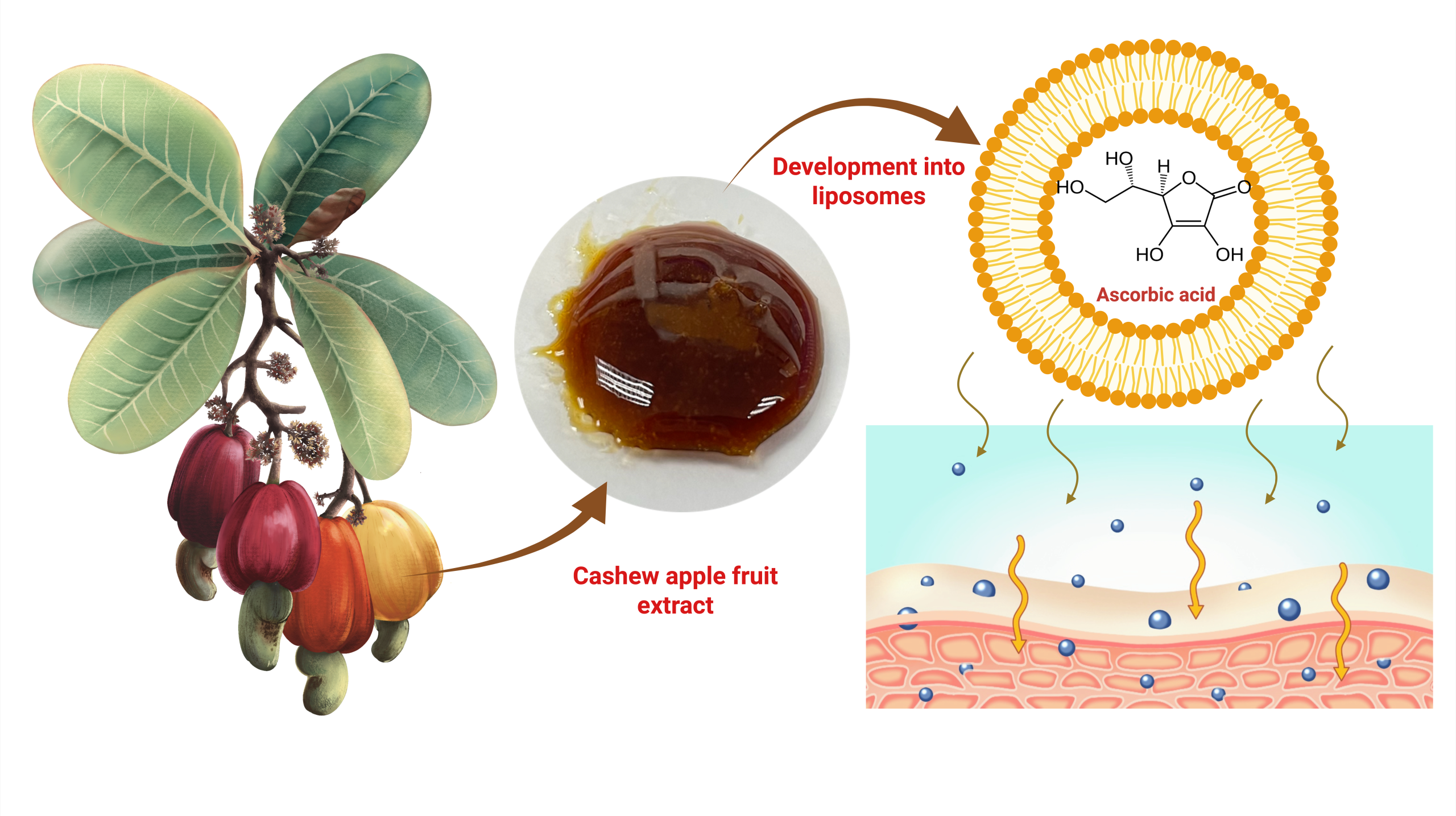

The cashew apple (Anacardium occidentale L.) is a tropical pseudo-fruit known to be rich in bioactive constituents such as ascorbic acid, phenolic compounds, and flavonoids, which are associated with anti-aging and wound healing properties. Despite its high potential for cosmetic applications, the cashew apple is often an underutilized agricultural byproduct, prompting investigations into its valuable bioactive compounds. Given its strong antioxidant activity, mainly attributed to high phenolic content and abundance of ascorbic acid, CAE represents a promising candidate for protecting skin against oxidative stress and providing anti-aging benefits. Ascorbic acid is present in remarkably high concentrations in the cashew apple, reportedly nearly five times higher than in citrus fruits.
The central issue addressed by this research is that ascorbic acid, a key bioactive constituent, is highly susceptible to degradation during processing and storage. To mitigate this instability and maintain the efficacy of CAE for topical applications, the potential solution explored was liposomal encapsulation. Liposomes have been recognized as an effective strategy for protecting sensitive bioactive compounds, such as ascorbic acid, against environmental stressors and oxidation. Furthermore, liposomal encapsulation enhances the stability of active compounds and is known to improve their skin penetration, thereby boosting the overall effectiveness of topical cosmetic formulations. Developing a liposomal delivery system for CAE’s bioactive compounds was considered a novel and promising approach because it had not yet been reported in existing literature.
Methods
Fresh cashew apple extract (CAE) was prepared via ethanol maceration, solvent evaporation, and freeze-drying. The resulting extract was quantified for its bioactive compounds, including ascorbic acid, total phenolic content (TPC), total flavonoid content (TFC), and total caffeoylquinic acid content (TCQAC). Biological activities such as antioxidant capacity, anti-tyrosinase activity, cytotoxicity, cytoprotection against oxidative stress, stimulation of collagen synthesis, and in vitro wound healing potential were then assessed. CAE was encapsulated in liposomes using L-α-phosphatidylcholine and cholesterol by the thin-film hydration method, and the resulting CAE-loaded liposomes were characterized for particle size, zeta potential, entrapment efficiency (%EE), stability, and in vitro skin permeation compared to non-encapsulated CAE.
Key Findings
The study yielded several crucial findings regarding the biological activity and formulation success of CAE:
• Bioactive Content: Each gram of CAE contained 0.90 ± 0.05 mg of ascorbic acid, 81.40 ± 7.14 mg GAE (gallic acid equivalents) of TPC, 3.73 ± 0.30 mg RE (rutin equivalents) of TFC, and 4.48 ± 0.05 mg CGAE (chlorogenic acid equivalents) of TCQAC.
• Antioxidant and Safety Profile: CAE exhibited antioxidant properties (IC50 = 282.19 ± 11.16 µg/mL for DPPH) and provided a cytoprotective effect against H2O2-induced oxidative stress in L929 cells. The extract was confirmed to be non-cytotoxic to fibroblast and monocyte cells at concentrations less than 1 mg/mL and did not induce inflammatory responses.
• Anti-Aging and Wound Healing Efficacy: CAE stimulated collagen production in fibroblasts in a dose-dependent manner at concentrations above 250 µg/mL. In vitro wound healing assays demonstrated that CAE effectively promoted cell migration and closure.
• Encapsulation Success: Liposomes formulated with PC:CH (4:1) achieved a high encapsulation efficiency (84.55 ± 4.12%) for ascorbic acid.
• Enhanced Skin Permeability: CAE-loaded liposomes significantly improved skin permeation, demonstrating an enhancement ratio of approximately two-fold greater than that of free-CAE.
• Stability Improvement: Stability testing conducted over 3 months confirmed that the ascorbic acid content in the CAE-loaded liposome solution remained significantly higher than that in the free-CAE solution under both refrigerated and long-term storage conditions (30 ◦C/75% RH).
Conclusion: Novelty and Future Implications
The research successfully confirmed the multi-functional potential of CAE, demonstrating significant antioxidant activity, promoting fibroblast collagen synthesis, offering cytoprotection against oxidative stress, and supporting wound healing activity. The novelty of this study lies in the successful development of a liposomal delivery system for the bioactive compounds derived from the cashew apple, a strategy previously unreported in existing literature. This liposomal incorporation effectively addressed the major limitation of CAE—the instability of its key constituent, ascorbic acid—markedly improving both its stability and its ability to penetrate the skin.
The final formulation, a solution containing CAE-loaded liposomes, demonstrated suitable physicochemical characteristics for skincare applications, supporting its potential development as a stable, anti-aging cosmetic product. Future implications for this research include the necessary focus on conducting long-term stability evaluations and initiating clinical trials to validate the efficacy and safety of these CAE formulations as viable alternatives for anti-aging skincare products.
Link to the study: https://www.mdpi.com/2079-9284/12/6/246