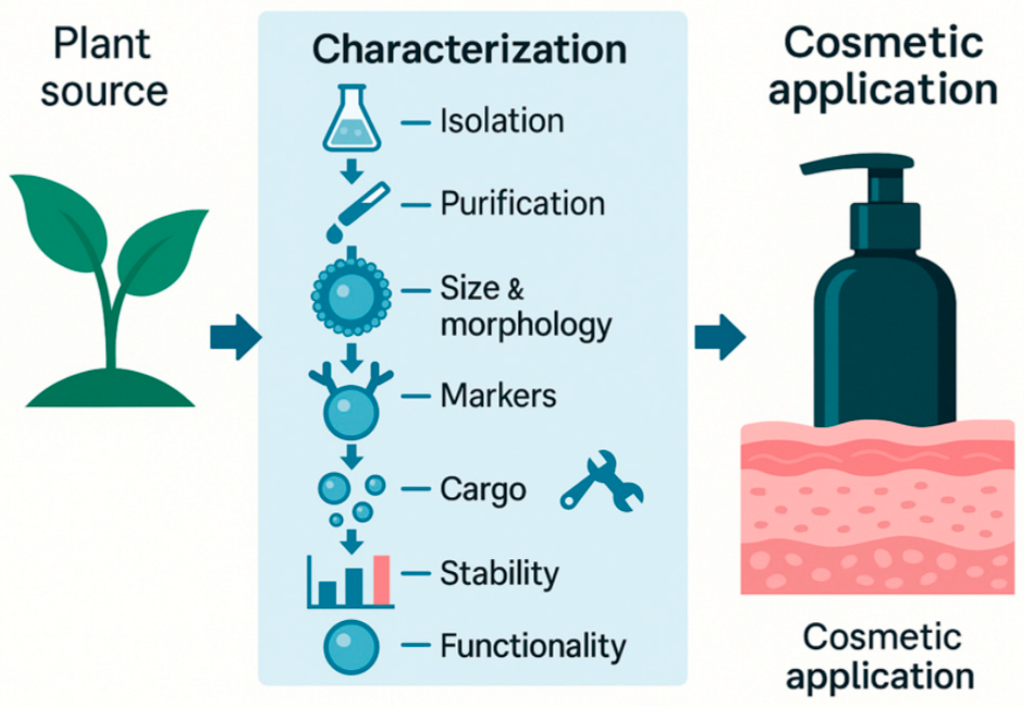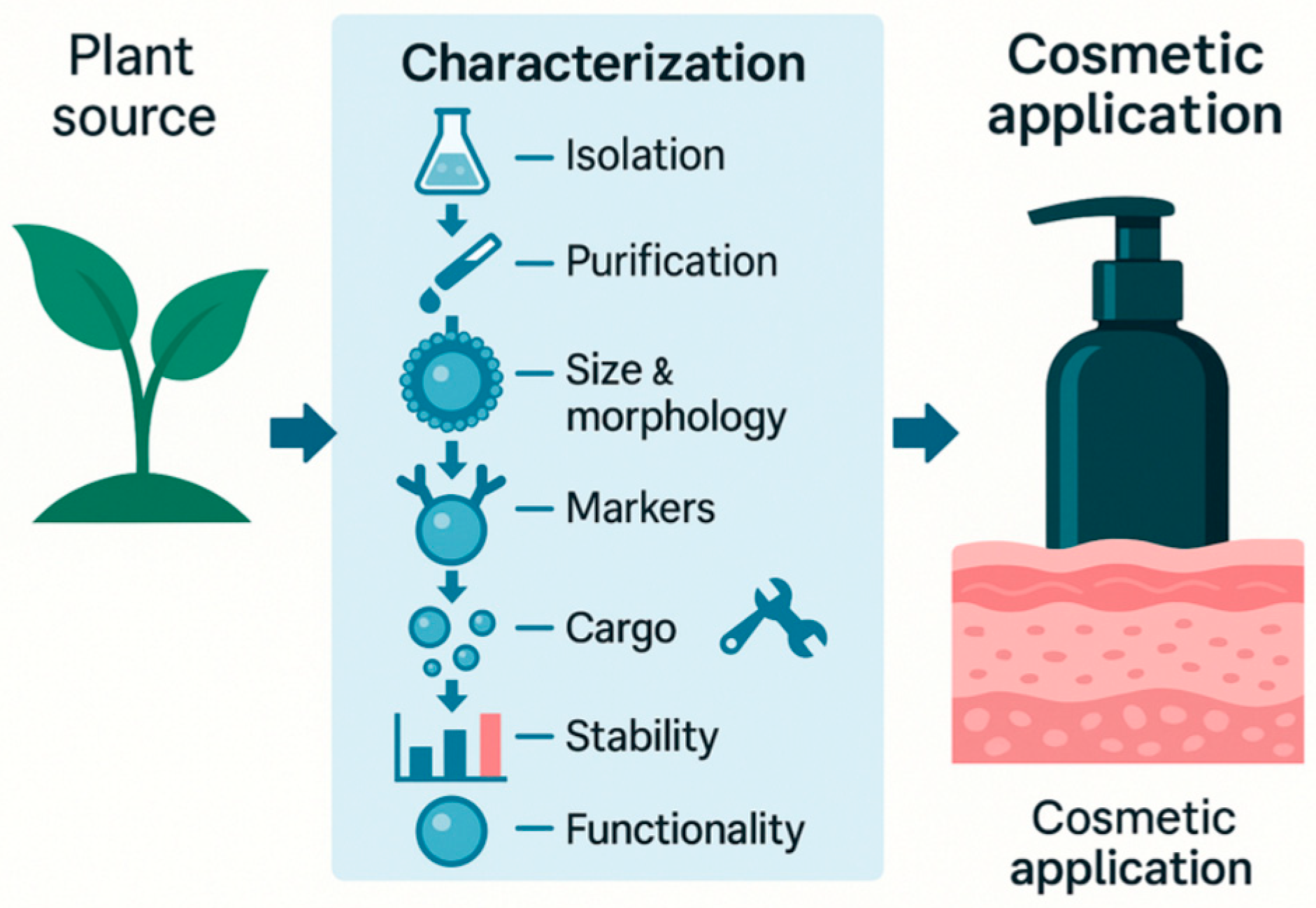

Plant-derived extracellular vesicles (PDEVs) are natural nanocarriers rapidly gaining significant attention in both cosmetics and regenerative medicine. Their appeal stems from their biocompatibility, natural origin, and capacity to deliver promising bioactive components, such as proteins, lipids, nucleic acids, and secondary metabolites (e.g., polyphenols and carotenoids). PDEVs, which are naturally secreted by virtually all cell types, are highly biocompatible due to their nano-scale dimensions and natural origin.
The increasing use of PDEVs in topical products, often marketed with claims related to anti-aging, moisturizing, and anti-oxidant effects, has highlighted a critical regulatory gap. While standardized guidelines exist for mammalian Extracellular Vesicles (EVs), equivalent scientific or regulatory standards are currently lacking for non-animal-derived EVs, including PDEVs. This absence of standardized guidelines has resulted in an inconsistent, unregulated landscape where terms like “phyto-exosomes” are frequently used interchangeably without sufficient biochemical verification or functional substantiation. This regulatory vacuum significantly compromises product reproducibility, undermines consumer trust, and raises concerns regarding scientific credibility and consumer safety, especially if poorly characterized or contaminated preparations are used.
To address this challenge, the review by Ferroni and Zavan proposes a comprehensive set of minimal characterization guidelines. These guidelines are intended to serve as a harmonized baseline to elevate the scientific standards and promote the safe, ethical, and effective application of PDEV-based ingredients in cosmetic and biomedical contexts.
Key Findings and Recommendations
The article’s comprehensive framework yields several critical findings and recommendations for the PDEV field:
• Mandatory Physical and Chemical Profiling: Minimal baseline evidence requires documenting vesicle size, concentration, morphology (ideally via Cryo-TEM), and surface charge (ζ-potential). This physical evidence must be coupled with quantification of total protein content to calculate the particle-to-protein ratio, serving as a pragmatic purity index.
• Species-Specific Cargo Characterization: Due to the lack of universal markers comparable to mammalian EVs, PDEV identity must be established using a multi-analyte approach. This includes lipidomics (documenting plant-specific features like phytosterols and glycosyl inositol phosphorylceramides/GIPCs) and proteomics.
• Essential Marker Panels: Identity confirmation requires documenting the enrichment of EV-compatible proteins (e.g., aquaporins like PIP1/PIP2, annexins, HSP70/HSP90) and the depletion of negative markers associated with cellular organelles that rule out non-vesicular contamination (e.g., RuBisCO, VDAC, Histone H3, and Oleosin). RNA cargo, particularly small RNAs, must also be validated, ideally with RNase-protection controls to prove encapsulation.
• Non-Negotiable Functional Validation: Functional testing is required to substantiate cosmetic claims. This must include demonstrating cellular uptake in relevant skin cells (fibroblasts, keratinocytes) and assessing proximal activation via intracellular Ca2+ dynamics. Mechanistic studies must align with claims, such as anti-inflammatory activity (cytokine modulation, NF-κB) and barrier integrity (TEER, tight junction proteins).
• Sourcing Dilemma and Quality Control: The choice of source—raw plant material versus in vitro culture—presents a trade-off. Raw-material PDEVs offer functional richness (stress-enriched cargo) but suffer from batch variability and the critical risk of co-isolated agrochemical contaminants if not organically sourced. In vitro-derived PDEVs offer superior reproducibility but may lack natural complexity and pose the risk of residual culture components (e.g., antibiotics, plant growth regulators). Organic sourcing is recommended as an optimal standard, as it mitigates contamination risk while maintaining or enhancing bioactivity.
• Regulatory Compliance: Safety dossiers must integrate validated non-animal OECD Test Guidelines, including TG 431/439 (corrosion/irritation), TG 497 (sensitization), and TG 432 (phototoxicity), ensuring interference controls are implemented to account for PDEV properties.
The future implications are profound: adherence to these guidelines will facilitate transparent labeling, enable regulatory harmonization across different jurisdictions (e.g., EU, US, Asian markets), and support verifiable efficacy claims. For producers, this framework mandates a commitment to safe-by-design innovation, requiring traceable sourcing (ideally organic), validated removal of contaminants, and rigorous stability monitoring throughout the intended shelf life. Ultimately, the goal is to ensure that PDEVs establish themselves as credible, safe, and innovative ingredients by translating their intrinsic molecular complexity into reliable performance, moving the field toward a scientifically accountable domain of natural nanocarriers.
Link to the study: https://www.mdpi.com/2079-9284/12/6/252