

Facial hyperpigmentation, which affects over 40% of adults aged 30–50, is a prevalent dermatological concern that often leads to significant psychological distress, including anxiety and social withdrawal. While traditional treatments like hydroquinone and other tyrosinase inhibitors exist, they are frequently limited by transient efficacy, rebound hyperpigmentation, and adverse reactions such as ochronosis or severe irritation. A 2-mercaptonicotinoyl glycine (2-MNG)-containing serum was considered a potential solution because it offers a unique mechanism of action; rather than merely inhibiting tyrosinase, it intercepts melanin precursors (such as dopaquinone) downstream in the melanogenic cascade. This allows for a balanced inhibition of pigment synthesis without compromising the integrity of melanocytes, potentially offering a safer and more stable alternative for long-term use.
Methods
The research involved two clinical studies conducted in China: a randomized controlled intra-individual study on 32 subjects using a UV-induced pigmentation model and a 56-day open-label study on 42 females with existing facial dark spots. Researchers utilized ITA° (Individual Typology Angle) and Melanin Index (MI) to instrumentally measure skin tone and melanin content, alongside visual evaluations by independent dermatologists. The serum’s performance was compared against both negative (vehicle) and positive (ascorbic acid) controls to establish its relative efficacy.
Key Findings
• Superior Brightening: The 2-MNG serum significantly improved ITA° values, MI, and visual skin color scores compared to both the negative control and the 7% ascorbic acid positive control.
• Melanin Reduction: Clinical assessments showed a significant decrease in melanin content in both localized dark spots and perilesional skin, with a 15.39% reduction in spot melanin observed seven days after treatment discontinuation.
• Anti-Aging Benefits: Beyond pigmentation, the serum significantly reduced the wrinkle area ratio in the crow’s feet region and increased overall skin gloss.
• Barrier Protection: The formulation helped decrease transepidermal water loss, indicating an improvement in skin barrier function.
• High Tolerance: The product demonstrated excellent safety and tolerance, making it suitable for individuals with sensitive skin.
The novelty of this research lies in the validation of 2-MNG as a downstream interceptor of melanin precursors, providing a comprehensive multi-target approach that addresses inflammation and oxidative stress alongside pigmentation. These findings have significant future implications, suggesting that 2-MNG could replace more aggressive conventional agents in treating melasma and post-inflammatory hyperpigmentation with fewer side effects. Future research should focus on expanding sample sizes and diversifying study populations to further solidify its role as a global standard in dermatological care.
Link to the study: https://link.springer.com/article/10.1007/s13555-025-01628-3
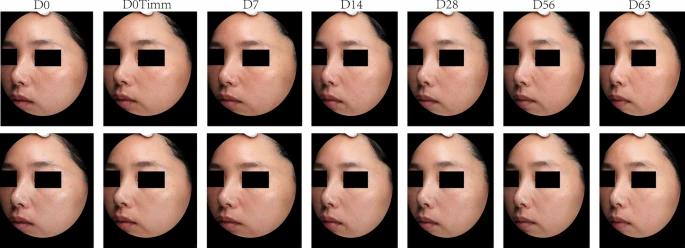
Clinical images of the subjects at different time points in clinical study 2