

Aging is a complex biological process characterized by distinct morphological and physiological changes, driven by a combination of intrinsic and extrinsic factors. Recent scientific inquiry has highlighted alterations in the skin microbiota composition as a significant extrinsic factor contributing to accelerated aging. Research indicates that the abundance of Lactobacillus species, specifically Lactobacillus plantarum (LP), is markedly higher in younger individuals compared to older adults. Because the skin microbiome is essential for maintaining the skin barrier, pH homeostasis, and moisture levels, restoring these microbial populations through probiotics has emerged as a promising solution. While LP has demonstrated antiaging benefits when administered orally or in vitro, its topical efficacy in humans has remained under-explored, often obscured by the moisturizing properties of the oil-based vehicles used in previous studies. Consequently, this study utilized a specialized serum formulation designed for enhanced absorption to isolate and evaluate the direct antiaging potential of topical LP.
Methods
This double-blind, randomized clinical trial evaluated the efficacy of a serum containing Lactobacillus plantarum ATCC8014 against a placebo in 36 female participants over a 12-week period. Researchers quantified various skin parameters using a pH meter, corneometer for hydration, and ELISA for ceramide levels, alongside a skin analyzer to objectively measure wrinkles and pigment density. Participants applied the assigned serum twice daily, with clinical assessments conducted at weeks 2, 4, 8, and 12. Statistical analyses, including the Friedman and Independent t-tests, were employed to compare changes from baseline between the treatment and control groups.
Key Findings
• Optimal Skin pH: The LP serum group experienced a statistically significant reduction in mean skin pH (–0.37 vs. 0.28 in the placebo group), helping restore the skin’s natural acidic environment.
• Enhanced Hydration: Participants using the LP serum showed a median increase in skin hydration of 15.32 AU, significantly higher than the 11.90 AU increase observed in the placebo group.
• Increased Ceramide Production: The treatment group demonstrated a significant rise in mean ceramide levels (15.38 ng/ml), whereas the placebo group showed a decrease (–9.57 ng/ml), suggesting LP promotes ceramide biosynthesis.
• Reduction in Wrinkles: The LP group showed a significant improvement in the wrinkle index, particularly regarding crow’s feet, which became noticeably diminished by week 8 and further reduced by week 12.
• Improved Skin Brightness: While overall melanin index changes were not significant between groups, the LP group showed a statistically significant increase in skin brightness (L value) specifically between weeks 8 and 12.
• Positive Trends in Pigmentation: Although not statistically significant compared to the control, the LP group exhibited early subclinical improvements in pigment distribution and UV spot density.
This research is pioneering as it is the first to explore the use of Lactobacillus plantarum incorporated specifically into a serum vehicle to ensure high active ingredient concentration and optimal absorption. The study successfully demonstrates that topical LP can serve as a potent antiaging intervention by improving the skin’s physical barrier and appearance within a relatively short duration. The future implications of this research suggest a shift toward microbiome-based skincare; however, further studies with larger sample sizes and longer monitoring periods are required to evaluate the long-term sustainability of these effects and the underlying molecular mechanisms.
To understand this, you might think of the skin’s microbiome as a high-performance engine. Over time, the internal “fluids” (like Lactobacillus) deplete, causing the system to overheat and lose efficiency (aging). Applying this LP serum is like providing a precision-engineered synthetic lubricant that restores the engine’s balance, allowing it to run smoothly and stay protected against wear and tear.
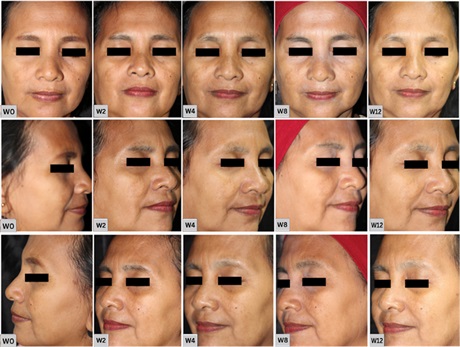
Gradual reduction of hyperpigmented lesions over a 12-week period in a patient treated with Lactobacillus plantarum serum. Representative frontal, left oblique, and right oblique facial photographs are displayed at baseline (W0), and at weeks 2 (W2), 4 (W4), 8 (W8), and 12 (W12).
Link to the study: https://journals.lww.com/jewds/fulltext/2026/01000/the_effectiveness_of_a_microbiome_serum_containing.11.aspx?context=latestarticles