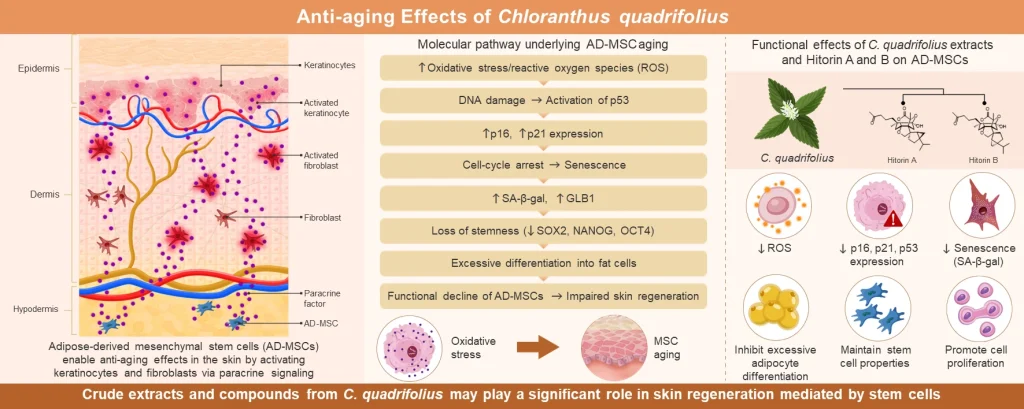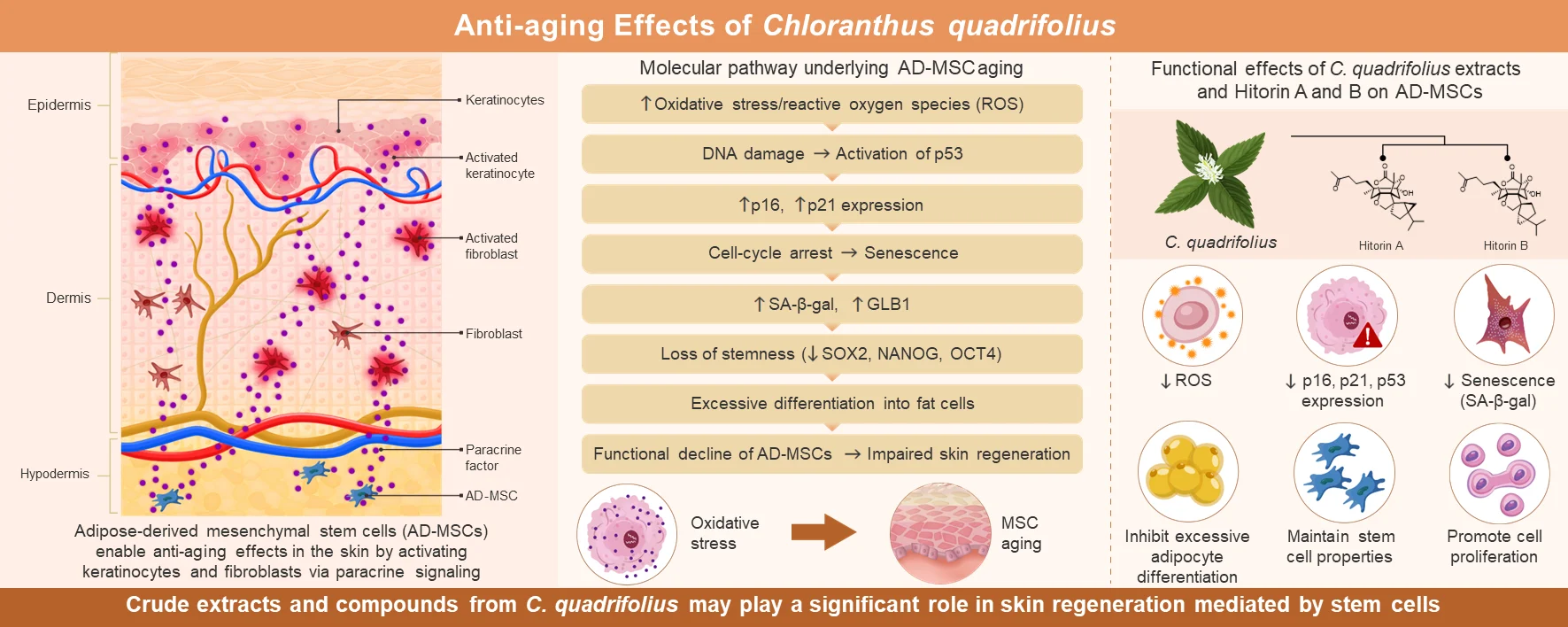

The human skin is constantly subjected to environmental stressors, such as ultraviolet radiation, leading to an unavoidable decline in biological function known as aging. A primary driver of this process is the degenerative change in tissue-specific stem cells, including the inhibition of their mobilization and a decrease in their overall number. Adipose-derived mesenchymal stem cells (AD-MSCs) are critical for skin homeostasis because they can differentiate into skin cells and secrete growth factors that promote wound healing and collagen production. However, oxidative stress and reactive oxygen species (ROS) induce cellular senescence and the loss of stemness, hindering the skin’s regenerative capacity. To address this, researchers investigated Chloranthus quadrifolius, a plant used in traditional medicine, because its extracts had previously shown the ability to promote skin cell proliferation and increase growth factor expression. The study specifically focused on its crude extract and two unique, newly identified C25 terpenoids, hitorin A and hitorin B, as potential solutions for maintaining stem cell function and reversing signs of aging.
Methods
Researchers obtained a crude extract from the aerial parts of C. quadrifolius using 80% ethanol and subsequently isolated hitorins A and B through repeated silica gel chromatography and high-performance liquid chromatography (HPLC). Human AD-MSCs were treated with these substances to evaluate their impact on cell proliferation, lipid accumulation, and stemness marker expression via quantitative PCR and specialized staining. Additionally, senescence was induced in the cells using hydrogen peroxide (H₂O₂) to measure the extracts’ ability to inhibit aging markers, ROS production, and inflammatory cytokine expression.
Key Findings
• Promotion of Cell Proliferation: The crude extract and both hitorins significantly enhanced the proliferation of AD-MSCs, with the strongest effects observed at concentrations between 1 and 3 µg/mL.
• Suppression of Adipogenesis: The treatments significantly inhibited the accumulation of excessive lipid droplets and downregulated adipocyte differentiation genes such as PPARγ and C/EBPα.
• Maintenance of Stemness: Exposure to the extracts increased the expression of essential stem cell markers, including SOX2, NANOG, and OCT4, helping the cells retain their regenerative potential.
• Anti-Aging Activity: The compounds significantly reduced senescence-associated β-galactosidase activity and suppressed the expression of aging-related genes like p16, p21, and p53 under oxidative stress.
• Antioxidant and Anti-Inflammatory Effects: The research demonstrated a marked reduction in intracellular ROS production and a decrease in the expression of inflammatory markers IL-6 and IL-8.
The novelty of this research lies in being the first to identify the biological activities of hitorin A and B, which possess an unprecedented hexacyclic skeleton, specifically regarding their effects on AD-MSCs for cosmetic use. By demonstrating that these compounds can simultaneously suppress unwanted fat differentiation and maintain the “youthful” stemness of cells, the study highlights their potential as high-performance ingredients for skin rejuvenation. Future implications include the development of advanced anti-aging formulations, though further clinical evaluations, stability tests, and signaling pathway analyses are required to fully transition these findings into commercial cosmetic products.
To visualize this, think of AD-MSCs as a skilled construction crew responsible for maintaining a building (the skin). As time passes, the crew members either retire (senescence) or start performing different, less helpful jobs (adipocyte differentiation). The C. quadrifolius extract acts like a specialized training and wellness program that prevents the crew from retiring and keeps them focused on their original maintenance tasks, ensuring the building remains strong and resilient.
Link to the study: https://www.mdpi.com/2079-9284/13/1/9