
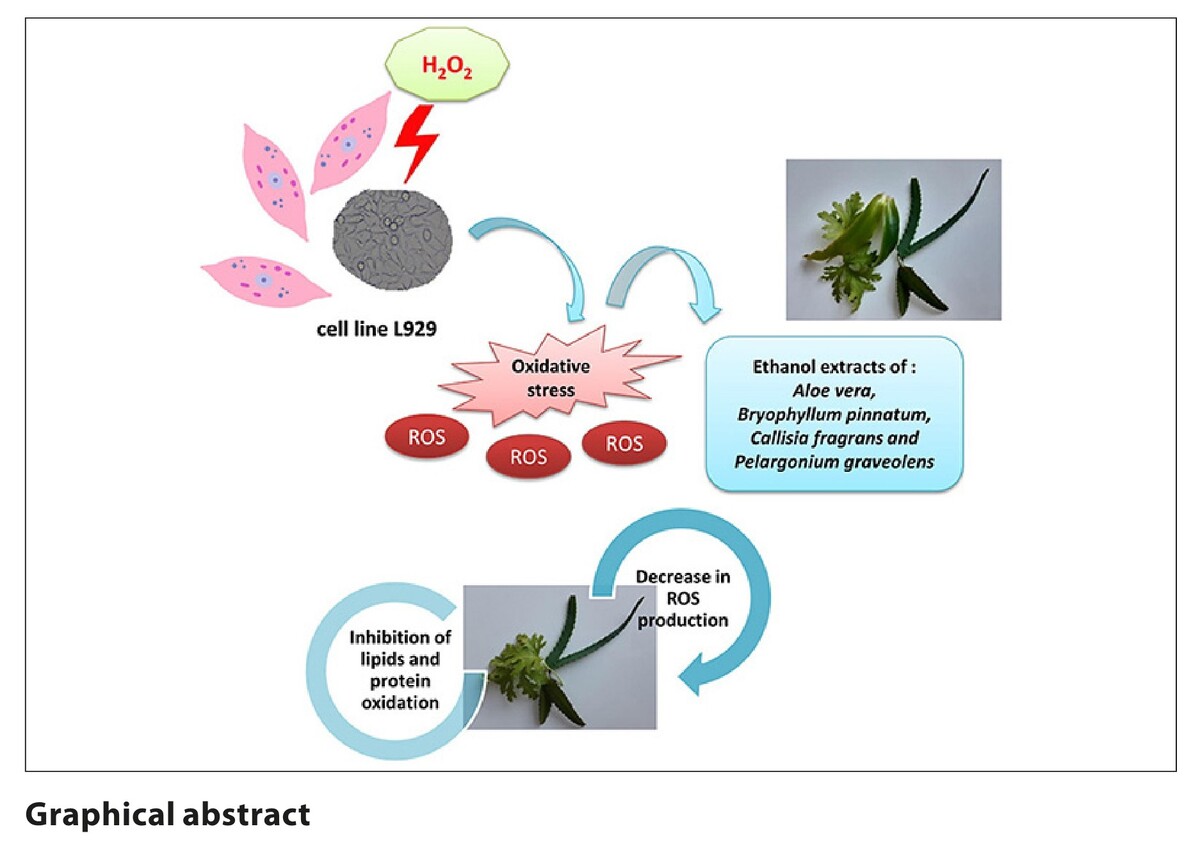

Oxidative stress in the skin is primarily triggered by external factors such as ultraviolet (UV) radiation, pollutants, and chemicals, as well as internal factors like stress and poor nutrition. These factors lead to the production of reactive oxygen species (ROS), which cause inflammation, degrade collagen fibers, and contribute to skin aging and diseases such as atopic dermatitis and psoriasis. To combat these issues, researchers have turned to traditional medicinal plants as potential solutions because they are rich in bioactive substances—including flavonoids, vitamins, and antioxidant enzymes—that may inhibit lipid and protein oxidation. This study specifically investigates Aloe vera, Bryophyllum pinnatum, Callisia fragrans, and Pelargonium graveolens, which are widely used in folk medicine but require scientific validation regarding their protective effects on skin fibroblasts.
Methods
Researchers utilized an in vitro model of mouse L929 fibroblastic cells, inducing oxidative stress with 100 µM hydrogen peroxide (H2O2). Ethanol extracts from biennial plants were applied in three concentrations (3.5 g/ml, 1.75 g/ml, and 0.875 g/ml) and incubated for 24 hours. The study measured antioxidant capacity (FRAP), lipid peroxidation (MDA), and protein oxidation (carbonyl groups) through spectrophotometric assays. Statistical analysis was conducted using one-way ANOVA to determine the significance of the results compared to the H2O2-treated control group.
Key Findings
• Significant antioxidant activity was confirmed for Aloe vera, Bryophyllum pinnatum, and Pelargonium graveolens, which effectively decreased ROS production and inhibited cellular damage.
• Cell lysates treated with Aloe vera, B. pinnatum, and P. graveolens showed a notable decrease in ferric reducing antioxidant power (FRAP) and malondialdehyde (MDA) concentrations.
• Aloe vera and P. graveolens extracts statistically lowered the concentration of protein carbonyl groups, indicating a reduction in protein oxidation.
• Unlike the other plants, Callisia fragrans exhibited pro-oxidant behavior, evidenced by a significant increase in protein carbonyl groups and a higher FRAP concentration at high doses.
• Aloe vera, B. pinnatum, and P. graveolens were found to improve the proliferation of fibroblasts after they were damaged by oxidative stress.
The novelty of this research lies in its being the first study to evaluate the antioxidant properties of Callisia fragrans, revealing unexpected pro-oxidant trends that challenge its traditional use in folk medicine. Conversely, the study validates the therapeutic potential of Aloe vera, Bryophyllum pinnatum, and Pelargonium graveolens as protective agents for skin cells. Future implications suggest these three plants can be safely integrated into external skin care products for treating cutaneous diseases. However, the results regarding Callisia fragrans highlight a critical need for further investigation into its redox-disrupting effects and the conditions under which it might exhibit pro-oxidant behavior.
Link to the study: https://www.aaem.pl/Do-Aloe-vera-Bryophyllum-pinnatum-Callisia-fragrans-and-Pelargonium-graveolens-used,216269,0,2.html