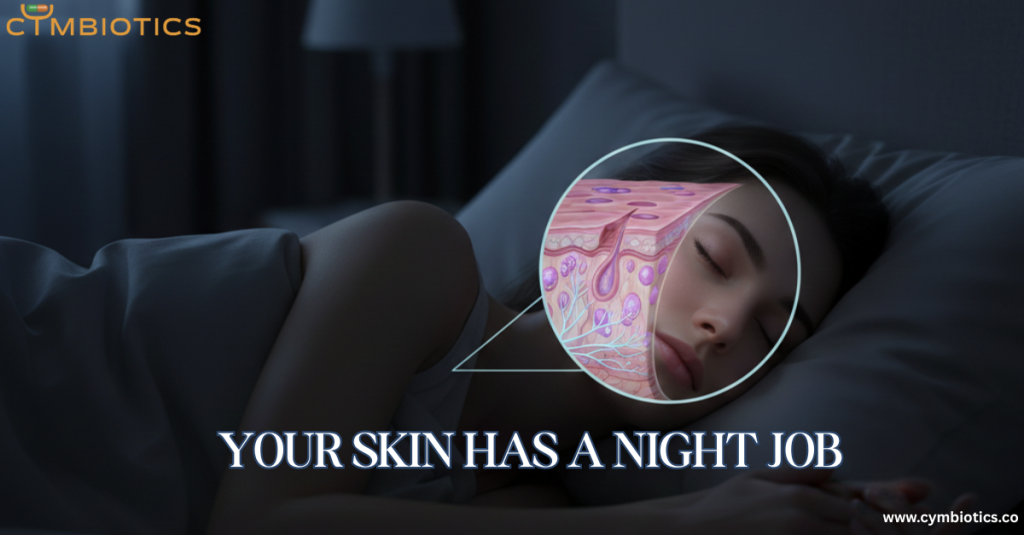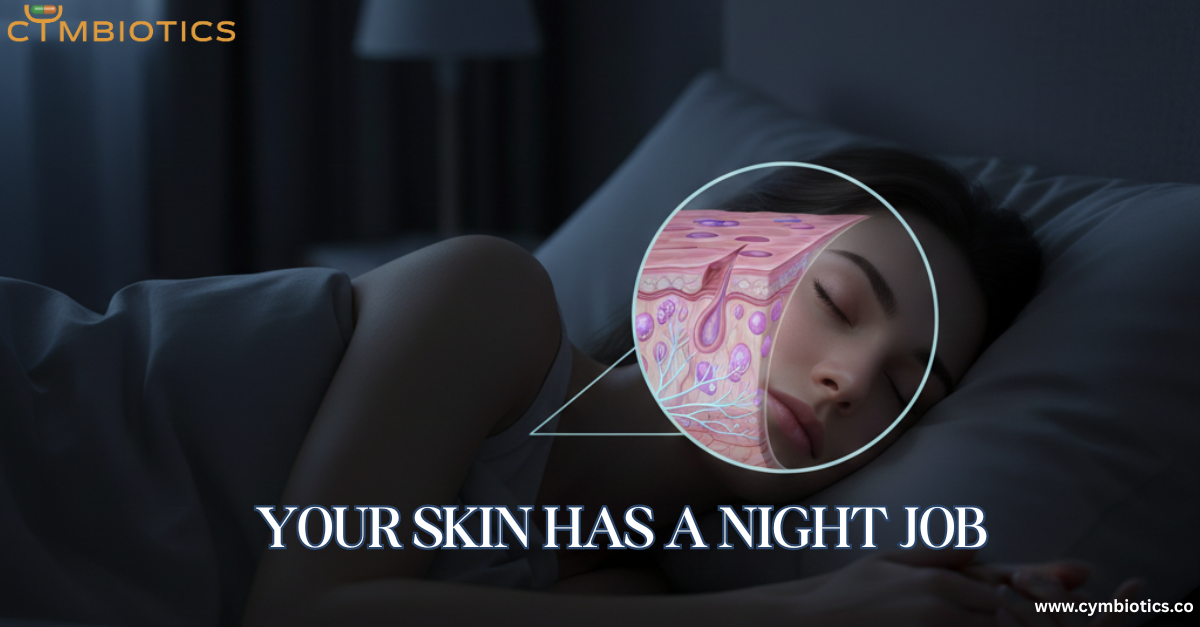

Night is often framed as a period of rest. Heart rate drops, muscle activity reduces, and external exposure to environmental stressors decreases. For the skin, however, nighttime is not passive recovery. It is an active biological phase marked by repair, reorganization, and recalibration.
Skin follows circadian rhythms just like other organs. These internal clocks regulate when cells divide, when barriers are reinforced, and when immune surveillance is most active. Understanding what happens after lights out reframes skin not as a surface that needs constant intervention, but as a system that already knows when and how to heal.
Circadian Rhythm: Skin Runs on a Clock
Keratinocytes, fibroblasts, melanocytes, and immune cells in the skin all express circadian clock genes. These genes synchronize cellular activity with the day–night cycle, influencing DNA repair, oxidative stress responses, and epidermal renewal.
At night, skin cell proliferation increases. DNA damage accumulated during daytime ultraviolet exposure is more actively repaired. Enzymes involved in antioxidant defense and cellular cleanup show heightened nocturnal activity. This biological timing ensures that repair processes occur when exposure to new insults is minimal.
When circadian rhythms are disrupted, through chronic sleep deprivation, irregular light exposure, or shift work skin repair becomes inefficient. Clinically, this can appear as dullness, delayed healing, increased sensitivity, and accelerated signs of aging.
Barrier Repair: Rebuilding the Defensive Wall
The stratum corneum functions as the skin’s primary barrier, regulating water loss and preventing pathogen entry. During the day, this barrier is under constant assault from temperature changes, pollution, friction, and ultraviolet radiation.
At night, transepidermal water loss naturally increases. While often interpreted as vulnerability, this increase is part of a controlled biological process. Elevated permeability facilitates lipid synthesis and reorganization within the barrier. Ceramides, cholesterol, and fatty acids are actively produced and arranged to restore structural integrity.
Barrier recovery during sleep is essential for maintaining hydration balance and preventing chronic inflammation. When this nocturnal rebuilding is compromised, the barrier remains fragile, leading to irritation, dryness, and increased reactivity.
Cell Turnover: Epidermal Renewal After Dark
Epidermal cell turnover is not uniform throughout the day. Mitosis in basal keratinocytes peaks during nighttime hours. This ensures that damaged or aged cells are replaced efficiently, supporting surface renewal and barrier continuity.
Desquamation, the shedding of corneocytes from the skin surface, is also influenced by circadian timing. Enzymatic processes that regulate cell separation become more active overnight, allowing orderly renewal rather than chaotic disruption.
This rhythm explains why skin often appears smoother and more resilient after consistent, adequate sleep, and why chronic sleep loss visibly accelerates signs of fatigue and aging.
Microcirculation: Nighttime Nutrient Delivery
Cutaneous blood flow follows a daily rhythm. Peripheral vasodilation increases during sleep, enhancing oxygen and nutrient delivery to the skin. This improved microcirculation supports metabolic repair, collagen synthesis, and waste removal.
Enhanced blood flow also facilitates communication between skin cells and systemic signals, including hormones involved in growth and repair. Growth hormone release during deep sleep further supports tissue regeneration and structural maintenance.
Impaired sleep disrupts this vascular rhythm, reducing the efficiency of nutrient exchange and slowing recovery processes.
Immune Activity: Surveillance and Reset
The skin is an active immune organ. Langerhans cells, macrophages, and resident T cells continuously monitor for threats. At night, immune activity shifts from immediate defense to regulation and repair.
Inflammatory signaling decreases, allowing tissue recovery without excessive immune activation. At the same time, antigen processing and immune memory formation continue, strengthening long-term resilience.
Chronic circadian disruption alters immune balance in the skin, contributing to heightened sensitivity, delayed wound healing, and increased susceptibility to inflammatory conditions.
The Cymbiotics Perspective
Recognizing skin as a nocturnal repair organ changes how topical science should approach formulation and delivery. Skin does not need to be overridden; it needs to be supported.
At Cymbiotics, skin biology is observed rather than simplified. Technologies such as Cetosomes™ and FADD™ are developed as support systems, designed to respect circadian processes, reinforce barrier recovery, and work in alignment with the skin’s natural repair window.
This approach reflects a broader commitment to enhancing health and well-being through continuous innovation and science-backed formulations, grounded in how skin actually functions especially when it is given the space to do its night job.
References
- The circadian clock and diseases of the skin – Duan J., Greenberg E.N., Karri S.S., Andersen B., FEBS Letters, 2021.
- Circadian rhythms in skin barrier function in humans – Yosipovitch G., Xiong G.L., Haus E., Sackett-Lundeen L., Ashkenazi I., Maibach H.I., Journal of Investigative Dermatology, 1998.
- Circadian rhythm and the skin: A review of the literature – Farage M.A., Miller K.W., Maibach H.I., Journal of Dermatological Science, 2019.
- Circadian protection against bacterial skin infection by epidermal CXCL14-mediated innate immunity – Nguyen K.D., Fentress S.J., Qiu Y., Yun K., Cox J.S., Chawla A., Journal of Investigative Dermatology, 2022.
- Circadian rhythms in immunity – Curtis A.M., Bellet M.M., Sassone-Corsi P., O’Neill L.A.J., Annual Review of Immunology, 2020.