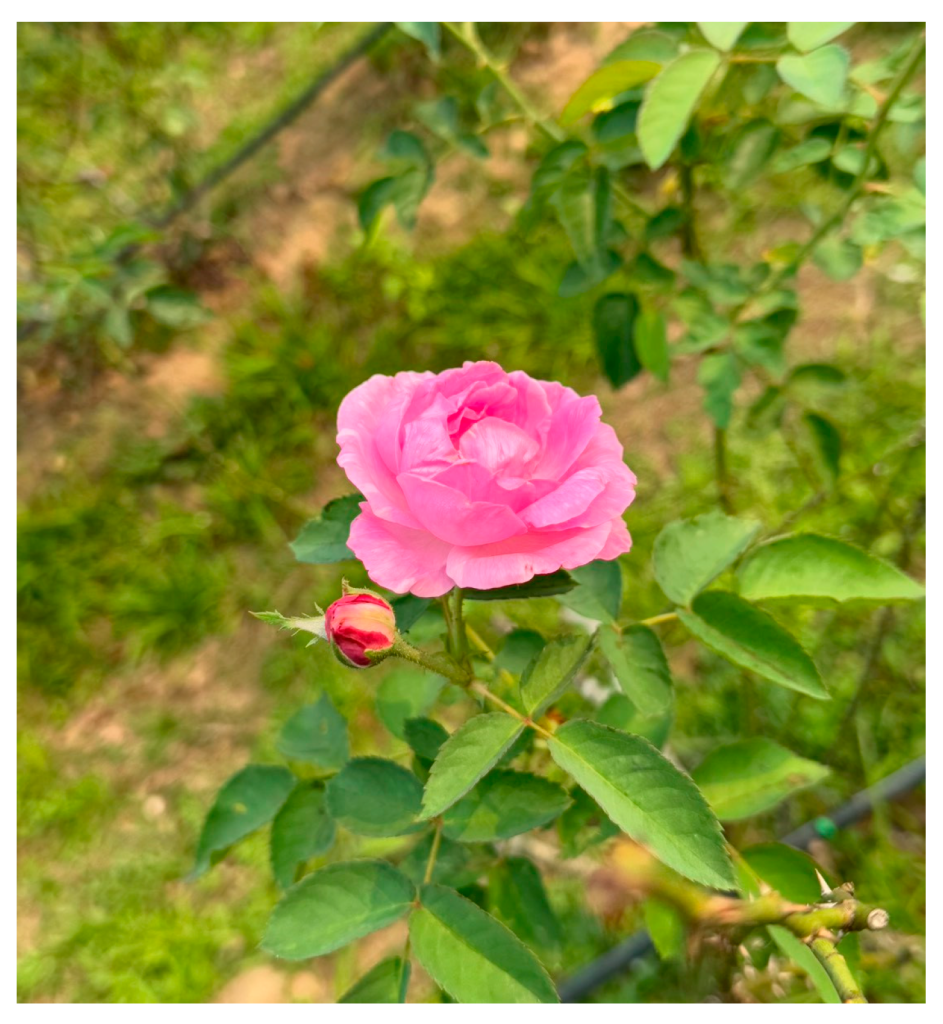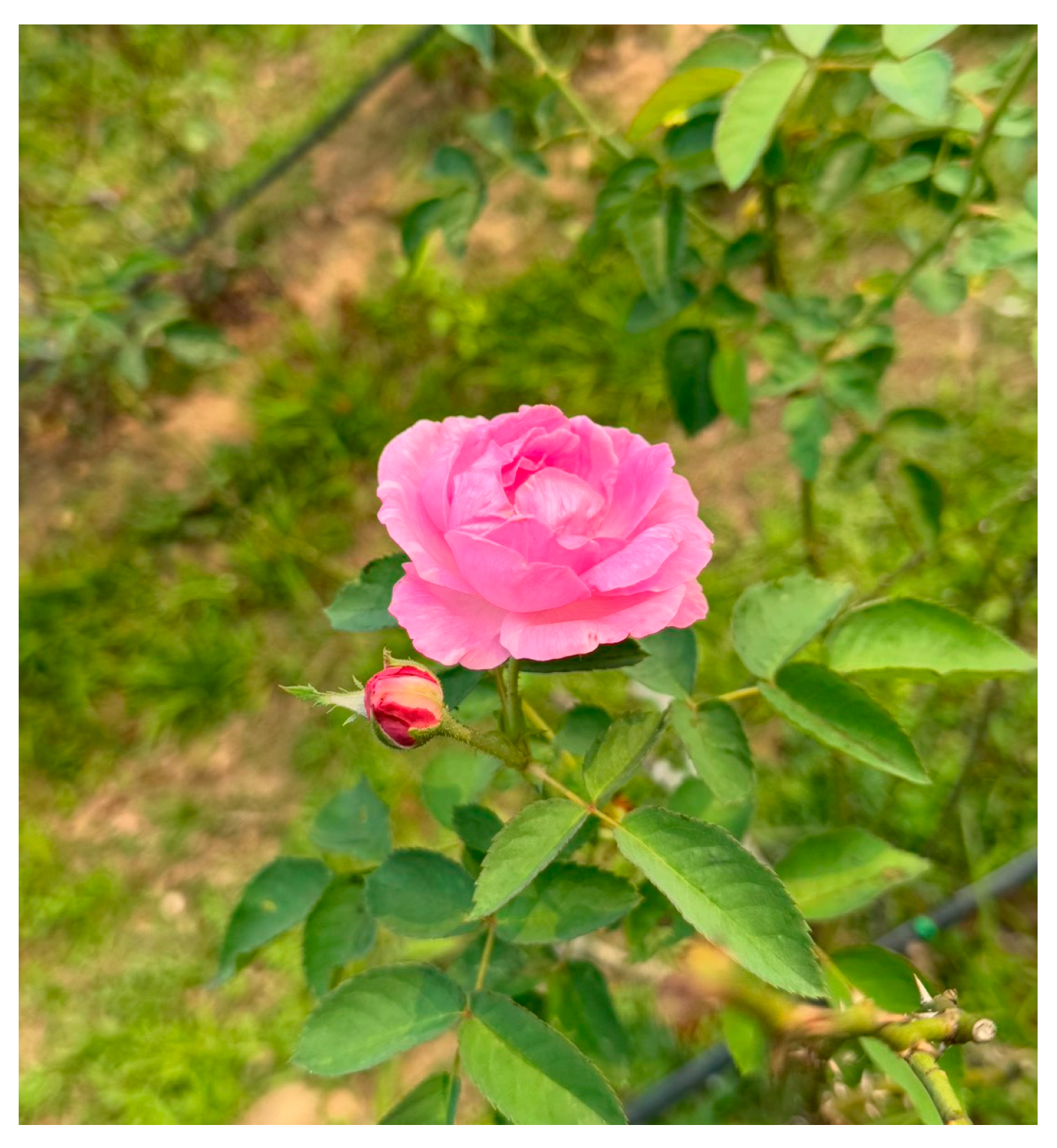

The industrial utilization of Damask rose (Rosa damascena) petals is currently hindered by conventional extraction practices that rely on high volumes of volatile organic solvents, energy-intensive processes, and extended extraction times. These traditional methods often lead to the thermal degradation of sensitive bioactive compounds and necessitate additional, costly purification steps to remove toxic solvents before the extracts can be used in cosmetics. To address these issues, ultrasound-assisted extraction (UAE) combined with polyol-based solvents like butylene glycol was proposed as a “green” solution. UAE utilizes acoustic cavitation to disrupt plant cell walls and accelerate mass transfer at lower temperatures, while polyols serve as safe, non-volatile, “ready-to-use” solvents that can be incorporated directly into cosmetic formulations without the need for energy-intensive evaporation.
Methods
Bioactive compounds were extracted from dried R. damascena petal powder using a 20 kHz probe ultrasonicator at room temperature. The study systematically evaluated several parameters, including solvent type (e.g., glycerin, propylene glycol, butylene glycol), solvent concentration, extraction duration, and solid–liquid ratios. Optimal conditions were identified as 40% butylene glycol with a 15-minute treatment and a 1:50 g/mL solid–liquid ratio. Finally, the extracts were characterized using LC-QTOF-ESI-MS/MS profiling and various antioxidant assays (DPPH and FRAP).
Key Findings
• Superior Flavonoid Recovery: Butylene glycol-based UAE (Bu-UAE) yielded a total flavonoid content (TFC) of 51.26 ± 1.75 mg QE/g, which was significantly higher than the yield from ethanol-based UAE.
• Enhanced Antioxidant Activity: Bu-UAE exhibited the strongest DPPH radical scavenging activity and the highest FRAP values compared to both ethanol-based UAE and conventional shaking methods.
• Diverse Phytochemical Profile: LC-QTOF-ESI-MS/MS analysis confirmed that while all methods share a core phenolic profile, Bu-UAE selectively enriched additional galloyl derivatives and conjugated flavonoids.
• Detection of Complex Phenolics: The use of ultrasound with butylene glycol uniquely enabled the detection of less polar phenolics (such as embelin and triptophenolide) that were absent in shaking-derived extracts.
• Process Efficiency: Optimal extraction was achieved in just 15 minutes, reaching an equilibrium state much faster than conventional 24-hour shaking methods.
The novelty of this research lies in its status as the first systematic development of a UAE protocol using polyol-based solvents specifically for R. damascena petals. By replacing volatile solvents with butylene glycol, the study successfully aligns extraction efficiency with green chemistry principles, producing high-quality, antioxidant-rich extracts that are immediately formulation-ready. The future implications of this work include a significant reduction in industrial energy consumption and solvent waste. Subsequent research should focus on the stability of these extracts in topical systems and their biological performance in clinical cosmetic applications to support large-scale industrial adoption.
Link to the study: https://www.mdpi.com/2079-9284/13/1/34