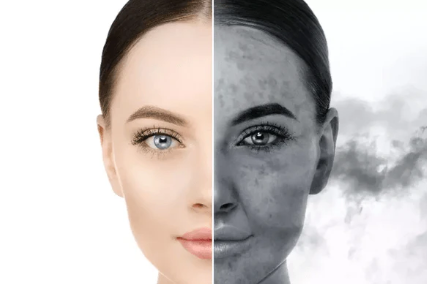
Urban air pollution, characterized by elevated levels of particulate matter (PM), poses a significant threat to skin health. Exposure to PM induces oxidative stress, inflammation, and structural skin damage, contributing to premature aging and reduced skin integrity. PM, containing harmful substances like PAHs, can penetrate the skin, generate reactive oxygen species (ROS), and activate inflammatory pathways, leading to increased levels of pro-inflammatory cytokines (e.g., IL-6), matrix metalloproteinases (e.g., MMP-1), and decreased levels of collagen and hyaluronic acid (HYA). Given the severe toxicity of PM, there is a growing focus on developing effective anti-pollution treatments. This study considered two distinct approaches: culture medium-based treatments (indomethacin, L-ascorbic acid, and rapamycin) to mimic systemic absorption and target internal effects, and topical treatments (retinol and epigallocatechin gallate (EGCG)) for direct surface protection against PM exposure. These strategies were selected for their known antioxidant, anti-inflammatory, and barrier-strengthening properties, suggesting potential in mitigating PM-induced skin damage.
Methods:
Human ex vivo skin models were employed to simulate real-world PM exposure and treatment conditions. Skin explants were topically exposed to PM, while culture medium-based treatments were administered to the underlying medium and topical treatments were applied directly to the skin surface. Various biochemical markers, including hydrogen peroxide (H2O2), interleukin 6 (IL-6), matrix metalloproteinase 1 (MMP-1), cyclooxygenase-2 (COX-2), prostaglandin E2 (PGE-2), collagen type I, and hyaluronic acid (HYA), were assessed in the treated tissues and culture media. Tissue viability was evaluated using the MTT assay, and collagen and COX-2 expression were analyzed through staining techniques. Statistical analyses were performed to determine the significance of the observed effects.
Key Findings:
•PM exposure induced significant skin damage, evidenced by increased H2O2, IL-6, MMP-1, COX-2, and PGE-2 levels, along with decreased collagen type I and HYA.
•Culture medium-based treatments showed varied protective effects:
◦Indomethacin, L-ascorbic acid, and rapamycin significantly reduced MMP-1 levels and improved collagen type I expression2.
◦L-ascorbic acid and rapamycin lowered PGE-2 and COX-2 expression, while indomethacin reduced COX-2 but not PGE-2.
◦L-ascorbic acid uniquely reduced IL-6 secretion.
◦Indomethacin reduced H2O2 levels, while L-ascorbic acid and rapamycin did not show significant reductions.
◦Indomethacin and rapamycin restored HYA levels, whereas L-ascorbic acid had no significant effect.
•Topical treatments also demonstrated protective effects:
◦Retinol and EGCG effectively reduced H2O2 and MMP-1 levels and restored collagen type I.
◦Retinol further reduced IL-6 levels, highlighting its anti-inflammatory role.
◦Both retinol and EGCG brought MMP-1 levels below baseline.
This research provides valuable insights into the harmful effects of PM on human skin and highlights the complementary protective effects of culture medium-based and topical anti-pollution treatments using an ex vivo skin model. The study’s novelty lies in its direct comparison of systemic-like and topical delivery of various anti-pollution compounds in mitigating PM-induced damage across multiple markers of oxidative stress, inflammation, and structural integrity. The findings suggest that culture medium-based treatments could be promising for systemic or transdermal delivery of active compounds, while topical agents are suitable for daily skincare routines to prevent pollutant-induced skin aging. Future research should focus on optimizing treatment protocols, exploring synergistic combinations, and validating the efficacy of these approaches under real-world conditions and in in vivo studies to enhance skin protection in polluted environments.
Link to the study: https://www.mdpi.com/2079-9284/12/2/64