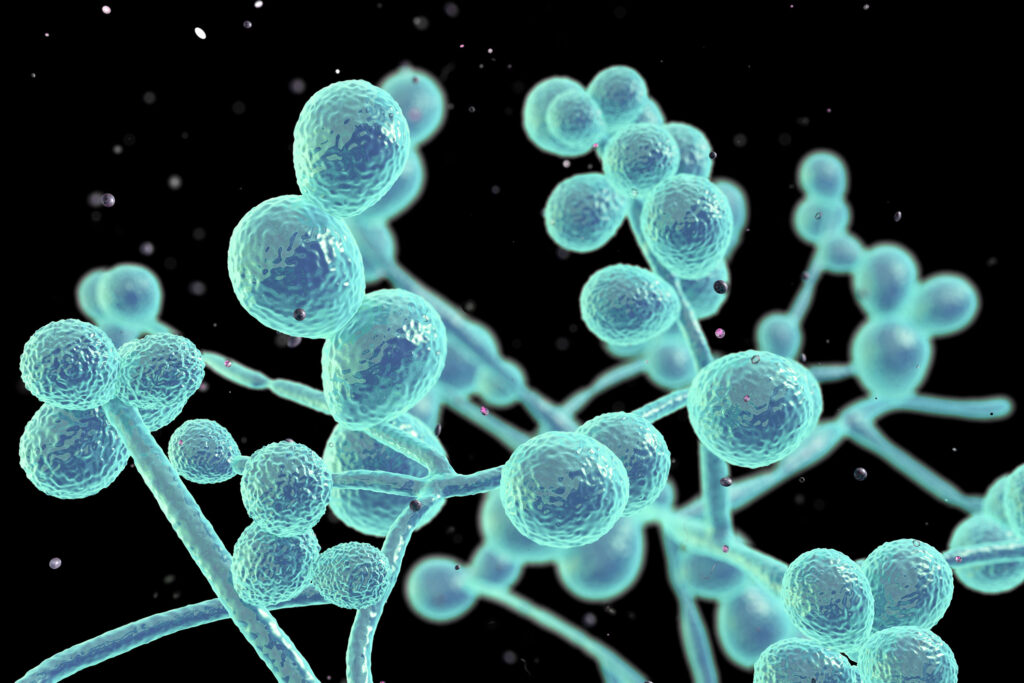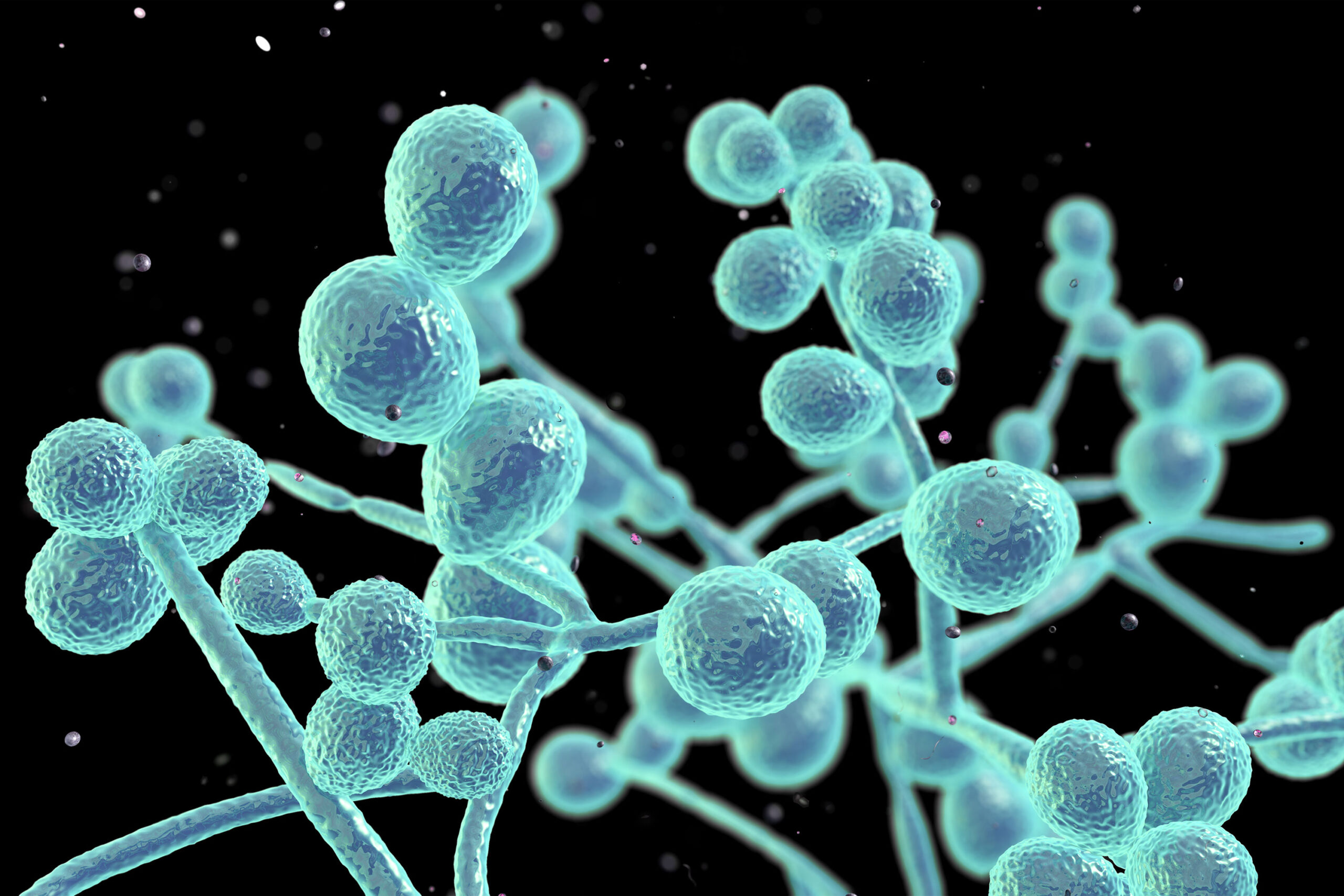

Maintaining microbial quality in cosmetic products is essential to protect consumer health. Water-rich formulations are especially susceptible to contamination by microbes like Candida albicans, a polymorphic fungus that can become pathogenic, particularly in immunocompromised individuals. Contamination not only affects product safety but also reduces shelf life and product performance.
Traditional detection methods—such as culture-based plating—are widely used but come with limitations. They are time-consuming (taking 24–72 hours), may not detect viable but non-culturable (VBNC) organisms, and can yield inaccurate results due to interference from non-target organisms when using non-selective media.
Fluorescence In Situ Hybridization (FISH) offers a faster, more specific, and culture-independent approach by using fluorescent probes that bind to microbial nucleic acids. This study developed and validated a novel DNA-FISH probe—Cad202—for the rapid, formamide-free detection of Candida albicans in cosmetics.
Methods
The Cad202 probe targets the 26S rRNA of C. albicans. Its design was based on in silico predictions of specificity and efficiency, optimized to perform without formamide (a toxic reagent traditionally used in FISH). Validation included:
- In silico specificity analysis
- Flow cytometry-based hybridization (flow-FISH) with C. albicans and non-target organisms (e.g., C. krusei, S. cerevisiae, W. anomalus, E. coli, and S. aureus)
- Testing in a cosmetic tonic matrix artificially contaminated with C. albicans
Key Findings
- High Probe Specificity: Cad202 showed perfect sequence identity with 494 C. albicans entries and no cross-reactivity with non-target sequences.
- Efficient Hybridization: Under 0% formamide conditions, the probe achieved 99.68% hybridization efficiency in pure cultures, with strong fluorescence signals (~25,000 a.u.).
- Low Cross-Reactivity: Minimal hybridization was observed with non-target yeasts (e.g., 4.7% for C. krusei), and fluorescence was significantly weaker compared to C. albicans. Bacteria showed negligible signal.
- Formamide-Free Success: Cad202 was optimized to work without formamide, enhancing safety and operational ease in laboratory and industrial settings.
- Performance in Real Samples: The probe effectively detected C. albicans in a cosmetic tonic, with slightly reduced efficiency (88.4%), likely due to formulation-related interference.
The Cad202 probe offers a rapid, specific, and safe alternative to traditional microbial testing in cosmetic manufacturing. Its ability to function effectively under formamide-free conditions eliminates the need for hazardous reagents, streamlining the protocol for routine use.
Combined with flow cytometry, Cad202 enables quantifiable, single-cell resolution, making it well-suited for early-phase contamination screening and source tracking. While conventional challenge tests remain vital for regulatory validation, this method provides an important complementary tool for routine quality control—especially where time, safety, and precision are critical.
Future applications may include integration into automated systems and expanded testing across diverse formulations. Overall, the Cad202 DNA-FISH method represents a significant step forward in improving microbial monitoring, ensuring product safety, and enhancing regulatory compliance in the cosmetics industry.
Link to the study: https://www.mdpi.com/2079-9284/12/3/115