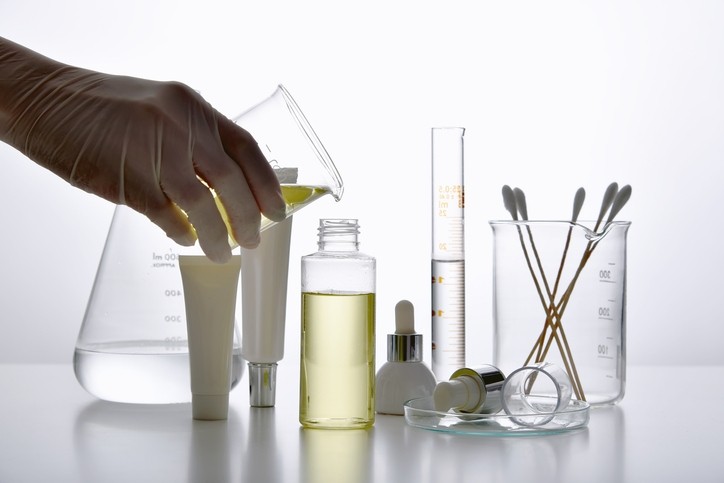
The cosmetics industry has seen a significant expansion in the market for personalized cosmeceutical preparations, which offer enhanced benefits over conventional cosmetics by integrating bioactive ingredients with clinically proven therapeutic effects. These next-generation topical platforms are specifically designed to deliver bioactive molecules directly to the skin, targeting particular dermatological conditions for both aesthetic improvement and functional skin health support. Consumers are increasingly seeking products tailored to their unique skin needs, driving the growth of this niche segment.
A key innovation in this field is the incorporation of active substances, known for their therapeutic efficacy, into moisturizing and anti-aging cream bases. Among these, N-acetylcysteine (NAC) is considered particularly innovative due to its multifunctional properties, acting as a potent antioxidant, anti-inflammatory agent, and a precursor of glutathione. While both NAC and glutathione possess strong antioxidant properties, NAC presents distinct advantages for topical cosmetic formulations, including higher chemical stability, superior skin penetration due to its lower molecular weight, greater formulation versatility, and more favorable cost and regulatory profiles compared to glutathione. Despite NAC’s well-documented pharmacological applications and growing interest for its role in anti-aging, barrier repair, and oxidative stress protection, its use in topical cosmetics has been relatively limited, partly due to formulation challenges related to its stability, bioavailability, and characteristic unpleasant odor.
This research aimed to address these challenges by developing and evaluating novel multi-active cosmeceutical formulations. The study focused on creating stable semisolid preparations, specifically creams and emulgels, that effectively incorporate NAC alongside other beneficial bioactive components such as arginine HCl, Blainvillea acmella flower extract, tocopherol, and hyaluronic acid. A crucial aspect was to ensure these formulations not only delivered therapeutic potential but also exhibited excellent sensory performance, acceptability, and skin tolerance, which are vital for consumer adherence and overall product success. The superior therapeutic profile of emulsified systems for delivering active ingredients into deeper skin layers guided the development of primarily emulsion-type cream formulations over emulgels.
Methods
The study involved the development of four anti-wrinkle formulations: three emulsion-type creams (EG01, EG02, EG03) and one emulgel (EG04). These formulations incorporated a unique combination of active ingredients, including N-acetylcysteine, arginine HCl, Blainvillea acmella flower extract, tocopherol, and hyaluronic acid, with varied emulsifiers used for the cream formulations. All formulations underwent preliminary stability testing through centrifugation at 4000 rpm over 90 days to identify physically stable candidates. The stable formulations were then assessed for organoleptic characteristics and pH. Finally, a comprehensive sensory analysis was conducted by a trained panel of female assessors, evaluating attributes such as spreading, absorption, shininess, stickiness, greasiness, and smoothness, followed by an in vivo screening test on female human volunteers aged 50–65 years to evaluate skin acceptability and tolerance over 28 consecutive days.
Key Findings
• Stability: Only three out of the four formulations (EG01, EG02, and EG03) demonstrated excellent physical stability, remaining homogeneous through 90 days post-preparation after centrifugation. The emulgel formulation (EG04) showed signs of phase separation at 60 and 90 days and was subsequently excluded from further analysis.
• Organoleptic Properties and pH: The stable cream formulations (EG01, EG02, EG03) maintained a consistent milky-white appearance and skin-compatible pH values (within 4.5–6.5) over the 90-day storage period, indicating good physical and chemical stability.
• Sensory Performance: Sensory analysis revealed appealing properties across the stable formulations, including good spreading behavior, rapid absorption, minimal stickiness and greasiness, and high smoothness. EG01 and EG03 exhibited superior overall sensory profiles, differing mainly in shininess and greasiness, both demonstrating high smoothness. The significant presence of active ingredients like Arginine and N-acetylcysteine was noted to act as sensory enhancers, contributing to lower shininess, greasiness, and stickiness, and improving smoothness. EG02, however, presented less favorable sensory outcomes and was therefore excluded from in vivo testing.
• Skin Tolerability and Acceptability: In vivo testing conducted on female human volunteers (aged 50–65 years, Fitzpatrick skin types II–IV) for 28 days showed that both EG01 and EG03 formulations achieved 100% acceptability and tolerance. No new or worsening clinical signs, irritation, or discomfort were observed or reported by the subjects.
The future implications of this research are substantial. The promising formulations, EG01 and EG03, lay a strong foundation for developing advanced anti-aging, barrier repair, and oxidative stress protection skincare products. However, comprehensive long-term and accelerated stability testing, rheological profiling, chemical degradation analysis, microbiological evaluation, and packaging compatibility assessments are necessary to fully determine their shelf life and ensure regulatory compliance before market introduction. Furthermore, parts of the presented formulation are intended for inclusion in a future patent application, underscoring the innovative potential of this work. This study demonstrates that effective and well-accepted cosmeceuticals must prioritize both therapeutic efficacy and a favorable sensory experience to support user adherence and perceived effectiveness.
Link to the study: https://www.mdpi.com/2079-9284/12/5/195