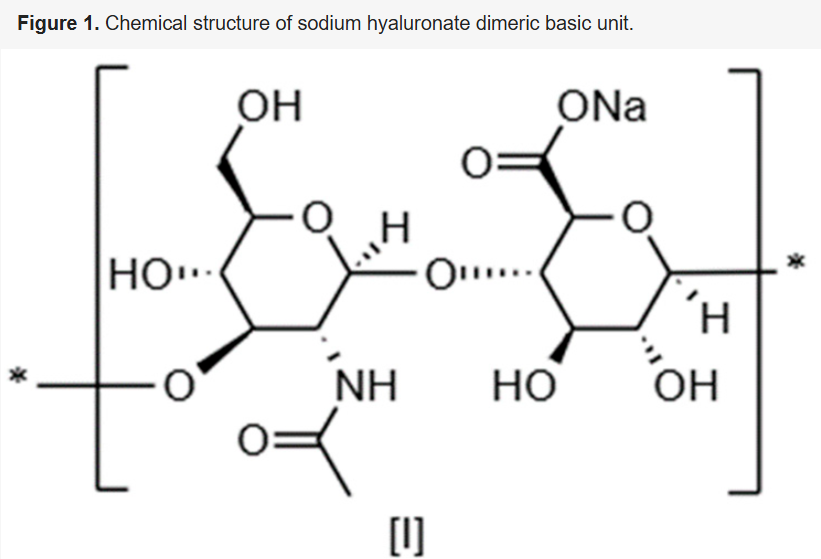
Hyaluronic acid (HA) is an essential linear, non-sulfated polysaccharide found abundantly in human skin, where it plays a critical structural role in the extracellular matrix, helping to maintain skin plumping and hydration. Beyond its structural function, HA is recognized for modulating skin homeostasis, including cell proliferation, migration, and inflammation. In cosmetic applications, HA is widely valued for its moisturizing and anti-aging properties.
The biological effects of HA are highly dependent on its molecular weight. While high-molecular-weight HA (HMW-HA, >1000 kDa) typically does not cross the stratum corneum (SC), lower molecular weights are known to penetrate deeper into the skin. Low-molecular-weight HA (LMW-HA) and HA oligomers (o-HAs, often below 10 kDa) have shown promising moisturizing, anti-aging, and anti-inflammatory activities, sometimes exceeding those of HMW-HA. However, although HA ingredients are frequently utilized in over 600 formulations, comprehensive safety data, particularly case reports following topical application, are sometimes lacking.
The potential solution explored in this research was the development of an extra-low-molecular-weight HA (ExLMW-HA) of 3 kDa. This specific size was chosen because previous studies have indicated that o-HAs below 10 kDa are capable of passing through the SC barrier and reaching the living layers of the epidermis and dermis. Given this enhanced skin permeation ability, rigorous studies were required to ensure the molecule’s safety and tolerance when used in topical cosmetic applications.
Methods
This study utilized in vitro and ex vivo models to evaluate the skin tolerance and safety profile of the 3 kDa sodium hyaluronate oligosaccharide (ExLMW-HA). Skin penetration was assessed using Raman spectroscopy imagery on human skin explants. The inflammatory potential was evaluated by quantifying pro-inflammatory cytokines (including TNF-α, IL-1β, and IL-1α) released in the culture medium of skin explants, both under basal conditions and when stressed with PMA. Additionally, four predictive in vitro toxicology assays—the Keratinosens™ assay and kDPRA (sensitization), the Ames’ test (mutagenicity), and the micronucleus test (genotoxicity)—were performed to predict the overall safety for cosmetic use.
Key Findings
• The ExLMW-HA molecule successfully permeated the skin following topical application, crossing the stratum corneum and penetrating down to the living epidermis; detection of a spot at 100 µm also suggested a possible interaction with the dermal compartment.
• The oligosaccharide did not induce the release of pro-inflammatory cytokines (TNF-α, IL-1β, IL-1α, CXCL2, CCL3, or IL-15) under either basal or stressed (PMA-treated) conditions, suggesting it does not trigger an inflammatory response.
• A histological study revealed no visible negative morphological impacts on skin explants, even at a high concentration (10 mg/mL) applied over five days; specifically, no edema, necrosis, or modification of epidermal thickness was observed.
• ExLMW-HA was not predicted to be a skin sensitizer, yielding negative results in both the KeratinoSens™ and kinetic Direct Peptide Reactivity Assay (kDPRA).
• The substance was found to be non-mutagenic and non-pro-mutagenic in the Ames’ test across all tested strains (including Salmonella typhimurium and Escherichia coli) and conditions.
• The in vitro micronucleus assay also confirmed that ExLMW-HA is not predicted to be genotoxic, as it did not induce a statistically significant increase in micronucleated cells in human lymphocytes.
This research successfully provided an in vitro and ex vivo assessment of the safety and tolerance of a 3 kDa sodium hyaluronate (ExLMW-HA) designed for topical cosmetic applications. The novelty of this work lies in the comprehensive safety evaluation applied specifically to this extra-low molecular weight HA oligosaccharide, which was confirmed to penetrate deep into the skin’s living epidermis. This is crucial because lower molecular weights are desired for their functional benefits (moisturizing, anti-aging, anti-inflammatory properties) but require stringent safety checks due to their ability to interact with cells beneath the stratum corneum.
The robust predictive tests confirmed that ExLMW-HA is considered safe for topical use at the tested dosage. The future implications of this work involve continuing the research at the clinical level to further confirm its safety and, crucially, to fully determine its specific cosmetic benefits in human trials. Furthermore, comparative studies on skin penetration across various HA sizes under identical experimental conditions would enhance the understanding of how this extra-low molecular weight ExLMW-HA functions relative to its counterparts.
The confirmed safety and effective skin permeation of this 3 kDa HA suggest it acts as a key that successfully unlocks the lower layers of the skin, offering a stable foundation upon which cosmetic formulations can be reliably built.
Link to the study: https://www.mdpi.com/2079-9284/12/6/266