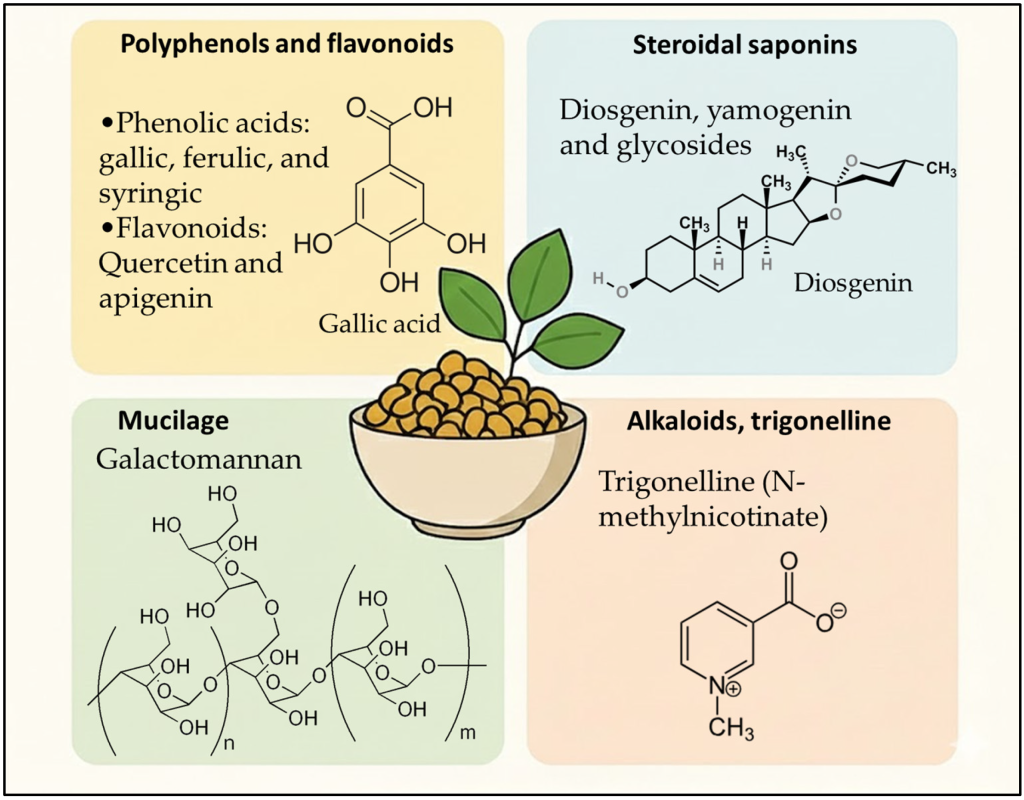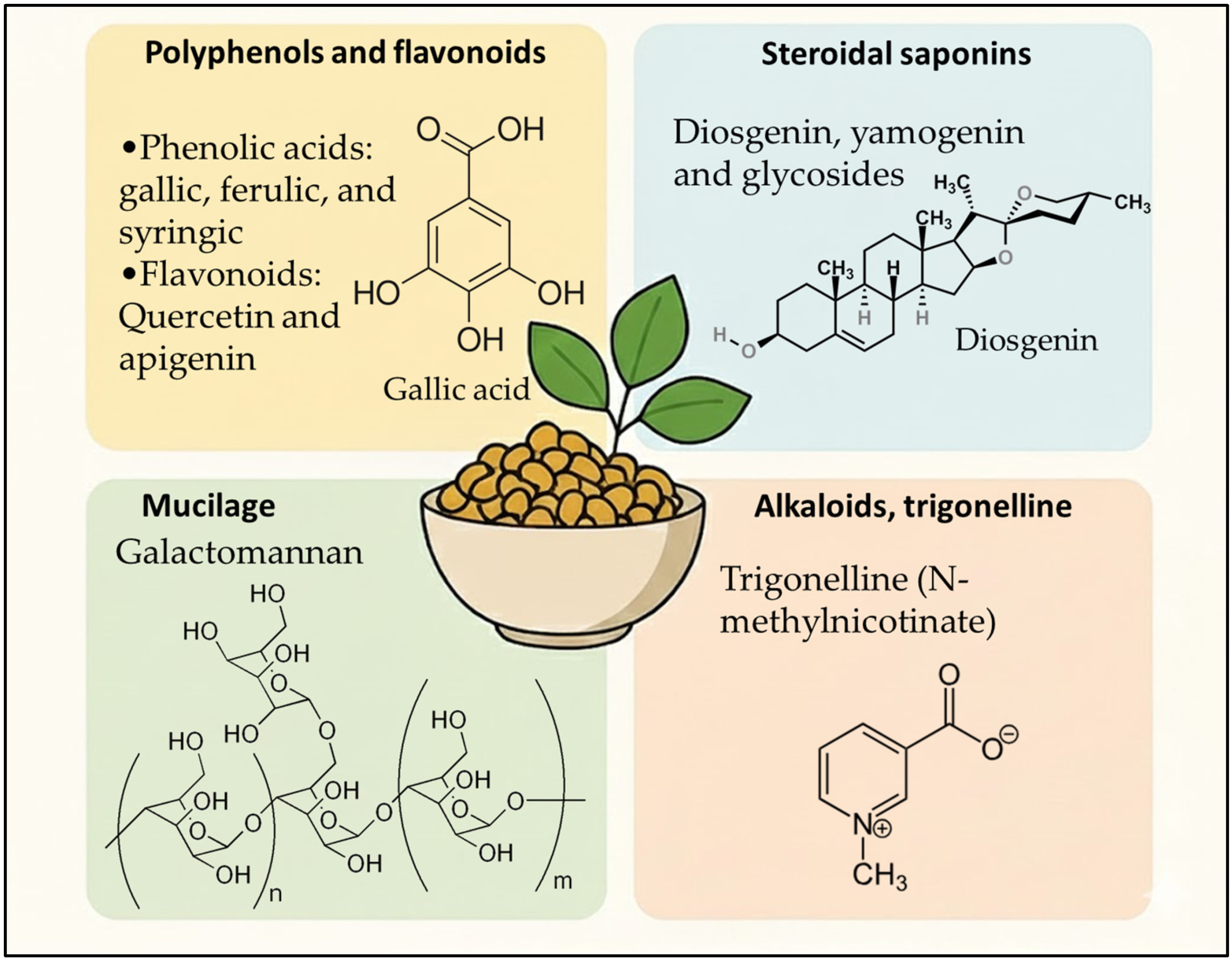

The cosmetic and personal care industry is currently undergoing a significant shift toward naturally derived and plant-based ingredients, driven by consumer demands for safety, sustainability, and transparency. Manufacturers are increasingly seeking multifunctional “cosmeceutical” actives capable of modulating complex skin targets such as oxidative stress, chronic inflammation, and extracellular matrix degradation. Fenugreek (Trigonella foenum-graecum L.) was considered a potential answer to these challenges due to its rich history in traditional medicine and a phytochemical profile featuring steroidal saponins, alkaloids, and mucilage-rich galactomannans. These bioactive molecules offer a versatile solution by providing antioxidant, anti-inflammatory, and barrier-supporting properties that are highly relevant to both skin and hair physiology.
Methods
This review provides a comprehensive synthesis of current knowledge by examining the phytochemical profile of fenugreek and its biological activities in relation to skin and hair care. The authors analyze experimental evidence from in vitro, ex vivo, and emerging clinical studies supporting various cosmetic claims. Furthermore, it evaluates green extraction technologies and formulation strategies while identifying critical knowledge gaps and future research directions. Finally, the study assesses safety data and the regulatory status of fenugreek derivatives under existing EU cosmetic legislation.
Key Findings
• Phytochemical Diversity: Fenugreek is a rich source of polyphenols and flavonoids (such as quercetin and apigenin), steroidal saponins (diosgenin and yamogenin), and the alkaloid trigonelline, all of which contribute to its biological efficacy.
• Superior Anti-Aging Potential: Ethanolic seed extracts have demonstrated the ability to inhibit collagenase activity more potently than Vitamin C, helping to preserve dermal collagen integrity and limit wrinkle formation.
• Hydration and Barrier Support: The high content of galactomannan-rich mucilage allows for the formation of a semi-occlusive film on the skin, significantly reducing transepidermal water loss (TEWL) and enhancing sustained hydration.
• Hair and Scalp Benefits: Fenugreek promotes hair health by protecting follicles from oxidative stress, improving hair anchorage, and providing conditioning properties that enhance hair fiber manageability.
• Antimicrobial Action: Extracts exhibit inhibitory effects against common pathogens like S. aureus and E. coli, suggesting a role in maintaining skin microbiome balance and treating acne-prone skin.
• Formulation Feasibility: Recent studies confirm that fenugreek extracts can be successfully integrated into cosmetic creams and gels while maintaining physicochemical stability and antioxidant performance.
Conclusion
The novelty of this research lies in positioning fenugreek not just as a traditional remedy, but as a scientifically grounded, multifunctional ingredient that serves a dual role as both a bioactive active and a functional excipient (thickener/stabilizer) in “clean beauty” formulations. Its ability to target multiple aging and inflammatory pathways simultaneously makes it a unique asset for the next generation of cosmeceuticals. Future implications of this study highlight a critical need for standardized extracts with validated marker compounds and more robust human clinical trials to fully substantiate its efficacy and ensure consistent performance in commercial skin and hair care products.
Link to the study: https://www.mdpi.com/2079-9284/13/1/44