
The human skin serves as a metabolically active interface that acts as the primary physical barrier against external threats, regulating transepidermal water loss (TEWL) and maintaining microbial homeostasis. Disruptions in the skin’s lipid matrix—composed of ceramides, cholesterol, and fatty acids—are central to various pathologies, including atopic dermatitis, acne, and age-associated photo-oxidation. While traditional cosmetic treatments often rely on generic emollient oils, Palmitoleic Acid (POA, 16:1 n−7) has emerged as a potential solution due to its “skin-native” status, being naturally present in the living epidermis and stratum corneum. As a monounsaturated “lipokine,” POA is considered a biomimetic candidate capable of integrating into the skin’s architecture to provide not only structural support but also active signaling to modulate inflammation, oxidative stress, and antimicrobial defense.
Key Findings
• Potent Antimicrobial Activity: POA and its isomers exhibit strong bactericidal effects against Gram-positive pathogens like Staphylococcus aureus and Cutibacterium acnes, particularly when used synergistically with low concentrations of ethanol.
• Topical Protection and Repair: Topical POA significantly accelerates wound healing by reducing neutrophil infiltration and suppresses UVB-induced inflammatory markers (COX-2, MMP-3) and oxidative stress in keratinocytes and fibroblasts.
• Oral Efficacy for Aging Skin: Randomized clinical trials demonstrate that oral POA supplementation (500–1000 mg/day) significantly improves skin hydration, reduces TEWL, and enhances elasticity, with higher doses showing a measurable reduction in wrinkle parameters.
• Novel Formulation Mechanisms: POA can form calcium di-palmitoleate, a hydrophobic salt that persists on the skin to provide long-lasting lubrication and selective antimicrobial activity that spares beneficial commensal bacteria like S. epidermidis.
• Sustainable Sourcing: While sea buckthorn and macadamia oils are traditional sources, fermentation-derived microalgal oil provides a scalable alternative containing ~58% POA, offering better consistency and sustainability than terrestrial crops.
The novelty of this research lies in positioning POA as a multifunctional, skin-native mediator that operates at the unique interface of epidermal and sebaceous metabolism. Unlike commodity vegetable oils, POA offers a differentiated, biomimetic route to skin health by combining sensorial benefits with active biological signaling. The future implications for this research are significant, suggesting that POA could become a cornerstone in nutricosmetic and dermatological interventions for barrier repair, photo-aging, and inflammatory conditions like acne. However, further robust mechanistic human studies are required to define optimal dosing and specific clinical indications for this promising omega-7 fatty acid.
Link to the study: https://www.mdpi.com/2079-9284/13/1/45
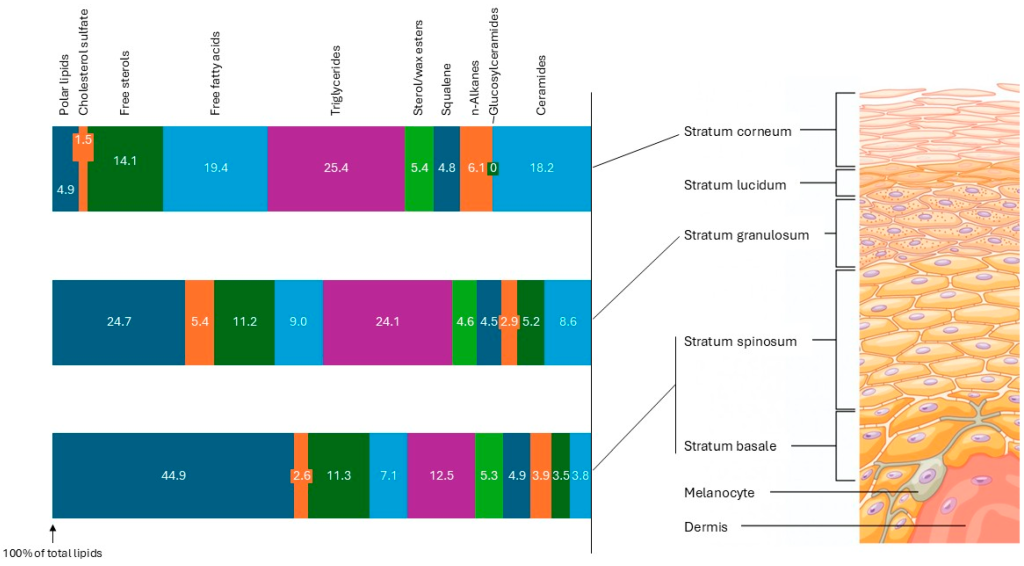
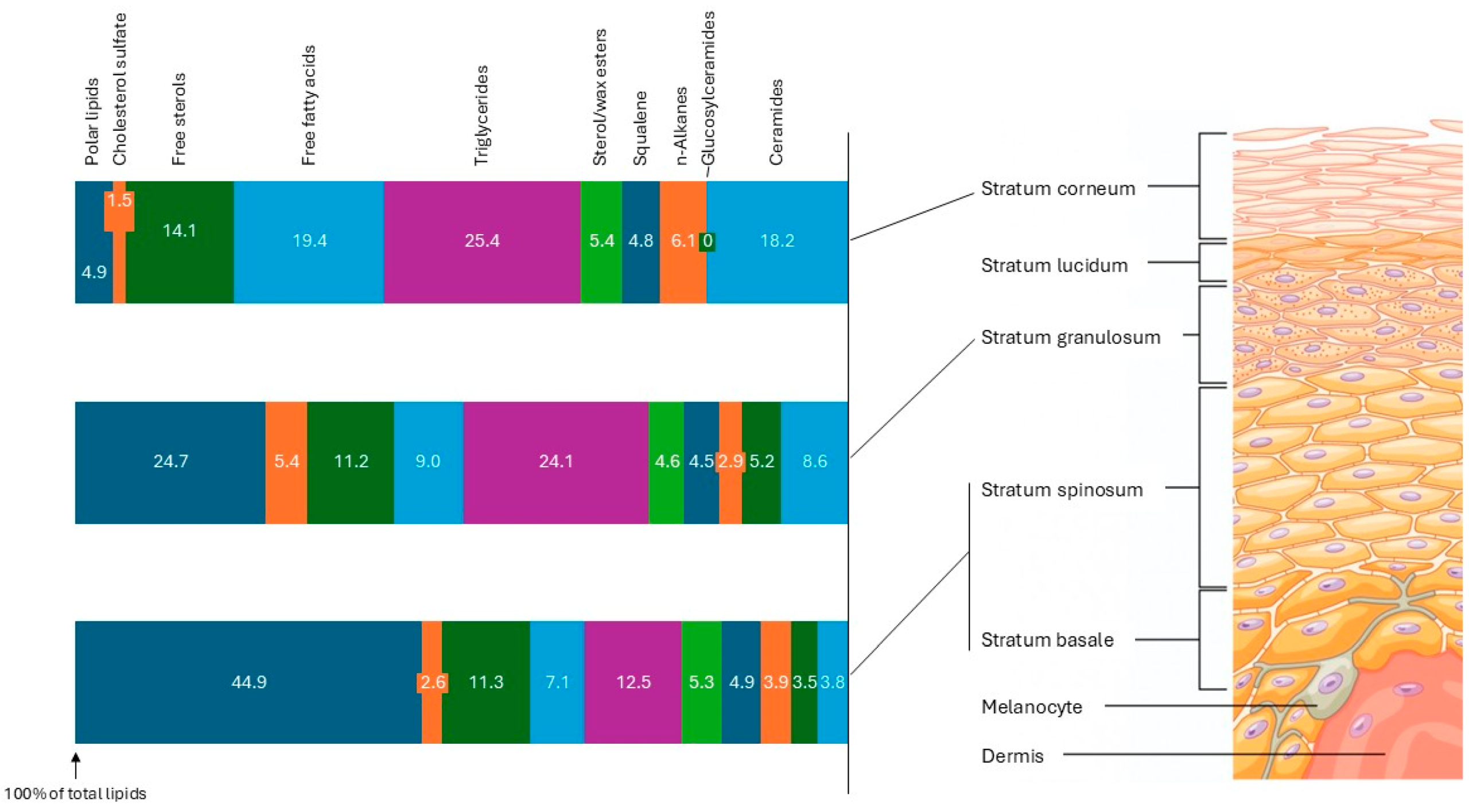
In the image below: The schematic on the right shows the main layers of the human epidermis and dermis. The stacked horizontal bars on the left represent the relative abundance (% of total lipids) of major lipid classes among different epidermal layers: stratum corneum (top bar), stratum granulosum (middle bar), and stratum basale-spinosum (bottom bar). Colors indicate lipid classes as labelled above the top bar (from left to right): polar lipids, cholesterol sulfate, free sterols, free fatty acids, triglycerides, sterol/wax esters, squalene, n-alkanes, glucosylceramides, and ceramides; numbers inside the bars give the percentage contribution of each class. Lipid composition data are adapted, and the epidermal morphology from an open-access teaching resource (Lumen Learning).