

Hair loss is a multifaceted biological issue influenced by genetics and hormones, but oxidative stress is increasingly recognized as a primary driver of follicular dysfunction. Excessive reactive oxygen species (ROS) disrupt cellular homeostasis, leading to impaired metabolic activity and premature functional decline in human follicle dermal papilla cells (HFDPCs), which are essential for hair growth regulation. To address this, researchers investigated upcycled postbiotic cell-free supernatants (CFS) derived from Limosilactobacillus fermentum (strains MG901 and MG4237). These postbiotics, often discarded as industrial by-products of fermentation, were selected because they contain diverse bioactive metabolites like organic acids and peptides that offer antioxidant and skin-protective benefits. Furthermore, using human-derived strains provides a strategic advantage for scalp-care applications due to their evolutionary compatibility with human epithelial environments.
Methods
Limosilactobacillus fermentum strains MG901 and MG4237 were isolated from human vaginal samples and cultured to collect their cell-free supernatants. HFDPCs were subjected to H2O2-induced oxidative stress and subsequently treated with CFS to evaluate cell viability, wound-healing capacity, and intracellular ROS accumulation. Mitochondrial integrity was assessed via JC-1 staining, while dermal papilla-specific inductivity was measured through alkaline phosphatase (ALP) activity. Finally, Western blot assays were utilized to analyze the modulation of the Wnt/β−cateninsignaling pathway.
Key Findings
• Restored Cellular Function: Both CFS strains significantly enhanced the wound-healing and migratory capacity of H2O2-damaged HFDPCs without inducing cytotoxicity.
• Antioxidant and Mitochondrial Protection: Treatment markedly suppressed intracellular ROS accumulation and restored mitochondrial membrane potential, which is typically disrupted by oxidative stress.
• Enhanced Inductivity: CFS treatment significantly increased ALP activity, a critical functional marker for maintaining hair follicle growth and regeneration.
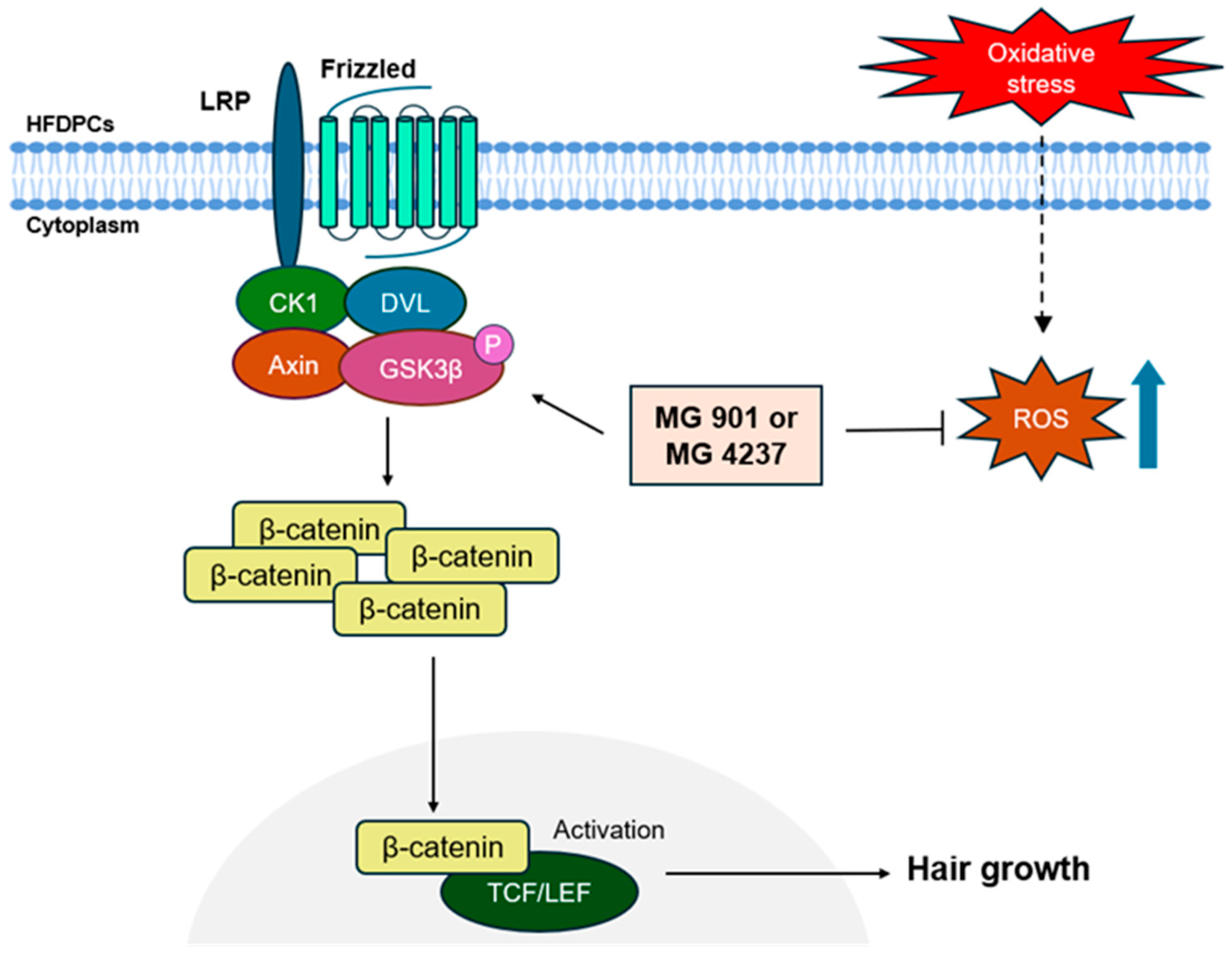
• Molecular Pathway Activation: The CFS promoted the stabilization of β-catenin and the phosphorylation of GSK3β, effectively reactivating the Wnt/β−catenin pathway essential for hair cycle progression.
• Strain-Specific Metabolites: While both strains were effective, MG4237-derived CFS showed a distinct increase in acetate, a short-chain fatty acid that supports mitochondrial stability under stress.
The novelty of this research lies in the repurposing of upcycled postbiotics from host-adapted L. fermentum strains as a sustainable and biologically compatible intervention for hair loss. By demonstrating that these typically discarded fermentation by-products can mitigate oxidative damage and restore lineage-specific cellular properties, the study provides a foundation for sustainable “clean beauty” ingredients. Future implications include the development of advanced scalp-care products, though further validation in ex vivo or in vivo systems and rigorous batch-consistency characterization will be necessary for successful commercialization.
Link to the age: https://www.mdpi.com/2079-9284/13/1/46
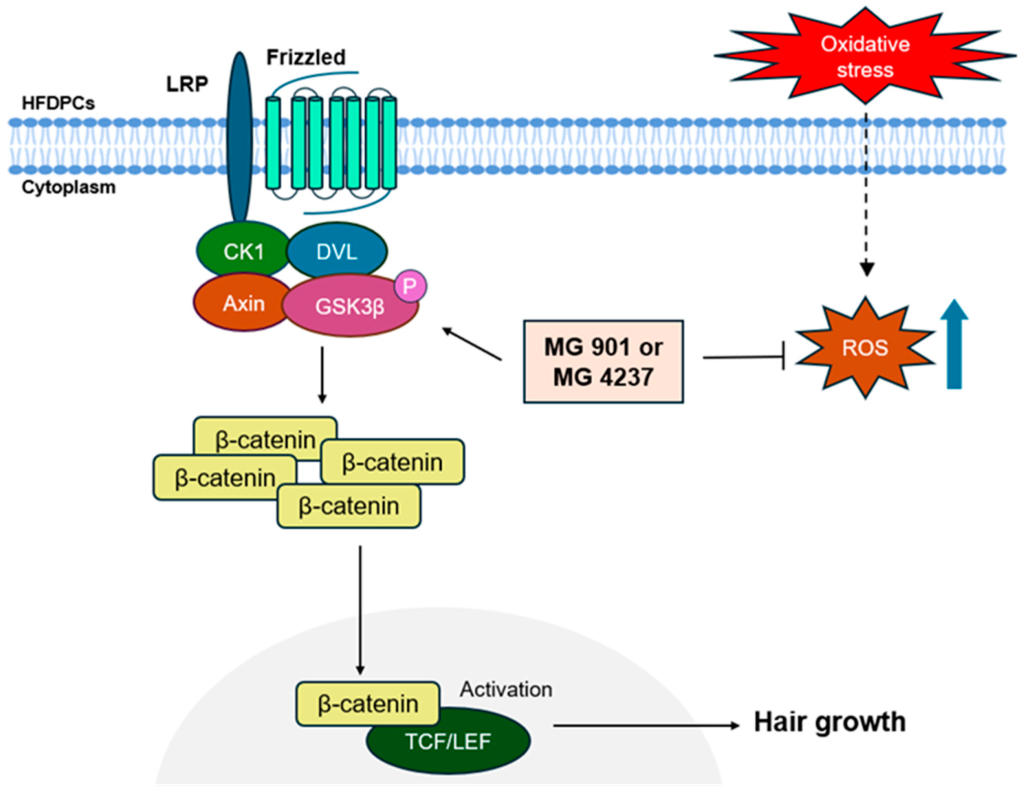
Schematic representation of the effects of MG901- and MG4237-derived CFS on oxidative stress–related Wnt/β-catenin signaling in HFDPCs. Oxidative stress–induced ROS disrupts β-catenin stabilization and downstream signaling, whereas MG901 and MG4237 reduce ROS levels and promote β-catenin–mediated transcriptional activity. This modulation supports dermal papilla cell function and hair growth–related responses.