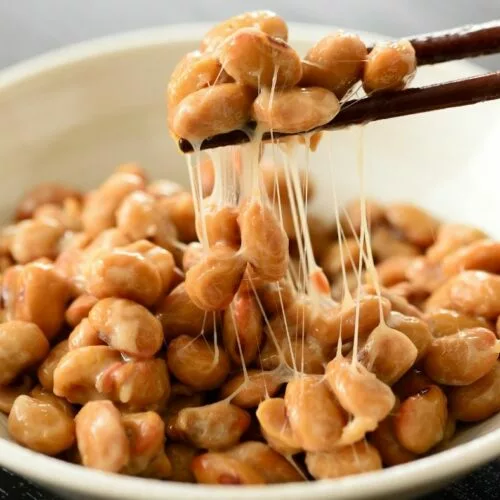
Skin aging is a multifaceted biological process driven by genetic factors and accelerated by external stressors like UV radiation and environmental pollutants. These factors trigger the upregulation of matrix-degrading enzymes, specifically collagenase and elastase, which break down the skin’s structural proteins, leading to wrinkles and loss of elasticity. Simultaneously, overactive tyrosinase causes hyperpigmentation and reduced skin luminosity. To address these issues, there is a growing demand for natural, plant-derived bioactive agents. Natto, a fermented soybean product, was identified as a potential solution because the fermentation process by Bacillus subtilis var. natto significantly enhances the bioavailability of phenolic compounds and flavonoids. These compounds possess potent antioxidant and enzyme-inhibitory properties, making Natto a promising candidate for rejuvenating and brightening the skin.
Methods
Soybeans were fermented with Bacillus subtilis var. natto, freeze-dried, and extracted using 80% ethanol to produce Natto Powder Extract (NPE). The study quantified its phenolic and flavonoid content while assessing antioxidant activity through DPPH, ABTS, and FRAP assays. NPE’s inhibitory effects on collagenase, elastase, and tyrosinase were measured, and its impact on human dermal fibroblast proliferation and cytotoxicity was evaluated. Finally, an emulsion serum containing 1% NPE was formulated and subjected to six heating-cooling cycles to determine its physical stability, pH, and viscosity.
Key Findings
• Bioactive Content: NPE yielded a 19.00% recovery with high concentrations of phenolics (20.64 mg GAE/g) and flavonoids (22.34 mg QE/g), enriched by microbial enzymatic activity during fermentation.
• Antioxidant Power: The extract demonstrated significant radical scavenging abilities, with IC50 values of 2.84 mg/mL for DPPH and 0.76 mg/mL for ABTS, correlating with its high polyphenol content.
• Enzyme Inhibition: NPE effectively inhibited skin-aging enzymes, particularly elastase (IC50 0.98 mg/mL) and collagenase (IC50 2.64 mg/mL), likely through hydrophobic interactions and metal-chelating mechanisms.
• Cell Proliferation: At non-cytotoxic concentrations (62.5 and 125 µg/mL), NPE significantly stimulated the proliferation of human dermal fibroblasts, reaching up to 111.39% compared to the control.
• Formulation Stability: The developed emulsion serum remained stable throughout thermal stress testing, maintaining an acceptable pH (5.33) and viscosity without phase separation.
The novelty of this research lies in demonstrating that fermented Natto, traditionally a food staple, serves as a potent multi-functional cosmeceutical ingredient that simultaneously targets oxidation, enzymatic degradation, and cellular regeneration. By successfully integrating the extract into a stable serum, the study bridges the gap between traditional fermentation and modern skincare technology. Future implications suggest that NPE could become a primary active agent in anti-aging and skin-whitening products, though subsequent research must focus on its long-term clinical efficacy and safety in human subjects.
Link to the study: https://li01.tci-thaijo.org/index.php/sdust/article/view/268011/181667