
The cosmetic industry is increasingly focused on addressing skin aging, cutaneous inflammation, and hyperpigmentation, which are often driven by environmental stressors like UV radiation and oxidative stress. Skin aging is primarily caused by the degradation of collagen and elastin by enzymes such as collagenase and elastase, while inflammation is linked to lipoxygenases (LOX), and hyperpigmentation results from tyrosinase-driven melanin overproduction. While many active ingredients exist to combat these issues, concerns regarding their toxicity, instability, and long-term side effects have spurred interest in safer, plant-based alternatives. Cannabis seeds offer a promising solution because they are a sustainable source of unique bioactive compounds, specifically lignanamides and hydroxycinnamic acid amides, which possess potent antioxidant and skin-protecting properties.
Methods
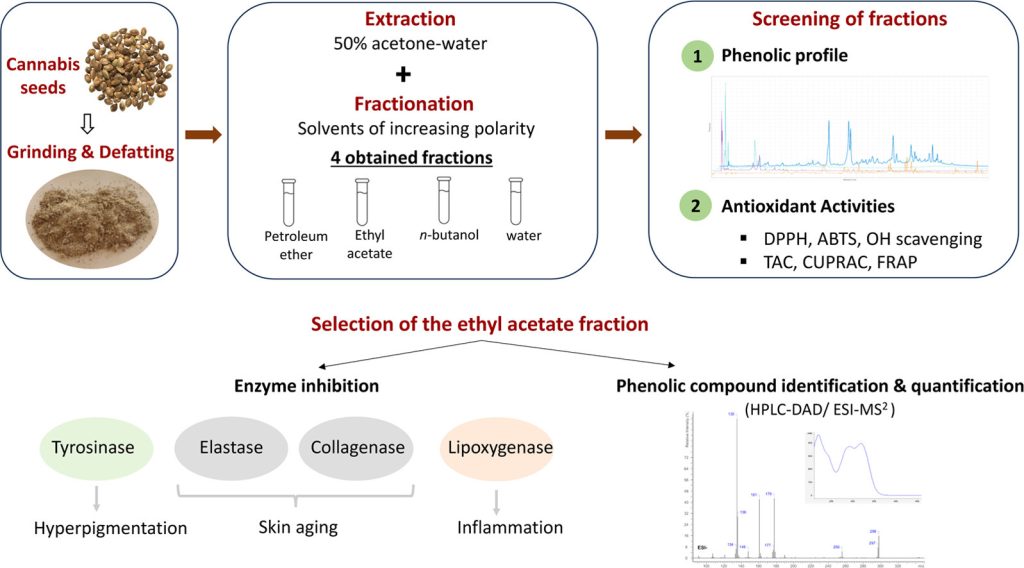
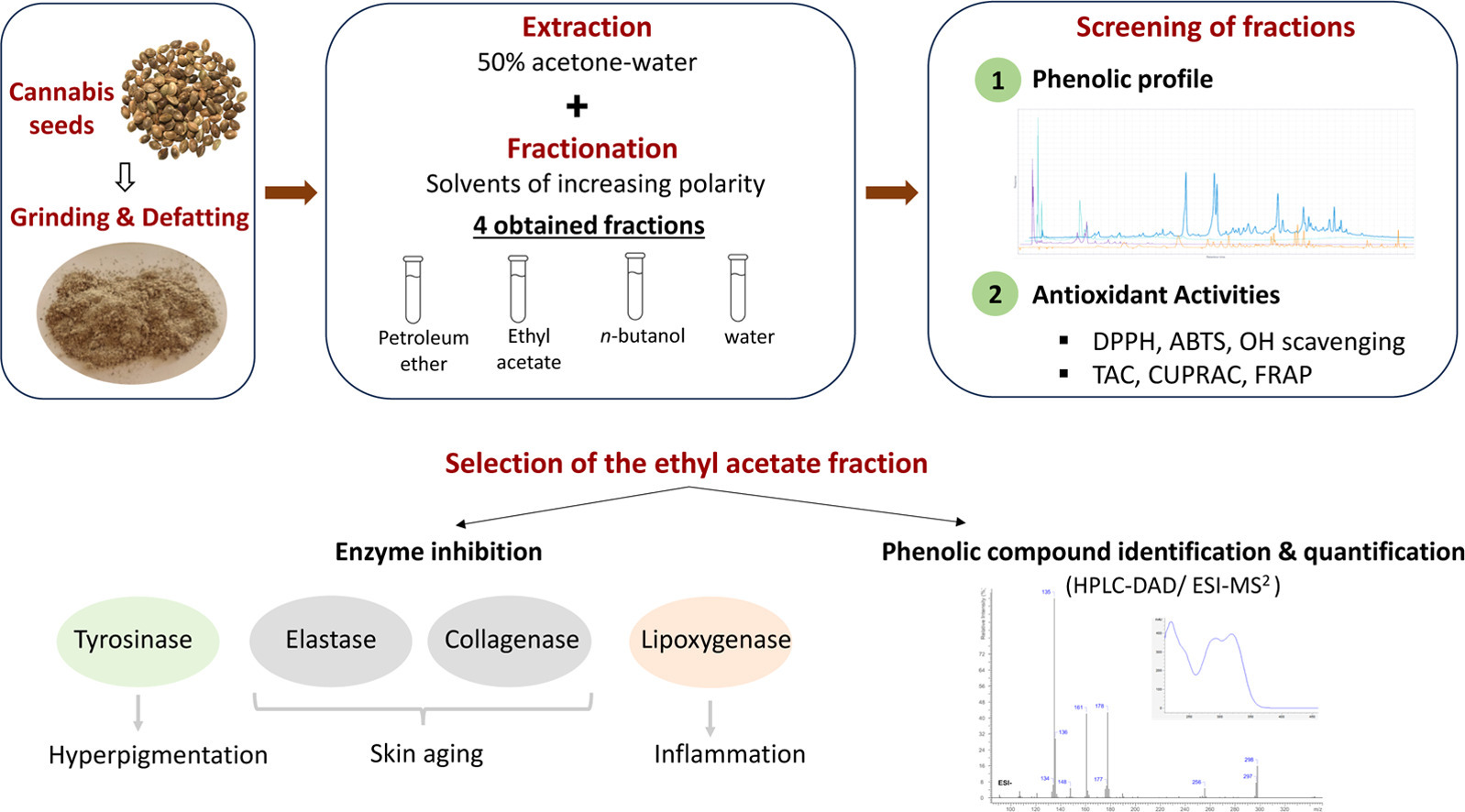
Defatted cannabis seeds were extracted using a 50% acetone-water mixture and then sequentially fractionated with petroleum ether, ethyl acetate (EA), and n-butanol to separate compounds by polarity. The EA fraction, identified as the most antioxidant-rich, underwent phenolic profiling via HPLC-DAD/ESI-MS² to identify and quantify its constituents. Finally, the fraction was tested through spectrophotometric assays to determine its inhibitory effects (IC50 values) against elastase, collagenase, lipoxygenase, and tyrosinase enzymes.
Key Findings
- Superior Antioxidant Activity: The ethyl acetate (EA) fraction exhibited significantly higher radical scavenging and reducing power compared to the petroleum ether fraction, often performing comparably to ascorbic acid.
- Rich Phenolic Profile: The EA fraction was found to be highly concentrated in lignanamides (449.34 mg/g) and hydroxycinnamic acid amides (240.90 mg/g), with cannabisins A and B and caffeoyltyramine being the dominant compounds.
- Potent Elastase Inhibition: The extract showed an IC50 of 31.05 µg/mL against elastase, which was notably more effective than the positive control, quercetin.
- Multifunctional Enzyme Inhibition: The fraction demonstrated strong inhibitory activity against collagenase (75.53 µg/mL), lipoxygenase (5.71 µg/mL), and tyrosinase (141.72 µg/mL), confirming its potential for diverse dermatological applications.
- Efficacy through Fractionation: The study highlighted that targeted solvent fractionation is crucial for concentrating the specific bioactive phenolics responsible for these high levels of biological activity.
The novelty of this research lies in its focus on the phenolic-rich fractions of defatted cannabis seeds, an underutilized byproduct, and its demonstration of their multifunctional ability to inhibit four key enzymes involved in skin degradation and inflammation. These findings position cannabis seed extracts as a safer, natural alternative for high-end cosmetic formulations targeting anti-aging and skin brightening. Future implications include the potential for clinical trials and in vivo studies to validate these results in human subjects, as well as molecular docking simulations to better understand the specific interactions between identified lignanamides and skin-related enzymes.
Link to the study: https://www.sciencedirect.com/science/article/pii/S2468227626001572