

Skin aging is a complex process driven by oxidative stress, extracellular matrix (ECM) remodeling, and disrupted intercellular communication. While mammalian exosomes have emerged as revolutionary “natural messengers” for cell signaling, their transition into cosmetics is severely hindered by ethical concerns, regulatory hurdles, and safety risks associated with human or animal sourcing. Natural plant-derived vesicles offer a vegan alternative but often suffer from low secretion yields and lack the complex membrane signaling required for true biological communication. To bridge this gap, vegan exosome-like biomimetic vesicles (EBVs) derived from the microalgae Chlamydomonas reinhardtii were developed. This solution was considered because microalgae provide a scalable, standardized, and biochemically rich “chassis” capable of reproducing the multi-layered biological logic of mammalian exosomes through structural and functional biomimetism.
Methods
EBVs were produced via a biomimetic self-assembly workflow using cultivated Chlamydomonas reinhardtii biomass subjected to standardized homogenization and controlled processing. Structural characterization was performed through nanoparticle tracking analysis (NTA), transmission electron microscopy (TEM), and high-resolution lipidomics and proteomics. Functional biomimetism was assessed through comparative transcriptomics against human fibroblast-derived exosomes and dermal penetration studies using reconstructed human skin. Biological activity was further validated using ex vivo UV-A-challenged skin explants and human hair follicle models. Finally, a randomized, placebo-controlled clinical study involving 41 subjects was conducted over 56 days to evaluate anti-aging efficacy.
Key Findings
- Structural Biomimetism: The EBVs are nanosized bilamellar vesicles (average diameter ~160 nm) containing a complex molecular profile of 109 membrane lipids and 1,369 proteins, significantly exceeding the complexity of standard liposomes.
- Functional Correspondence: Comparative transcriptomics showed that EBVs induce directionally convergent mRNA expression in human fibroblasts relative to human-derived exosomes, particularly in anti-aging and matrix-remodeling pathways.
- Superior Dermal Delivery: EBVs demonstrated a 166.7% higher dermal delivery bias compared to conventional liposomes, effectively navigating skin barriers to reach fibroblast-rich compartments.
- Photoaging and Repair: In ex vivo models, 2% EBVs showed 92% protective efficacy against UV-A-induced melanin production and accelerated fibroblast wound healing in vitro.
- Hair Follicle Vitality: EBV treatment significantly upregulated SOX9 (p = 0.0022) and versican, markers associated with follicle stem cell maintenance and anagen (growth) phase retention.
- Clinical Performance: A 56-day clinical study confirmed significant improvements in wrinkle depth (-12.2%), skin elasticity (+4.9%), and radiance (+20.0%) compared to a placebo.
The novelty of this research lies in establishing the first industrially scalable, vegan platform that moves beyond superficial resemblance to achieve true structural and functional biomimicry of mammalian exosomes. By shifting the focus from naturally secreted vesicles to engineered biomimetic systems, the study overcomes previous limitations regarding batch consistency and biological potency. The future implications are significant: EBVs provide a high-performance, ethically sound alternative for next-generation regenerative skincare and hair rejuvenation, offering a scientifically rigorous standard for exosome-inspired cosmetic innovation.
Link to the study: https://www.mdpi.com/2079-9284/13/3/120
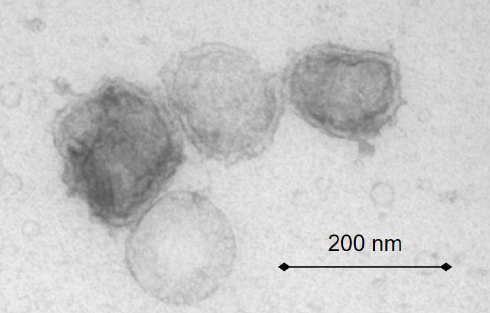
Characterization of EBVs. TEM images reveal population of spherical vesicles with distinct bilamellar morphology. Scale bar = 200 nm.