Lipid oxidation is a critical challenge in the cosmetics industry, as it causes instability, organoleptic alterations, and reduced durability in products containing natural vegetable oils. While synthetic phenolic antioxidants (SPAs) like BHT and BHA are commonly used to prevent this degradation, they face increasing scrutiny due to toxicological concerns, including potential endocrine disruption and environmental bioaccumulation. Furthermore, these synthetic additives are prohibited by major natural cosmetic certification bodies such as COSMOS and NATRUE. Consequently, there is a strategic shift toward “clean label” formulations that utilize natural alternatives. Basil essential oils (Ocimum basilicum L.) have emerged as a promising solution because they contain potent secondary metabolites with established biological activities, offering a sustainable way to enhance the oxidative stability of cosmetic lipids.
Methods
The study characterized two basil essential oils from Argentina (OBA) and Italy (OBI) using GC-MS to identify their chemical constituents. Their antioxidant capacity was quantified through DPPH and PCL (Photochemiluminescence) assays. Finally, the researchers employed the OXITEST method to evaluate the oxidative stability of sweet almond oil supplemented with varying combinations of the essential oils and DL-alpha-tocopherol under accelerated stress conditions (90 °C and 6 bar of oxygen pressure).
Key Findings
- Chemical Variability: GC-MS revealed that while linalool was the major constituent in both, OBA contained significantly higher levels of eugenol (18.44%) compared to OBI (2.25%), whereas OBI was richer in 1,8-cineole (13.90%).
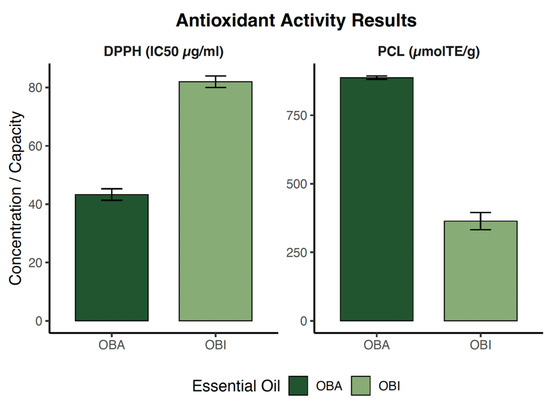
- Superior Antioxidant Potency: OBA consistently outperformed OBI in in vitro assays, showing a lower IC50 in the DPPH test (43.3 µg/mL vs. 81.98 µg/mL) and a higher PCL value (887.47 vs. 363.82 µmol TE/g).
- Synergistic Lipid Protection: The addition of basil essential oils to sweet almond oil containing 0.2% tocopherol significantly extended the Induction Period (IP) compared to using tocopherol alone.
- Optimal Formulation: The highest oxidative stability was achieved using a combination of 0.2% DL-alpha-tocopherol and 0.3% OBA, which resulted in an IP of 1611 minutes, compared to 1114 minutes for the pure oil.
- Mechanism of Action: The high eugenol content in OBA likely acts as a co-antioxidant, helping to regenerate tocopherol and extending the protection time of the lipid substrate.
This research is novel as it represents the first application of the OXITEST accelerated stability method to predict how essential oils contribute to the protection of highly oxidizable vegetable cosmetic lipids. It also provides the first evidence of a synergistic interaction between basil essential oils and DL-alpha-tocopherol in a cosmetic context. These findings have significant future implications for the industry, suggesting that selected essential oils can reduce the required dosage of Vitamin E, thereby minimizing costs and formulation issues while meeting natural standards. Future studies are recommended to explore a broader range of chemotypes and investigate the sensory and dermatological impacts of these antioxidant systems in finished commercial products.
Link to the study: https://www.mdpi.com/2079-9284/13/3/124