
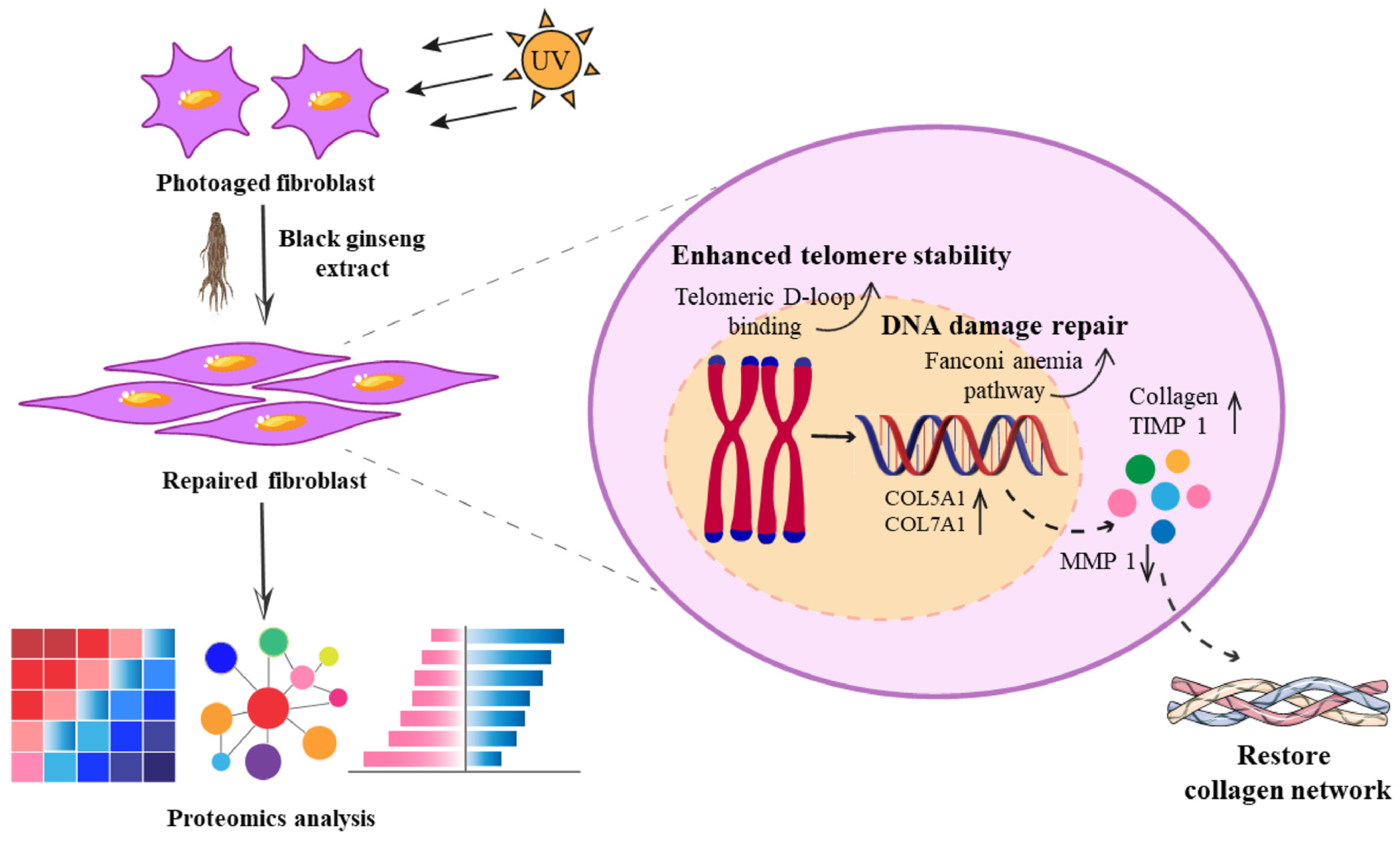

Chronic photoaging, primarily driven by prolonged exposure to ultraviolet (UV) radiation, is a major contributor to skin deterioration, characterized by oxidative stress, DNA damage, and the loss of structural integrity. A central feature of this process is the degradation of collagen—the protein responsible for skin elasticity—due to the upregulation of matrix metalloproteinases (MMPs), which leads to wrinkles and sagging. To address this, Black Ginseng Extract (BGE) was investigated as a potential solution because Panax ginseng is known for its potent antioxidant and anti-aging properties. The unique steaming and drying process used to create black ginseng enhances its bioactive components, such as ginsenosides and polyphenols, making it a promising natural candidate to restore collagen synthesis and protect dermal fibroblasts with minimal side effects.
Methods
Researchers established a chronic photoaging model by subjecting human dermal fibroblasts (HFF-1) to repeated UV irradiation over four days. The cells were treated with BGE to evaluate its effects on viability, proliferation, and senescence using CCK-8, EdU, and SA-β-gal assays. Molecular changes were quantified through qPCR, ELISA, and immunofluorescence, while DIA-based proteomics was employed to map broad biological pathway modulations. Finally, an alkaline comet assay was performed to visualize and assess the extent of DNA damage repair.
Key Findings
• Restoration of Cellular Vitality: BGE treatment significantly improved fibroblast viability and restored proliferative capacity that had been impaired by UV stress.
• Mitigation of Senescence: The extract effectively reduced cellular senescence markers (SA-β-gal) and upregulated SIRT1, a key regulator of longevity and stress response.
• Collagen Recovery: BGE boosted the expression of essential collagen types, including COL1A1, COL3A1, COL5A1, and COL7A1, at both the mRNA and protein levels.
• ECM Regulation: The treatment promoted a healthy extracellular matrix (ECM) by upregulating TIMP1 (a degradation inhibitor) and downregulating MMP1 (a collagen-degrading enzyme).
• Genomic Stability: Proteomic and qPCR data revealed that BGE enhances telomere maintenance and DNA repair pathways, specifically increasing the expression of POT1 and ORC1 to protect against genomic instability.
• Reduction of DNA Damage: Comet assay results confirmed that BGE-treated cells exhibited fewer DNA strand breaks compared to those exposed to UV radiation alone.
The novelty of this research lies in its multi-level approach, demonstrating that BGE does not merely provide structural support to the skin but actively reprograms nuclear regulatory circuits to sustain genomic integrity through telomere stabilization and the Fanconi anemia DNA repair pathway. By bridging the gap between extracellular matrix preservation and intracellular genome maintenance, this study positions BGE as a sophisticated bioactive ingredient for advanced anti-photoaging skincare. Future implications include the potential for BGE to be used in clinical dermatological treatments, though further studies are required to identify its specific active constituents and validate these results in human clinical trials.
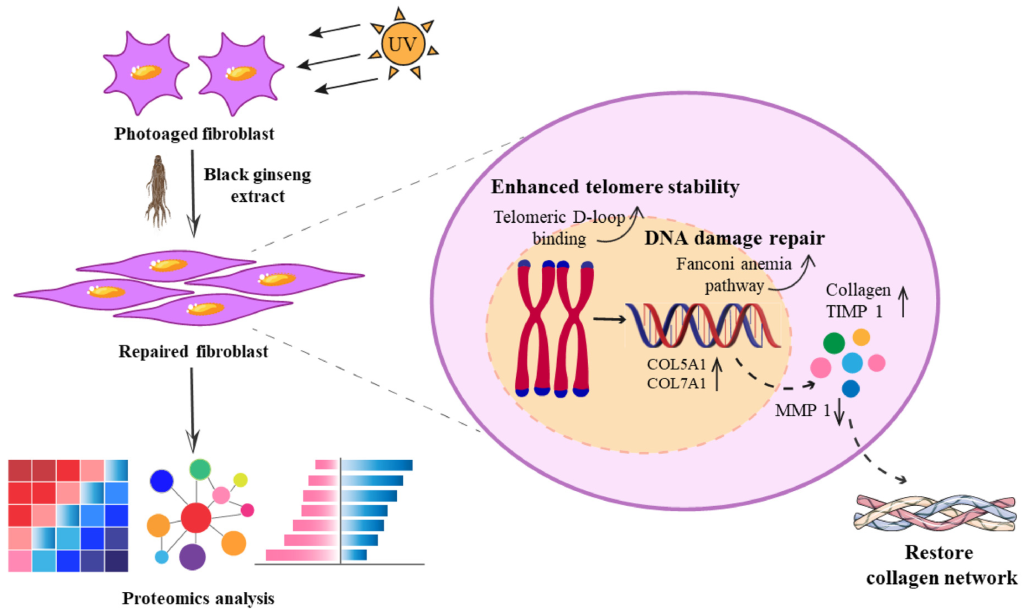
Schematic illustration of protective mechanisms of BGE on collagen synthesis in chronic photoaging.
Link to the study: https://www.mdpi.com/2079-9284/13/1/33