

The modern cosmetic industry is increasingly driven by consumer demand for natural, bioactive ingredients that prioritize skin health alongside aesthetic improvement. Chronic skin dryness and the degradation of the skin barrier remain significant dermatological concerns, necessitating delivery systems that can effectively replenish moisture and essential lipids. Traditional emulsions often fall short in stability and penetration depth; however, liquid crystal (LC) emulsions offer a biomimetic solution by mimicking the lamellar lipid organization of the human stratum corneum. Recent research has identified ultra-micro liquid crystal (ULC) emulsions—systems with particle sizes around 4 µm—as superior vehicles for enhancing skin hydration and barrier function compared to larger or non-liquid crystal systems. To address these needs, researchers turned to the Japanese pumpkin (Cucurbita maxima), which provides a potent combination of polysaccharides (PP) acting as humectants and seed oil (PO) rich in fatty acids and antioxidants to support lipid barrier repair.
Methods
The study involved extracting Japanese pumpkin polysaccharides via hot water extraction and deproteinization before formulating ULC emulsions using a heat-emulsification method and high-shear homogenization. These formulations were subjected to rigorous physicochemical characterization using polarized optical microscopy, laser diffraction for particle size, and wide-angle X-ray diffraction (WAXD) to confirm the presence of lamellar phases. Stability was assessed through centrifugation and six heating–cooling cycles, while clinical safety was verified via a 24-hour closed patch test. Finally, the moisturizing efficacy was evaluated on 33 human volunteers over 14 days using a Corneometer® for skin capacitance and a Tewameter® for transepidermal water loss (TEWL).
Key Findings
• Structural Integrity: Polarized microscopy confirmed the successful formation of lamellar structures through distinct Maltese cross patterns, while WAXD identified the coexistence of α-gel and Lα phases.
• Optimal Formulation (F9): The most effective formulation contained 2.0% PO and 0.1% PP, achieving a stable ultra-micro particle size of 4.02 ± 0.02 µm.
• Superior Stability: All tested ULC emulsions demonstrated excellent physical stability, showing no phase separation or significant changes in viscosity and pH after accelerated aging cycles.
• Dermatological Safety: Clinical patch testing confirmed that the pumpkin-based ULC emulsions are non-irritating, with Mean Irritation Index (M.I.I.) values well below the 0.2 threshold.
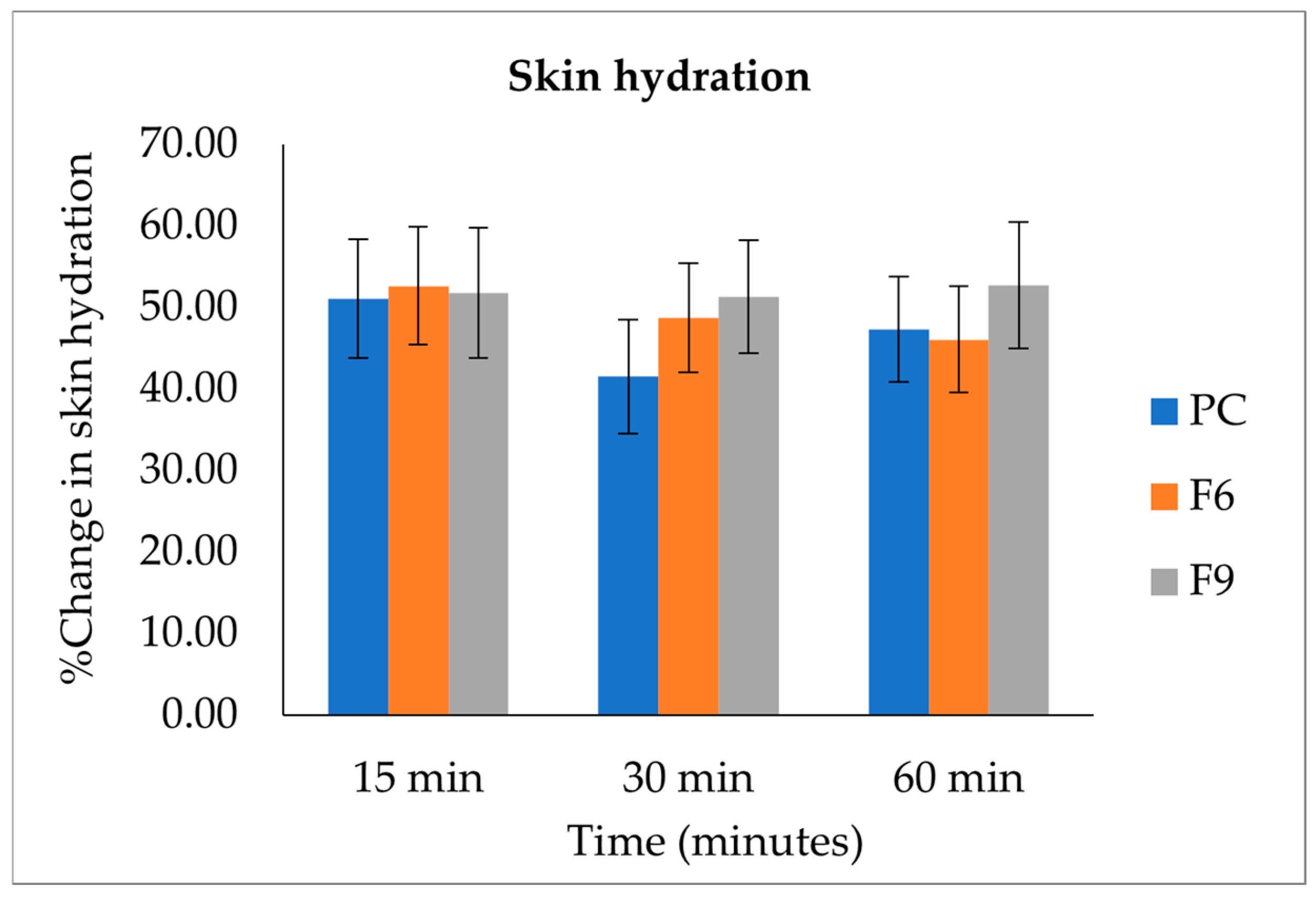
• Enhanced Hydration: Short-term and 14-day studies revealed that the ULC cream significantly increased skin hydration (by over 50% in the short term) and reduced TEWL compared to baseline measurements.
• Synergistic Effect: The addition of PP increased the relative crystallinity of the emulsion, reinforcing the crystalline structure and contributing to more sustained moisture retention.
The novelty of this research lies in its synergistic triple-action mechanism, which integrates a biomimetic lipid lamellar structure with the emollient properties of pumpkin seed oil and the humectant effects of pumpkin polysaccharides. By refining these components into an ultra-micro delivery system, the study successfully bridges the gap between agricultural by-products and high-performance cosmeceuticals. The future implications of this work are significant, suggesting a sustainable pathway for developing advanced, natural skincare products that utilize botanical waste to manage chronic skin dryness and reinforce the biological skin barrier.
Link to the study: https://www.mdpi.com/2079-9284/13/2/49
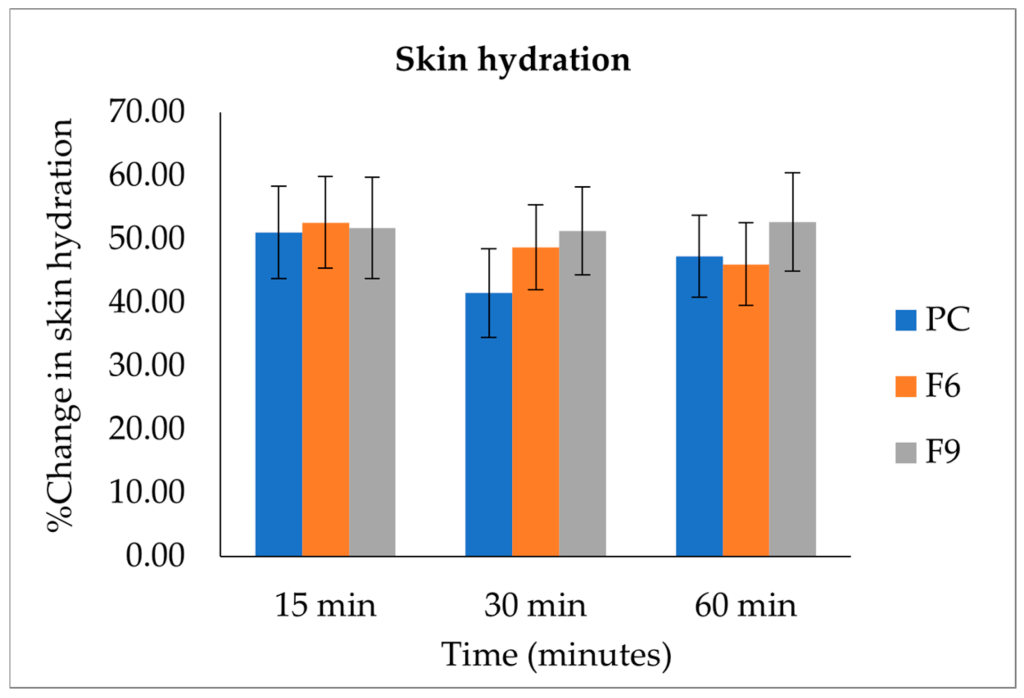
Percentage change in skin hydration after applying ULC cream formulations (Mean ± SEM, n = 33). The absence of letters and * indicates no significant differences (p < 0.05) between samples and the baseline (T0).