The human skin constantly faces environmental aggressions such as ultraviolet radiation, chemical pollutants, and microbial invasions, which trigger oxidative stress and inflammatory reactions. These processes lead to the overproduction of melanin via the tyrosinase enzyme and the degradation of elastin by the elastase enzyme, ultimately accelerating skin aging and causing hyperpigmentation. To address these issues, bioactive polysaccharides from marine macroalgae—specifically alginates and fucoidans—are considered ideal solutions due to their structural diversity, high skin compatibility, and perceived safety. These marine-derived macromolecules offer a broad spectrum of biological activities, including antioxidant, anti-inflammatory, and photoprotective properties, making them highly desirable for modern sustainable cosmeceutical formulations.
Methods
Researchers collected four brown algae species (Padina pavonica, Sargassum ilicifolium, Sargassum latifolium, and Turbinaria decurrens) from the Djibouti coastline for analysis. Polysaccharides were extracted using sequential acid and alkaline methods and structurally characterized using FT-IR and 1H-NMR spectroscopies to determine M/G ratios and sulfation degrees. Finally, the biological efficacy was evaluated through DPPH and FRAP antioxidant assays, alongside colorimetric inhibition tests against elastase and tyrosinase enzymes.
Key Findings
- Extraction Yields: Turbinaria decurrens yielded the highest amount of alginate (29.3%), while Padina pavonica recorded the highest fucoidan content (1.81%).
- Structural Composition: Alginates across all species were found to be rich in mannuronic acid, a feature that provides the structural flexibility and elasticity required for cosmetic applications.
- Antioxidant Superiority: Fucoidan extracts demonstrated significantly stronger radical scavenging and ferric reducing capacities compared to alginates, with some results being comparable to vitamin C.
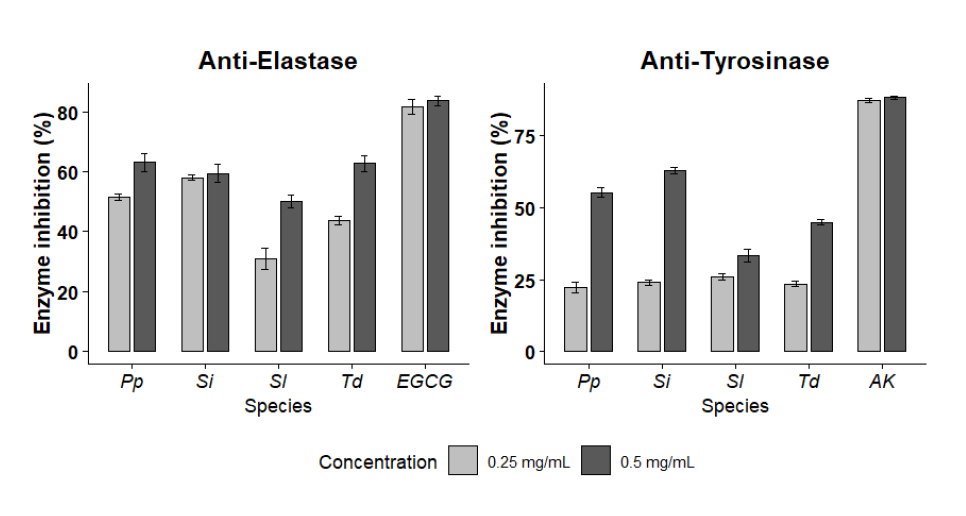
- Enzyme Inhibition: Fucoidans showed potent anti-aging effects, with elastase inhibition reaching 62.1% for P. pavonica and tyrosinase inhibition peaking at 63% for S. ilicifolium.
- Structure-Activity Relationship: The study confirmed that biological activity is critically determined by structural features, particularly the degree and pattern of sulfation in fucoidans.
The novelty of this research lies in its comprehensive evaluation of brown algae from the underexplored Djiboutian coastline, where extreme environmental conditions may drive the biosynthesis of polysaccharides with enhanced bioactivities. By establishing a clear link between the chemical structure of these marine polymers and their functional performance, the study confirms these species are a sustainable, high-value resource for the “blue economy”. Future implications suggest that these extracts could replace synthetic ingredients in multifunctional anti-aging products, with subsequent research focusing on human skin cell safety and molecular mechanisms.
Link to the study: https://www.mdpi.com/2079-9284/13/2/53
In the image below: Inhibition of elastase by fucoidan extracts (0.25 and 0.50 mg/mL) from four brown macroal-gae from Djibouti: Padina pavonica (Pp), Sargassum ilicifolium (Si), Sargassum latifolium (Sl), Turbinaria decurrens (Td) with EGCG and kojic acid (AK) as positive controls.