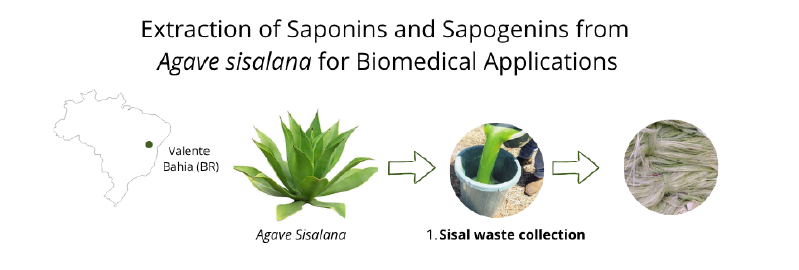
Chronic wounds, such as diabetic foot ulcers and pressure sores, affect over 20 million people worldwide and represent a major public health challenge due to persistent inflammation that stalls the natural healing process. Conventional dressings often fail to manage this inflammation or provide the necessary cellular environment for regeneration. To address this, electrospun poly(ε-caprolactone) (PCL) nanomembranes were considered as a solution because their fibrous architecture mimics the natural extracellular matrix, promoting cell adhesion and gas exchange. These membranes were surface-functionalized with sisal (Agave sisalana) extracts—specifically targeting saponins and sapogenins—because of the plant’s known anti-inflammatory and antiseptic properties, offering a sustainable way to repurpose agroindustrial residue into a bioactive therapeutic platform.
Methods
Researchers fabricated PCL nanomembranes via electrospinning and functionalized them using a post-electrospinning drop-coating technique with two distinct Agave sisalana fractions: a saponin-rich precipitate (EDP) and an acid-hydrolyzed sapogenin-enriched extract (EAH). The resulting materials were characterized by SEM and FTIR-ATR to ensure structural and chemical integrity, while biological performance was evaluated through MTT cytotoxicity assays on fibroblasts. Finally, pharmacological activity was assessed through macrophage modulation, hemolysis protection, and in vitro scratch assays to measure wound-closure potential.
Key Findings
- Phytochemical enrichment: The EAH fraction successfully released steroidal sapogenins (hecogenin and tigogenin) through acid hydrolysis, while the EDP fraction remained rich in glycosylated saponins.
- Structural Preservation: Surface functionalization preserved the continuous, porous fibrous architecture of the PCL mats without causing fiber coalescence or polymer degradation.
- Extract-Dependent Cytotoxicity: The saponin-rich PCL+EDP 5% membrane induced significant cytotoxicity, likely due to the membrane-disruptive detergent effect of glycosylated saponins.
- Anti-inflammatory Potency: The sapogenin-enriched PCL+EAH 5% showed high cell viability and potent anti-inflammatory activity, achieving 75% inhibition of phagocytosis and significant protection against protein denaturation and hemolysis.
- Enhanced Healing: In a scratch assay, the EAH-functionalized platform achieved 100% wound closure within 72 hours, significantly outperforming the pure PCL control.
The novelty of this research lies in its comparative analysis of chemically distinct fractions from the same biomass, identifying hydrolyzed sapogenins as superior, non-toxic modifiers for electrospun systems compared to their glycosylated counterparts. This proof-of-concept study demonstrates that post-electrospinning functionalization can effectively “program” biomaterials with specific biological activities while maintaining structural integrity. Future implications include the development of standardized, sustainable smart dressings that utilize agroindustrial waste for localized inflammatory modulation. Upcoming studies will focus on detailed release kinetics, chemical standardization with markers like hecogenin, and essential in vivo validation to confirm these pro-healing effects in clinical models.
Link to the study: https://www.mdpi.com/2079-9284/13/2/80