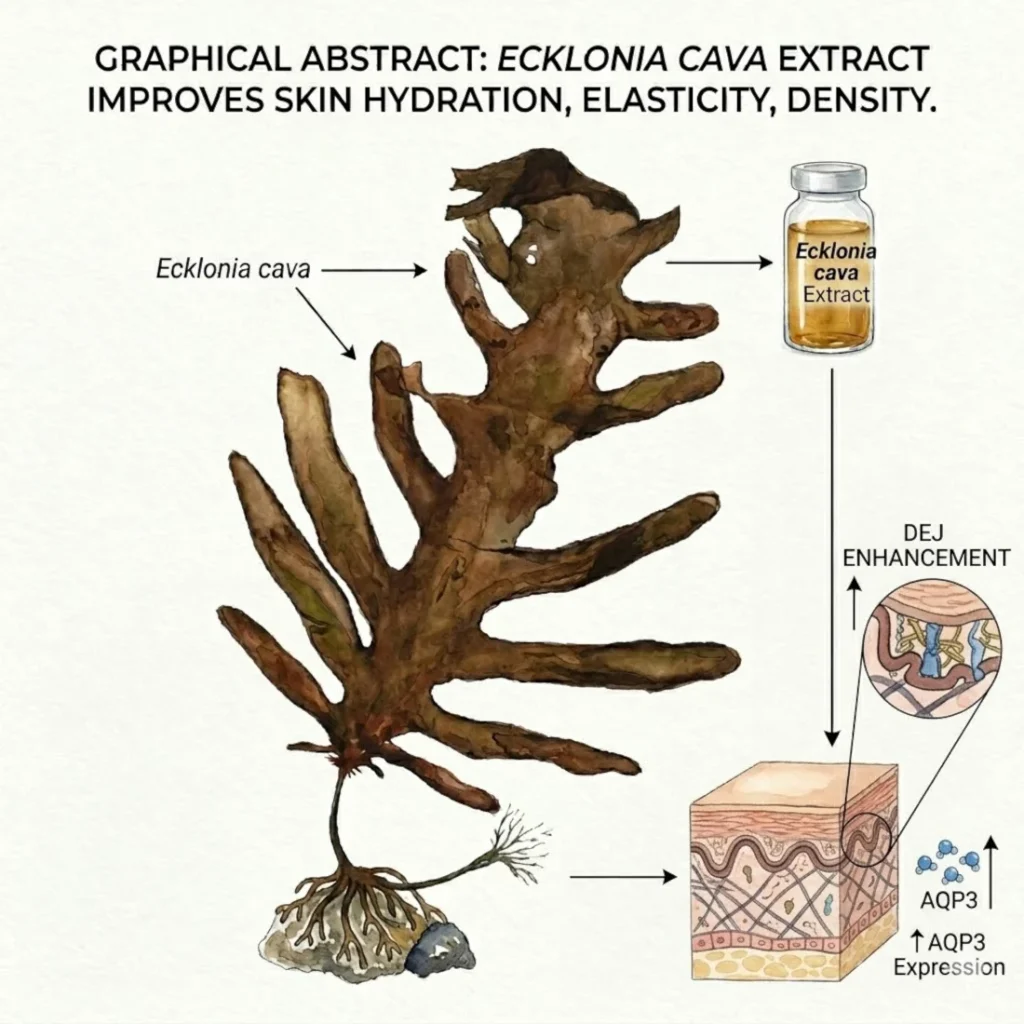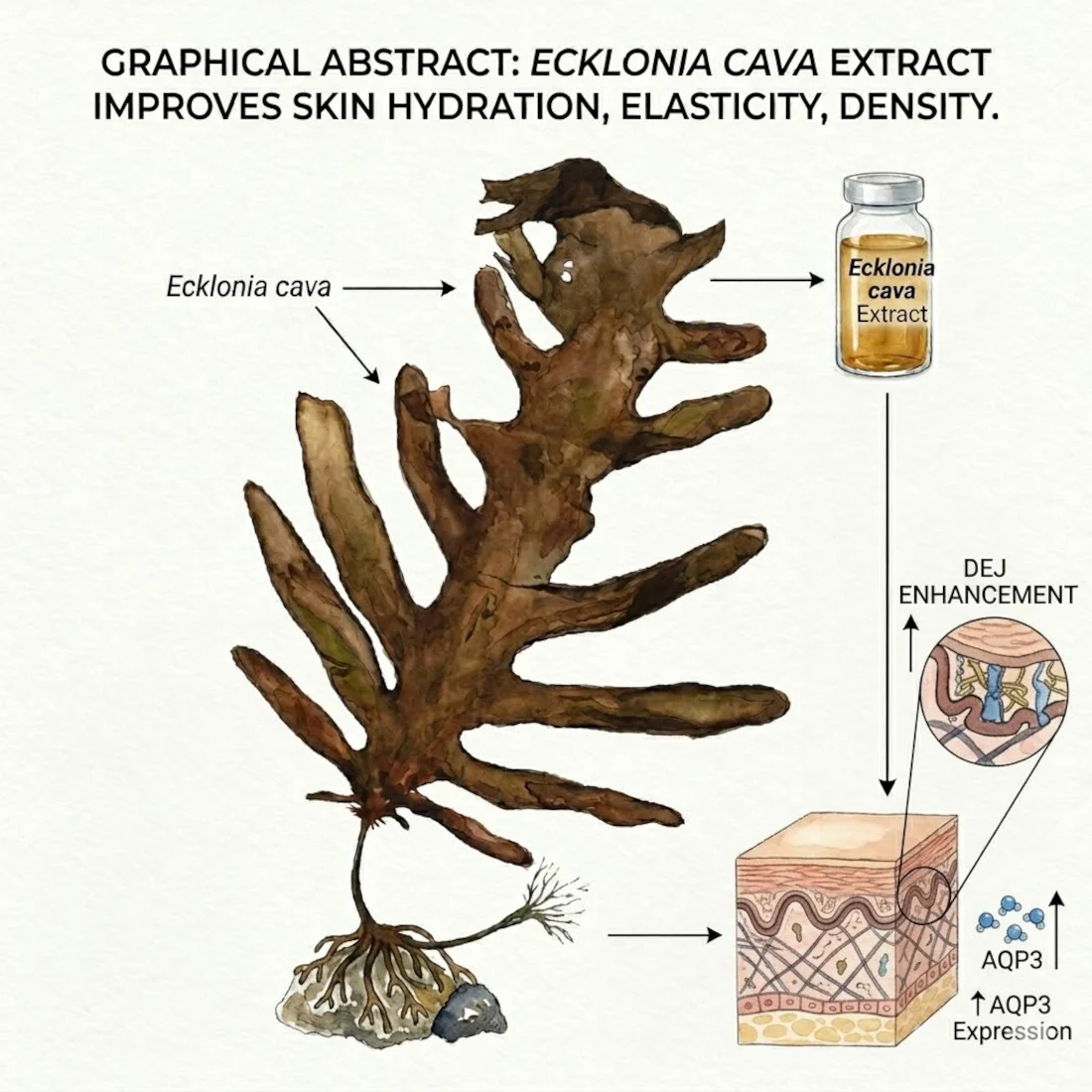

The cosmetic industry is increasingly shifting toward natural, marine-derived ingredients due to safety concerns regarding synthetic antioxidants and the need for multifunctional anti-aging solutions. Skin aging is a complex process characterized by oxidative stress, reduced epidermal moisture, and the structural weakening of the dermal–epidermal junction (DEJ), which manifests as dryness, sagging, and loss of density. While aquaporin-3 (AQP3) is vital for water transport, structural proteins like COL4A1, COL17A1, and LAMA5 are essential for maintaining dermal-epidermal cohesion. Ecklonia cava, an edible brown seaweed rich in unique polyphenols called phlorotannins, was considered a potential solution because of its documented antioxidant and anti-inflammatory properties, though its specific impact on DEJ integrity remained largely underexplored until this research.
Methods
Researchers prepared a standardized Ecklonia cava extract (ECE) using an optimized solvent mixture of water and 1,3-butylene glycol, utilizing ultrasonic-assisted extraction to ensure direct compatibility with cosmetic formulations. The study employed DPPH radical scavenging assays to measure antioxidant activity and RT-qPCR to analyze the expression of AQP3 and DEJ-related genes in human skin cells. Finally, a randomized, split-face clinical trial involving 22 female volunteers was conducted over four weeks to evaluate improvements in hydration, elasticity, and density using non-invasive instrumental assessments.
Key Findings
- Standardization and Antioxidants: ECE was found to contain significant levels of polyphenols (2.75 mg GAE/g) and flavonoids (0.41 mg QE/g), exhibiting concentration-dependent DPPH radical scavenging activity with an SC50 value of 1.14%.
- Molecular Gene Upregulation: In vitro results demonstrated that 2% ECE significantly increased the expression of critical DEJ genes: COL4A1 (38.5%), COL17A1 (51.6%), and LAMA5 (53.7%), suggesting enhanced skin firmness and cohesion.
- Clinical Hydration and Elasticity: Topical application of 0.1% ECE led to a progressive and significant increase in skin hydration at both two and four weeks compared to a placebo.
- Structural Improvements: Clinical data confirmed that ECE significantly improved skin elasticity and density by the end of the study period, outperforming the placebo-treated areas.
The novelty of this research lies in its systematic investigation of ECE’s effects on specific DEJ molecular markers and the development of an optimized extraction process that allows for the direct incorporation of the extract into cosmetic products without solubility issues. These findings establish ECE as a potent, multifunctional anti-aging ingredient that addresses both functional hydration and structural integrity. Future implications suggest that while ECE is effective in the short term, further long-term studies with larger, more diverse populations are necessary to confirm sustained efficacy and fully elucidate the underlying signaling pathways involved in its gene-regulatory effects.
Link to the study: https://www.mdpi.com/2079-9284/13/3/136