
The global prevalence of chronic skin conditions such as atopic dermatitis, psoriasis, and premature aging has increased significantly, often driven by interdependent processes of local oxidative stress and dysregulated inflammation. Conventional synthetic treatments can sometimes lead to adverse effects, prompting a growing demand for sustainable, natural-origin bioactive compounds that align with “green chemistry” principles. Amazonian biodiversity offers a potential solution in Byrsonima crassifolia (murici), a plant traditionally used for its anti-inflammatory properties and known to be rich in secondary metabolites. This study explored murici leaves as a sustainable source for dermocosmetics, aiming to provide a safer, plant-derived alternative to modulate the multifactorial processes of cutaneous pathologies.
Methods
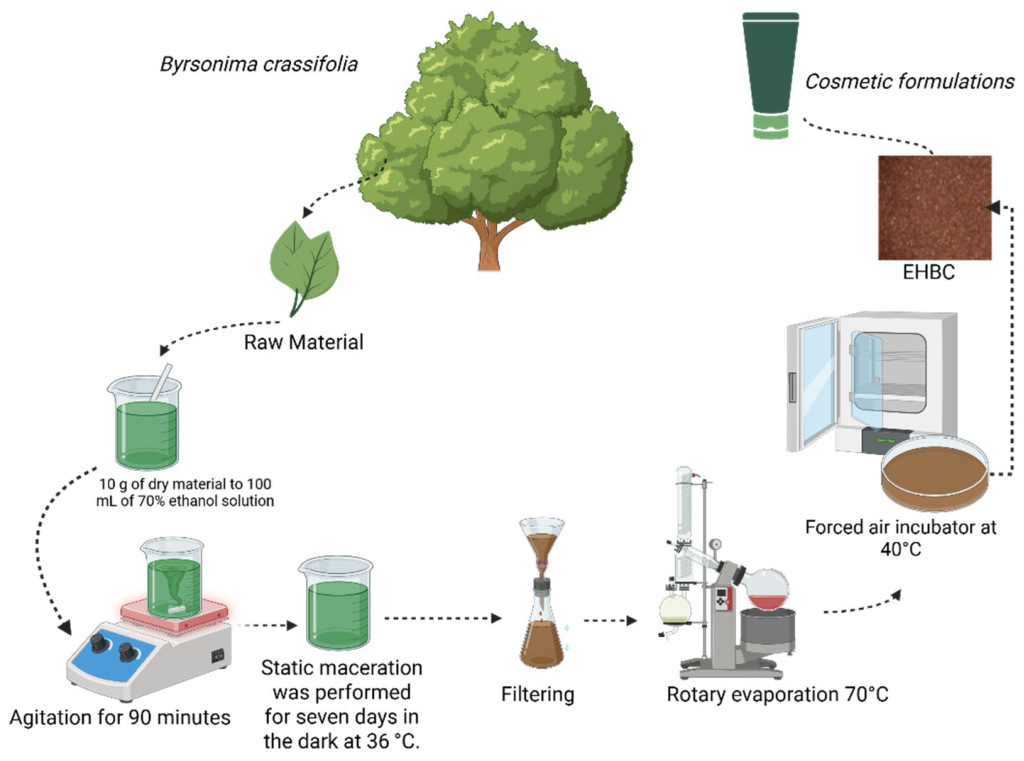
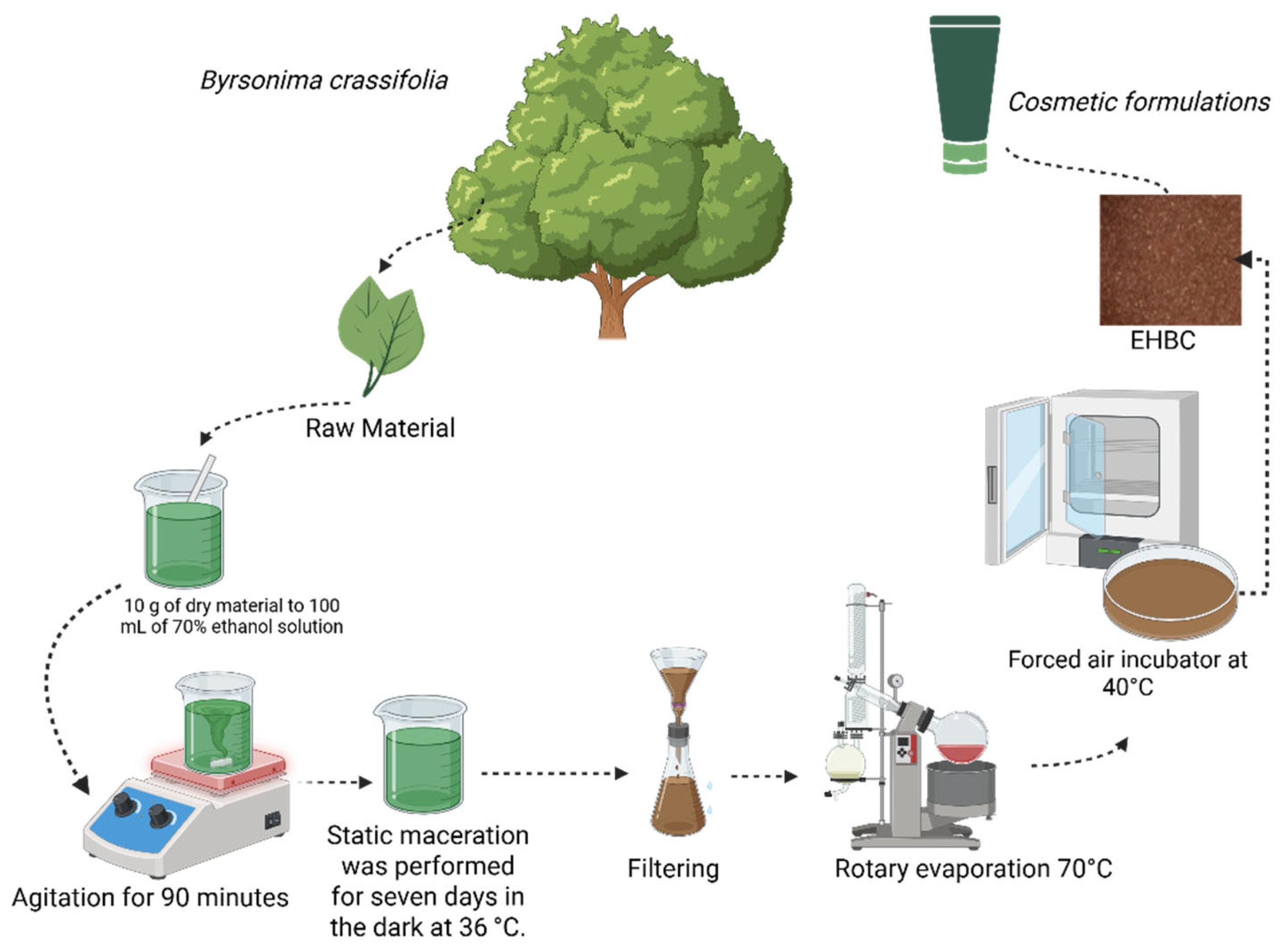
Researchers prepared a hydroalcoholic extract (HEBC) from dried murici leaves using a 70% ethanol solution, which was then characterized via HPLC, FTIR spectroscopy, and spectrophotometric assays for phenols and tannins. The extract’s safety was evaluated using MTT cytotoxicity assays on NIH 3T3 fibroblasts, while its therapeutic potential was measured through in vitro antioxidant tests (DPPH and lipid peroxidation) and anti-inflammatory assays (macrophage spreading and phagocytosis).
Key Findings
- Phytochemical Richness: HPLC and FTIR analyses confirmed high concentrations of phenolic compounds, specifically identifying catechin as a major constituent and precursor to the extract’s abundant condensed tannins.
- High Safety Margin: HEBC maintained high cellular viability and showed no cytotoxicity at concentrations of 100, 200, and 400 µg/mL across all analyzed time points (24, 48, and 72 hours).
- Potent Anti-Inflammatory Activity: The extract produced a clear dose-dependent inhibition of macrophage activation, significantly reducing both spreading and phagocytosis to levels comparable to or exceeding positive controls.
- Robust Antioxidant Capacity: HEBC demonstrated substantial free radical-scavenging activity and high efficiency in preventing lipid peroxidation, which protects against oxidative cellular damage.
The novelty of this research lies in its integrated evaluation—simultaneously addressing phytochemical, pharmacological, and toxicological profiles—using an environmentally sustainable “green” extraction method on murici leaves. This study establishes a scientific foundation for the use of HEBC as a safe and effective bioactive ingredient. Future implications include the incorporation of this extract into specific topical formulations, offering a sustainable strategy to valorize Amazonian biodiversity while advancing the development of natural cosmetics for skin health.
Link to the study: https://www.mdpi.com/2079-9284/13/3/137