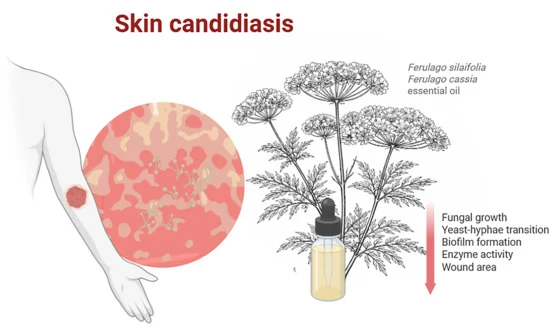
Skin candidiasis is a major factor in the development of chronic, non-healing wounds, as Candida species can form protective biofilms that disrupt tissue regeneration and promote persistent inflammation. The management of these infections is increasingly difficult due to the rising prevalence of antifungal resistance, which necessitates the discovery of novel therapeutic strategies. Aromatic plants from the genus Ferulagowere considered a potential solution because they have a long history of traditional use in treating dermal wounds and infections in regions like Türkiye and Iran. These plants produce essential oils rich in bioactive compounds, such as α-pinene, which are hypothesized to offer both antifungal activity and enzyme-inhibitory properties beneficial for wound care.
Methods
Researchers screened essential oils from five Ferulago species for antifungal activity using the EUCAST microdilution method against various Candida and Cryptococcus strains. The most potent oils, F. silaifolia and F. cassia, were then tested for their impact on virulence factors like germ tube and biofilm formation, as well as their safety and wound-healing potential through scratch-wound assays on fibroblasts and keratinocytes. Finally, the oils’ ability to inhibit skin enzymes, specifically tyrosinase and elastase, was evaluated through in chemico assays.
Key Findings
- Fungicidal Activity: Both F. silaifolia and F. cassia essential oils exhibited fungicidal effects, with F. silaifolia showing higher potency across all tested strains, particularly against Cryptococcus neoformans.
- Virulence Inhibition: Both oils successfully inhibited germ tube formation in C. albicans at concentrations well below their minimal inhibitory concentrations (MIC).
- Biofilm Management: F. silaifolia was highly effective at preventing early-stage biofilm formation, reducing biomass, extracellular matrix deposition, and fungal viability, though neither oil could disrupt mature, established biofilms.
- Wound Healing: Low concentrations of F. silaifolia (25 µg/mL) significantly promoted fibroblast migration, which is essential for tissue remodeling and structural restoration.
- Enzyme Inhibition: F. cassia demonstrated a strong inhibitory effect on tyrosinase activity, which may help reduce abnormal pigmentation and oxidative stress in wound environments.
- Safety Profile: Keratinocytes, the skin’s outer layer, showed high tolerance to the oils up to 400 µg/mL, suggesting a favorable safety margin for topical application.
The novelty of this research lies in being the first report to identify the specific antifungal effects of F. silaifolia and F. cassia against Candida and Cryptococcus while simultaneously documenting their dual-action potential in promoting cell migration and inhibiting skin enzymes. By validating the traditional uses of these plants with scientific mechanisms, the study provides a strong foundation for future implications in the development of plant-derived topical agents for managing skin candidiasis and chronic wounds. However, further in vivo and clinical evaluations are necessary to confirm the safety and therapeutic efficacy of these essential oils in human patients.
Link to the study: https://www.mdpi.com/2079-6382/15/5/471