

Skin aging is characterized by the structural deterioration of the dermal extracellular matrix, primarily driven by oxidative stress from reactive oxygen species (ROS). This stress triggers an imbalance where type I collagen synthesis is suppressed and degradation is accelerated by enzymes like matrix metalloproteinase-1 (MMP-1), leading to wrinkles and loss of elasticity. Potato peel extract (PPE) was investigated as a potential solution because it is a sustainable byproduct rich in functional phenolic compounds, such as chlorogenic acid and flavonoids, which possess known antioxidant and MMP-1 inhibitory properties.
Methods
Normal human dermal fibroblasts (NHDFs) were subjected to oxidative stress via hydrogen peroxide exposure and subsequently treated with PPE derived from ethanol extraction. The study utilized ELISA to measure type I collagen and MMP-1 secretion, while quantitative PCR analyzed the expression of synthesis and degradation-related genes. Additionally, specific inhibitors were employed to identify the involvement of the TGFBR2, ERK, and Akt signaling pathways in the extract’s mechanism of action.
Key Findings
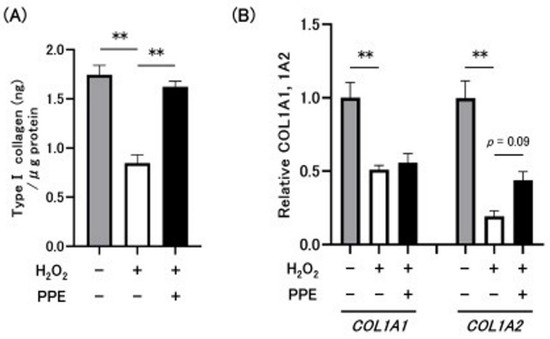
- Restoration of Collagen Levels: PPE significantly suppressed the reduction of type I collagen secretion in NHDFs caused by hydrogen peroxide exposure.
- Pathway Activation: The restorative effect on collagen synthesis is mediated through the TGFBR2–ERK/Akt signaling pathways, as confirmed by gene expression and pathway inhibition assays.
- Inhibition of Degradation: PPE reduced the elevated production of MMP-1 and suppressed the upregulation of its upstream transcription factor, AP-1.
- Enhanced Inhibitors: Treatment with PPE showed a tendency to increase the expression of TIMP-1, which is an endogenous inhibitor of collagen-degrading MMP activity.
- Non-ROS Mechanism: At the specific concentrations used for cell treatment, PPE did not significantly reduce intracellular ROS, suggesting its benefits stem from modulating signaling pathways rather than direct antioxidant scavenging.
The novelty of this research lies in demonstrating that PPE provides a dual regulatory role, simultaneously promoting collagen synthesis and inhibiting degradation under oxidative stress conditions. As a sustainable and bioactive byproduct, PPE holds significant future implications for the cosmetic industry as a functional ingredient for anti-aging formulations. Future research should focus on identifying the specific active molecules within the extract and validating these findings through UV-induced photoaging models and human clinical trials to assess practical skin penetration.
Link to the study: https://www.mdpi.com/2079-9284/13/3/134
Possible involvement of TGFBR2, ERK, and Akt pathways in PPE-induced type I collagen synthesis under oxidative stress conditions. (A) Relative mRNA expression levels of TGFBR1 and TGFBR2 in NHDFs exposed to H2O2 with or without PPE treatment were analyzed by qPCR. (B) Type I collagen secretion levels were measured by ELISA in the presence or absence of PPE and the ERK inhibitor U0126. (C) Type I collagen secretion levels were measured by ELISA in the presence or absence of PPE and the Akt inhibitor LY294002. Data are presented as mean ± SD (n = 3). Statistical analysis was performed using one-way ANOVA followed by Dunnett’s test. * p < 0.05; ** p < 0.01.