

Inflammation and skin wound healing represent complex biological responses essential for restoring tissue integrity; however, chronic or dysregulated inflammation can severely impede this process. Current clinical treatments often rely on synthetic pharmacotherapies like corticosteroids and non-steroidal anti-inflammatory drugs (NSAIDs), which are associated with significant side effects, including gastrointestinal toxicity, immunosuppression, and the rising global threat of antimicrobial resistance. Consequently, there is an urgent need for natural, tolerable alternatives for wound management. Medicinal plants, particularly those from the genus Cymbopogon, are considered viable solutions due to their rich reservoir of bioactive compounds and long-standing role in traditional medicine. Specifically, Cymbopogon proximus (locally known as “Halfa Bar”) was investigated because of its documented ethnopharmacological use in treating inflammatory conditions and preliminary evidence suggesting its ability to accelerate tissue repair through the regulation of inflammatory pathways and collagen production.
Methods
The study utilized hydrodistillation to isolate essential oils, which were then characterized using gas chromatography–mass spectrometry (GC–MS) coupled with chemometric analysis. Researchers conducted in vitro screenings to assess cytotoxicity, membrane stabilization, and pro-inflammatory gene expression modulation in stimulated white blood cells. Further in vivo evaluation involved a mouse excision wound model to monitor wound contraction, histopathology, and inflammatory biomarkers following topical application. Finally, network pharmacology and molecular docking were implemented to predict multi-target mechanisms and binding affinities between bioactive compounds and key signaling nodes.
Key Findings
- Chemical Profile: C. proximus essential oil exhibited a distinct piperitone-dominant profile (53.04%), which significantly differentiated it from the citral-rich C. citratus.
- Potent Anti-inflammatory Activity: In vitro tests demonstrated that C. proximus has superior membrane-stabilizing effects and more effectively downregulates key pro-inflammatory mediators, such as TNF-α, IL-1β, and IL-6, compared to C. citratus.
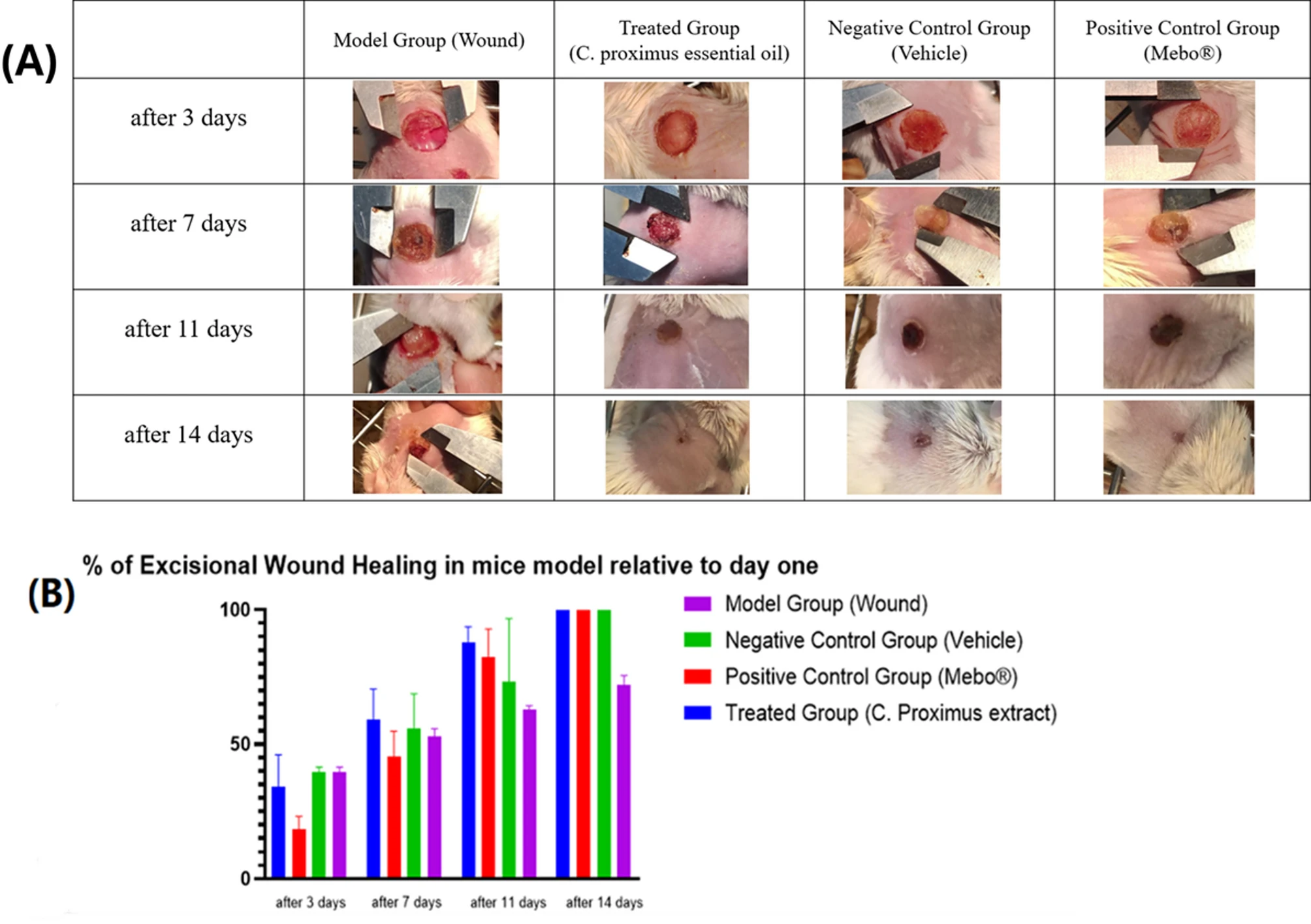
- Accelerated Wound Closure: Topical administration of a 10% oil formulation significantly accelerated wound contraction and re-epithelialization, achieving near-complete healing by Day 14 in vivo.
- Histological Improvements: Treatment resulted in reduced inflammatory cell infiltration and minimal scab formation, outperforming untreated models and demonstrating efficacy comparable to reference topical preparations.
- Molecular Mechanism: Network pharmacology identified MAPK1, PTGS2, and IL-1β as top-ranked hub genes, with molecular docking confirming strong binding affinities for components like piperitone, α-terpineol, and o-cymene.
The novelty of this research lies in its integrated approach, bridging traditional ethnopharmacological knowledge with modern in silico network pharmacology and molecular docking to provide a systems-level understanding of how C. proximus multi-component oil affects wound mitigation. It identifies the oil as a promising multi-target therapeutic agent that facilitates healing by balancing interconnected signaling pathways. Future implications of this work include the potential development of evidence-based botanical interventions for chronic wounds; however, subsequent studies must focus on expanded toxicological evaluations and extensive clinical trials to fully define its translational potential in human medicine.
Link to the study: https://www.nature.com/articles/s41598-026-55294-2
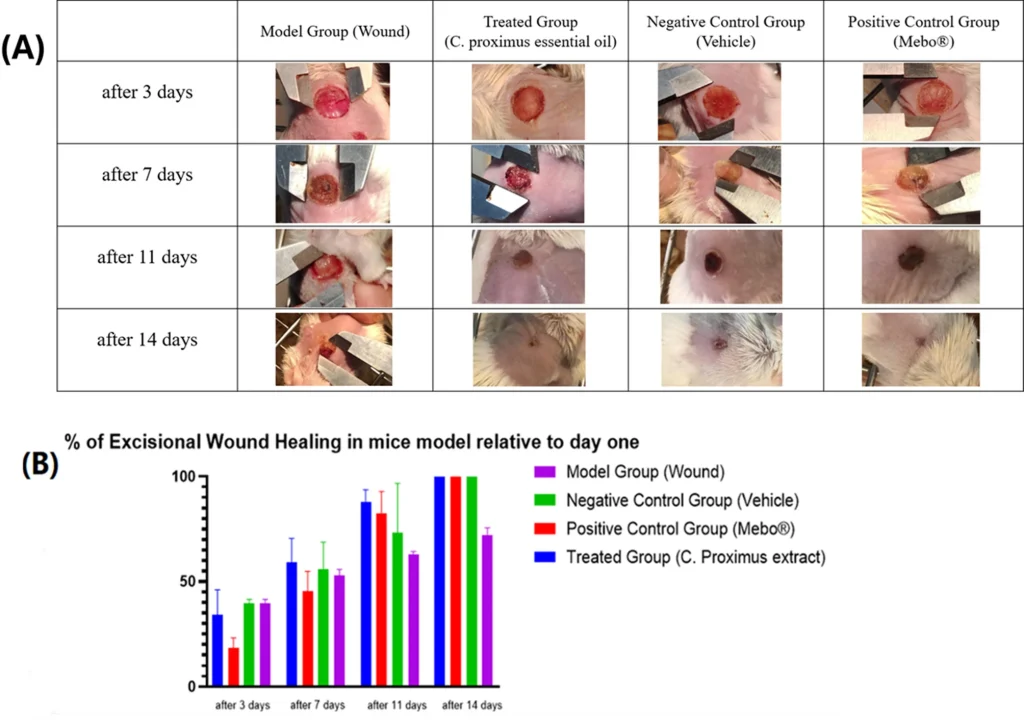
(A) A group of images illustrating the progression of wound healing in the different treatment groups. (B) The percentage of excisional wound healing progress in a Wistar rat model was evaluated over a 14-day period relative to the wound size on Day 1.