

Atopic Dermatitis (AD) represents a complex, multifactorial skin disorder characterized by microbial dysbiosis, specifically the pathological overgrowth of Staphylococcus aureus. Traditional therapies, such as corticosteroids, often fail to address this underlying imbalance and are associated with adverse effects during long-term use. To address this, green-synthesized silver nanoparticles (AgNPs) derived from Macaranga tanarius leaf extract (MTE) were investigated as a biocompatible, multitargeted antimicrobial alternative. M. tanarius was specifically selected due to its rich phytochemical profile, including polyphenols and flavonoids, which act as sustainable reducing and capping agents that enhance the stability and biological integration of the resulting nanoparticles.
Methods
MT-AgNPs were biosynthesized by mixing an aqueous M. tanarius leaf extract with silver nitrate under optimized conditions of 80°C and light exposure for 90 minutes. The resulting nanoparticles were characterized using TEM, XRD, and FTIR to confirm their spherical morphology, crystalline structure, and phytochemical capping. Antibacterial and antibiofilm efficacy were evaluated against clinical AD isolates of S. aureus using MIC and crystal violet assays. Additionally, the study assessed the antioxidant and tyrosinase inhibitory capacities of the extract and its catalytic efficiency in degrading Congo red dye.
Key Findings
- Successful Synthesis and Characterization: The process yielded stable, spherical MT-AgNPs with a mean size of 29.2 nm and a distinct surface plasmon resonance peak at 430 nm.
- Potent Antibacterial Activity: MT-AgNPs demonstrated high efficacy against 17 clinical S. aureus strains, including MRSA (mecA-positive) isolates, with minimum inhibitory concentrations (MICs) as low as 9.375 μg/mL.
- Significant Biofilm Suppression: At sub-inhibitory concentrations of 6.25 μg/mL, the nanoparticles inhibited biofilm formation by up to 63%, which is critical for treating recalcitrant chronic infections.
- Enhanced Bioactive Properties: The extract exhibited robust antioxidant capacity (82.72% DPPH scavenging) and maintained a stable tyrosinase inhibition rate of approximately 45%, suggesting potential for managing post-inflammatory hyperpigmentation.
- Catalytic Reactivity: MT-AgNPs served as efficient nanocatalysts, facilitating the rapid degradation of Congo red dye, which validates their high surface reactivity and electron-shuttling capabilities.
This research highlights the novelty of utilizing M. tanarius as a precursor for AgNPs specifically tailored to combat the microbial challenges associated with Atopic Dermatitis. By integrating bioactive plant metabolites with a metallic core, MT-AgNPs provide a synergistic therapeutic platform that addresses both infection and secondary skin damage like hyperpigmentation. Future implications of this work extend beyond clinical dermatology to potential applications in sustainable agriculture and cosmetic formulations, though future in vivo studies remain essential to confirm toxicity profiles and precise mechanistic pathways.
Link: https://onlinelibrary.wiley.com/doi/full/10.1155/ijm/3943779
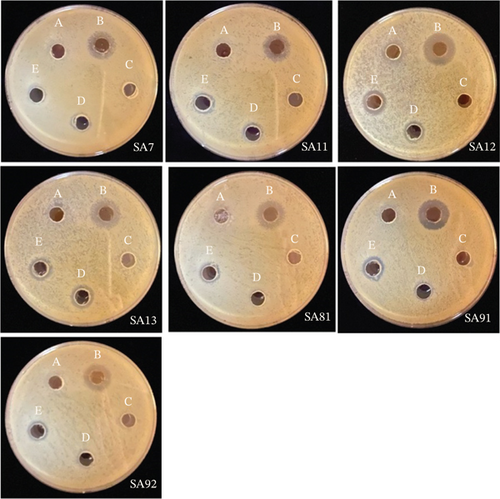
In the figure: Antibacterial activity of purified Macaranga tanarius–synthesized silver nanoparticles (MT-AgNPs) against eight Staphylococcus aureus strains. (A) DMSO negative control and (C) water negative control showed no inhibition zones, confirming no antibacterial effect. (B) MT-AgNPs dissolved in DMSO produced clear inhibition zones against all tested strains, including potential MRSA, demonstrating strong antibacterial activity. (D) Gentamicin (1 μg/mL) served as a positive control to validate the assay. (E) MT-AgNPs dissolved in water also exhibited antibacterial activity but with smaller inhibition zones compared to those dissolved in DMSO.