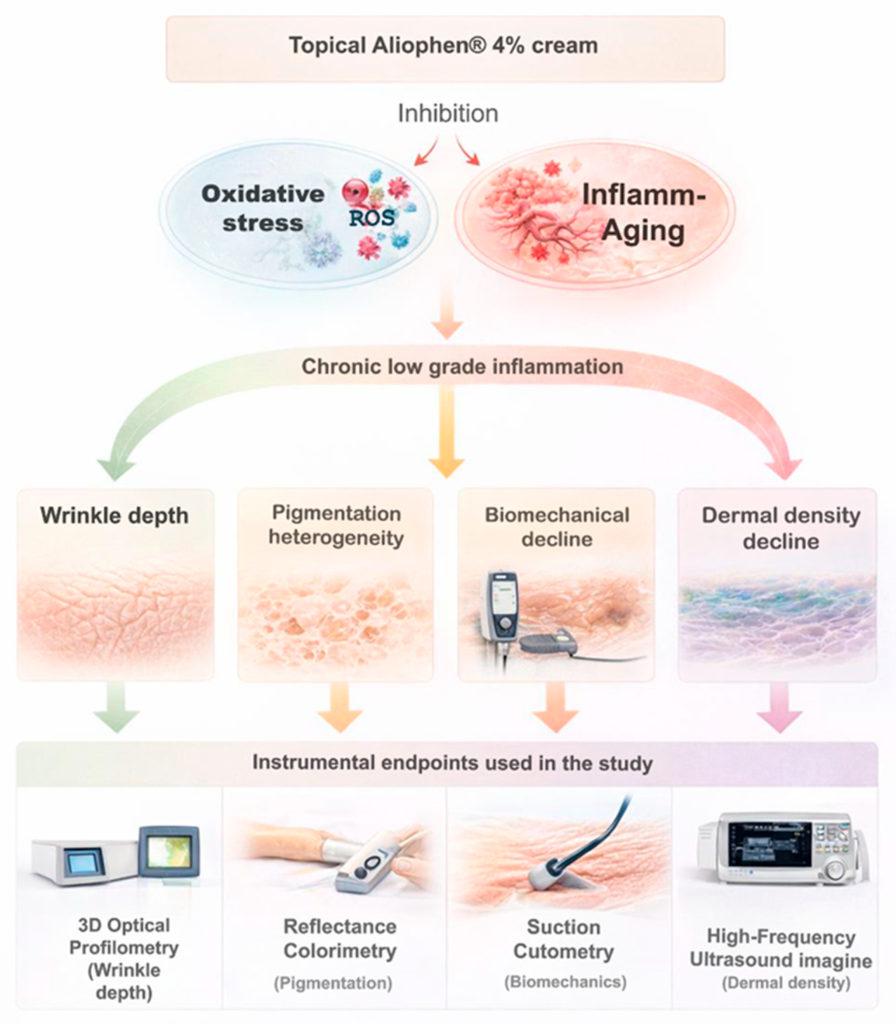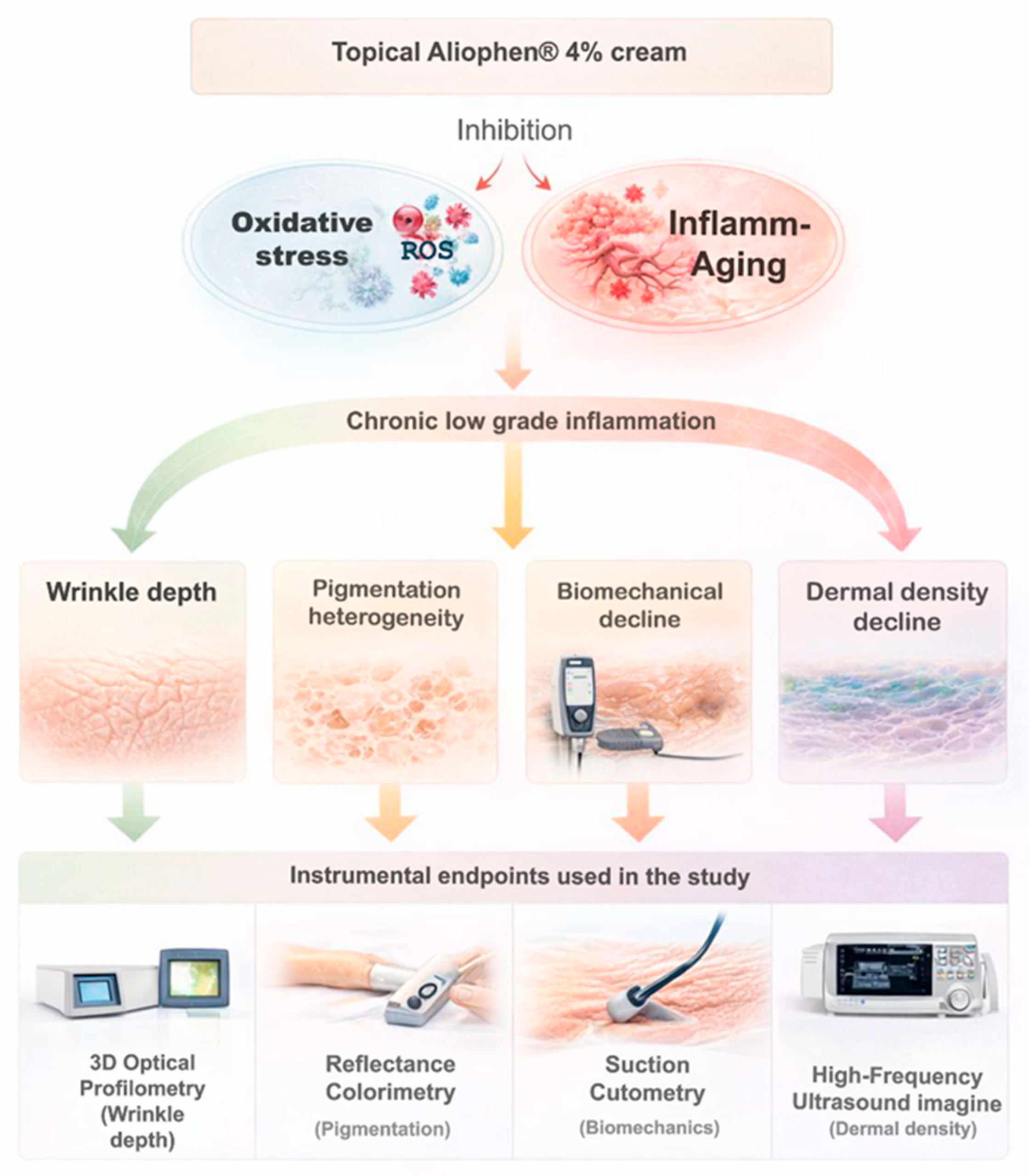

Facial skin aging is a complex, multifactorial biological process characterized by the development of fine lines, wrinkles, loss of firmness, and pigmentary alterations. These visible changes are driven by an interplay of intrinsic factors and extrinsic stimuli, particularly ultraviolet (UV) radiation, which induce oxidative stress and chronic low-grade inflammation. These mechanisms lead to the degradation of the dermal extracellular matrix, including collagen fragmentation and elastin disorganization. Polyphenols have emerged as a potential solution in cosmetic science due to their proven antioxidant, anti-inflammatory, and photoprotective properties. Specifically, Aliophen®, a proprietary polyphenol-rich formulation derived from unfermented malts and hops, was considered for this study because its native phenolic fraction (including phenolic acids and flavonoids) is hypothesized to modulate redox-sensitive pathways and support collagen homeostasis.
Methods
This 56-day prospective, open-label study evaluated 20 women (aged 45–65) applying a topical cream containing 4% Aliophen® twice daily. Researchers utilized a multidimensional instrumental panel, including 3D optical profilometry for wrinkles, reflectance colorimetry for pigmentation, cutometry for biomechanical properties, and 50 MHz high-frequency ultrasound for dermal density. In vitro assessments were also conducted on HaCaT keratinocytes to measure intracellular reactive oxygen species (ROS) reduction.
Key Findings
- Antioxidant Power: Aliophen® significantly attenuated oxidative bursts in human keratinocytes, leading to a dose-dependent reduction in intracellular ROS.
- Wrinkle Reduction: Instrumental profilometry revealed a progressive decrease in crow’s feet wrinkle depth, achieving a 15.9% reduction by Day 56.
- Pigmentation Lightening: Dark spot appearance improved significantly, with the Individual Typology Angle (ITA°) increasing by 18.2%, indicating a lightening effect.
- Biomechanical Improvement: Skin firmness (R0) and global elasticity (R2) improved by 5.3% and 5.5% respectively, suggesting enhanced viscoelastic performance.
- Increased Dermal Density: High-frequency ultrasound documented a significant increase in dermal echogenicity, potentially reflecting positive changes in tissue architecture.
- Safety and Tolerability: The formulation was well tolerated under real-life conditions, with no serious adverse events or clinically meaningful intolerance reported.
The novelty of this research lies in its integrated, multidimensional approach, representing one of the few exploratory investigations to evaluate a malt–hop-derived phytocomplex across both superficial and deeper dermal parameters. By demonstrating that a complex botanical extract can act as a multi-target ingredient on wrinkles, pigmentation, and skin resilience, the study validates the “phytocomplex effect” over isolated compounds. The future implications of these findings suggest that Aliophen® is a promising candidate for sustained anti-aging interventions, though the authors emphasize the need for larger, randomized, vehicle-controlled clinical trials to confirm these preliminary results and further explore the underlying biological mechanisms.
Link to the study: https://www.mdpi.com/2079-9284/13/3/110