
Skin photoaging is a significant global concern characterized by wrinkles, loss of elasticity, and compromised barrier function, primarily driven by oxidative stress and inflammation from increasing ultraviolet (UV) radiation exposure. While traditional Chinese medicine has long utilized the roots of the genus Paeonia, its stems and leaves have largely remained underutilized agricultural by-products. These tissues were considered a potential solution because they are rich in bioactive secondary metabolites, such as monoterpenoid glycosides, flavonoids, and phenols, which offer a natural, potentially safer alternative to the synthetic antioxidants currently dominating the skincare market. This research explores the viability of transforming these neglected resources into high-value natural anti-photoaging ingredients.
Methods
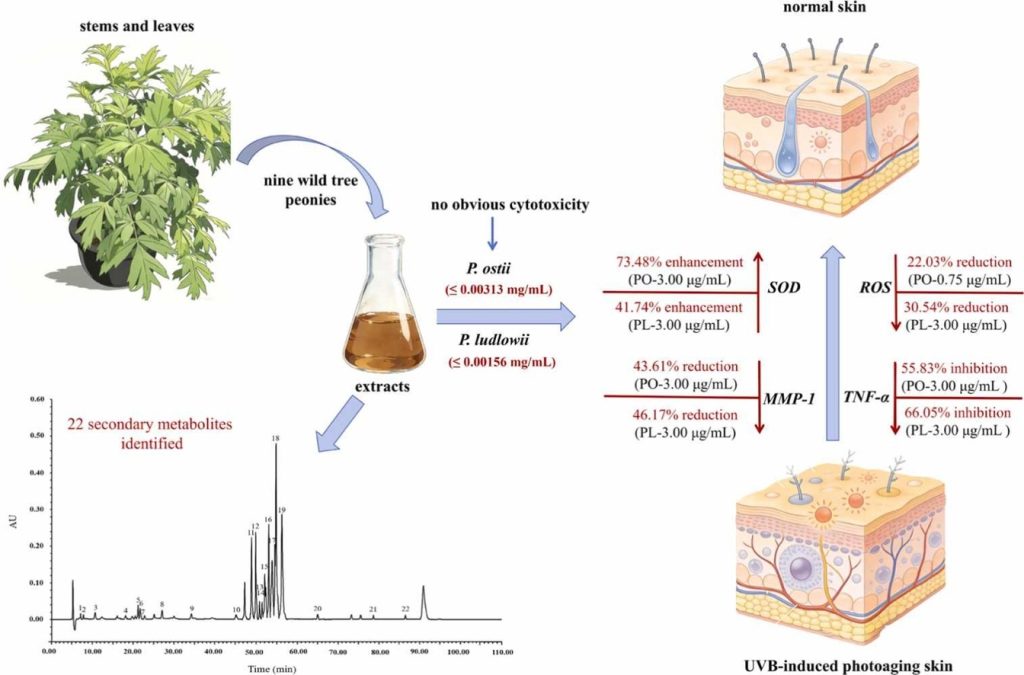
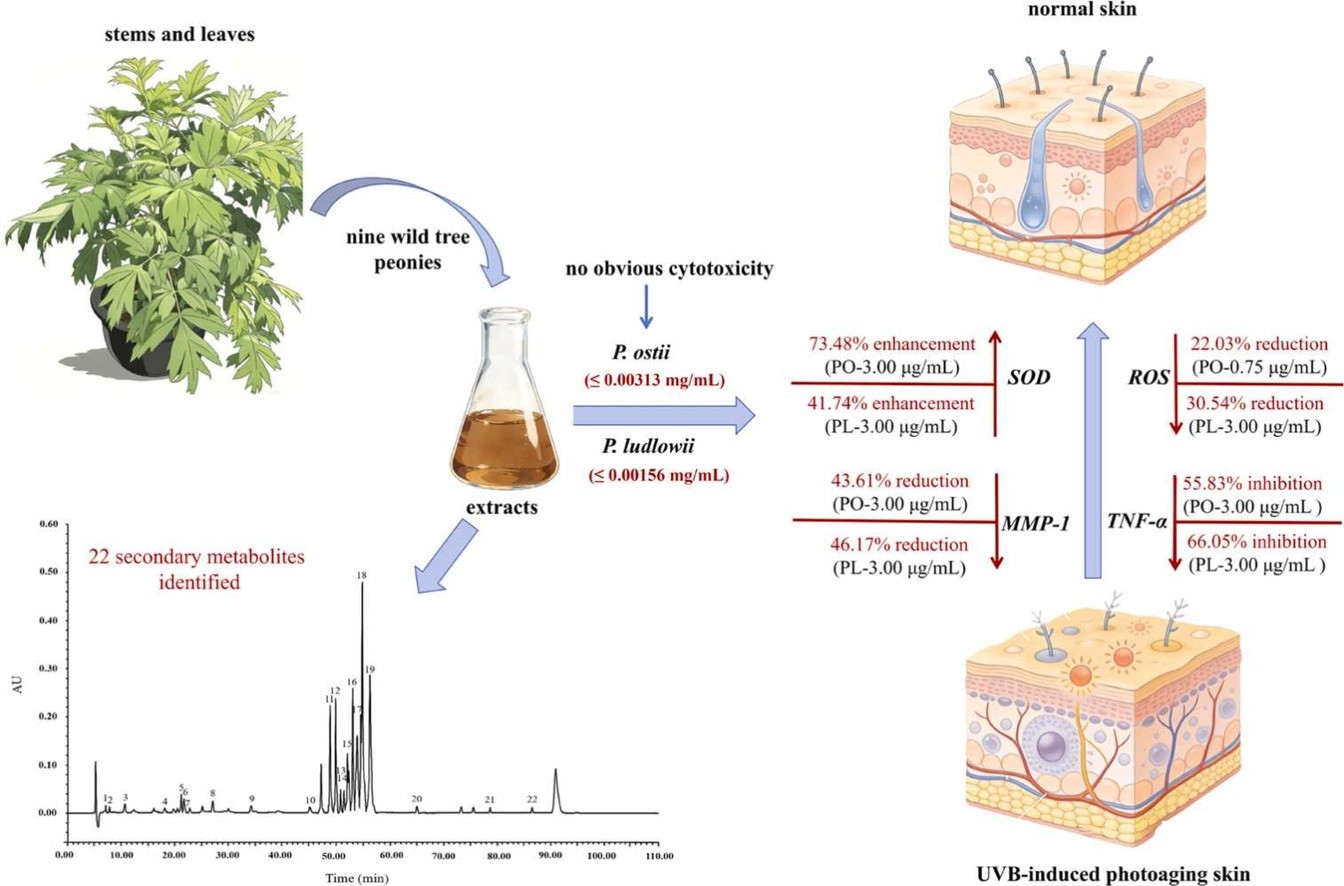
Researchers collected stems and leaves from nine wild tree peony species and characterized their chemical profiles using HPLC-DAD and HPLC-Q-TOF-MS. Extracts from P. ludlowii and P. ostii were then selected for efficacy testing based on their distinct metabolite concentrations. These extracts were applied to UVB-irradiated human keratinocytes to evaluate their impact on intracellular reactive oxygen species (ROS), superoxide dismutase (SOD) activity, and the secretion of inflammatory and wrinkle-related markers (TNF-α and MMP-1).
Key Findings
- Chemical Diversity: A total of 22 secondary metabolites were identified, with leaves consistently containing more diverse and abundant metabolites than stems across all species.
- Superior Species: Paeonia delavayi and Paeonia ludlowii were identified as having the highest total metabolite content, making them prime candidates for medicinal biomass.
- Targeted Antioxidant Action: P. ostii extract demonstrated superior antioxidant performance, efficiently scavenging ROS and significantly boosting SOD activity (up to 73.48% enhancement) at low concentrations.
- Potent Anti-Inflammatory Effects: P. ludlowii displayed stronger anti-inflammatory activity, inhibiting the pro-inflammatory factor TNF-α by up to 66.05%.
- Anti-Wrinkle Capabilities: Both extracts effectively suppressed MMP-1 production (over 43% reduction), thereby protecting collagen from degradation and mitigating wrinkle formation.
The novelty of this research lies in its being the first systematic evaluation of the anti-photoaging potential of wild tree peony stems and leaves, effectively bridging traditional herbal knowledge with modern dermatological science. By proving that these “waste” materials possess potent, species-specific biological activities, the study provides a scientific foundation for the sustainable exploitation of wild Paeoniaresources. Future implications include the development of specialized cosmeceutical formulations—such as P. ostii for preventive care and P. ludlowii for repairing established damage—and further research into synergistic interactions and 3D skin model validation.
Link to the study: https://www.sciencedirect.com/science/article/pii/S0926669026008009