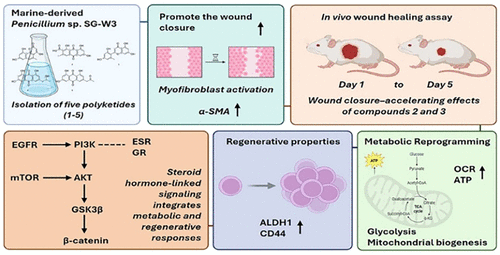
The clinical management of cutaneous wounds remains a significant challenge, as factors such as diabetes, advanced age, and vascular insufficiency often lead to chronic, non-healing ulcers. These conditions are associated with high patient morbidity and mortality, yet current treatments—such as debridement and standard dressings—frequently fail to provide adequate repair. Consequently, there is an urgent need for therapeutic strategies that accelerate tissue regeneration. Marine-derived microorganisms, particularly the genus Penicillium, have emerged as a promising solution due to their ability to produce structurally unique bioactive secondary metabolites. These compounds, such as polyketides, are considered potential answers to impaired healing because they can modulate multifaceted biological processes, including inflammation, cell proliferation, and metabolic adaptation, which are essential for overcoming the limitations of existing therapies.
Methods
Researchers isolated five polyketide compounds from the marine fungus Penicillium sp. SG-W3 and evaluated their effects on HaCaT keratinocytes using scratch and Transwell motility assays, 3D spheroid formation models, and Seahorse bioenergetic analysis. These findings were validated through an in vivo murine full-thickness excisional wound model, where topical applications were assessed for closure rates and protein expression. Additionally, computational in silico analyses and molecular docking were performed to predict ligand-target interactions and pharmacokinetic suitability.
Key Findings
- Enhanced Keratinocyte Motility: All five isolated polyketides significantly accelerated wound closure and cell invasion in vitro, with penimethavone A and endocrocin exhibiting the most potent effects.
- Induction of Regenerative Markers: Treatment led to a pronounced increase in 3D spheroid formation and the upregulation of stemness-associated markers, specifically CD44 and ALDH1, which are critical for epidermal repair.
- Metabolic Reprogramming: The compounds promoted a “metabolically adaptable” phenotype by simultaneously enhancing glycolytic flux (upregulating GLUT1, HK2, and PKM2) and mitochondrial respiration (upregulating PGC-1α).
- Accelerated In Vivo Healing: In mouse models, topical application of polyketides significantly reduced wound size by day 5, supported by the increased expression of AKT, α-SMA, and metabolic enzymes in the wound tissue.
- Molecular Mechanism: Computational and experimental data suggest these compounds modulate signaling through nuclear hormone receptors (estrogen and glucocorticoid receptors) and the PI3K-AKT-GSK3β pathway.
The novelty of this research lies in identifying that marine-derived polyketides do not just stimulate migration, but actively drive metabolic reprogramming—linking cellular energy production to regenerative signaling to facilitate faster repair. By coordinating glycolysis and mitochondrial biogenesis, these compounds provide the bioenergetic support necessary for rapid re-epithelialization. The future implications of these findings are substantial, suggesting that these polyketides could serve as lead candidates for clinical-grade topical therapies for chronic wounds. Future work will focus on refining formulation engineering, such as hydrogels or nanocarriers, and validating these effects in complex pathological models like diabetic or ischemic wounds.
Link to the study: https://pubs.acs.org/doi/full/10.1021/acsptsci.6c00177