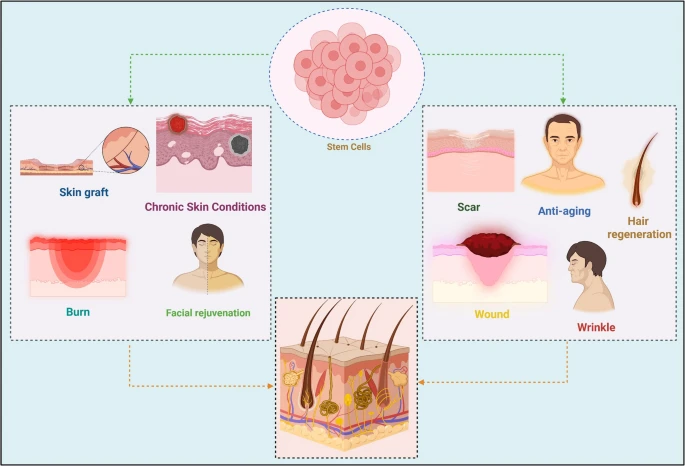
Skin regeneration and repair remain major challenges in clinical practice, particularly regarding chronic wounds, burns, scars, and photoaging. When disease or injury compromises the skin’s functional cell population, natural repair processes are often insufficient to restore physiological integrity. Stem cell-based therapies have been considered a pivotal solution due to their unique ability to self-renew and differentiate into multiple cell lineages, such as keratinocytes and fibroblasts, which are essential for replacing damaged tissue. Beyond cellular replacement, these cells provide a pro-regenerative microenvironment through paracrine signaling, immunomodulation, and the stimulation of new blood vessel formation (angiogenesis), making them a versatile tool for complex dermatological repair.
Key Findings
- Preclinical Success: Research indicates that stem cells significantly accelerate wound healing and reduce scarring by promoting angiogenesis, ECM remodeling, and re-epithelialization.
- Clinical Relevance: Early findings support the use of stem cell therapies for a wide range of conditions, including diabetic ulcers, severe burns, alopecia, and epidermolysis bullosa.
- Cell-Free Innovation: Exosomes and conditioned media are emerging as promising cell-free alternatives, offering the therapeutic benefits of stem cells with greater safety, easier storage, and reduced immunogenicity.
- Synergistic Technologies: The integration of stem cells with bioactive scaffolds and 3D bioprinting mimics the native extracellular matrix, improving cell survival and site-specific delivery.
- Significant Obstacles: Widespread application is currently hindered by a lack of standardized protocols for cell isolation, concerns over long-term safety (tumorigenicity), and complex regulatory approval pathways.
The novelty of this research lies in its focus on the integration of stem cells with “intelligent” biomaterials and the shift toward cell-free secretome-based therapies, which offer a more scalable and safer approach to regenerative medicine. Furthermore, the potential use of CRISPR/Cas9 gene editing and patient-specific iPSCs paves the way for highly personalized dermatological treatments. Future implications suggest that the field is moving toward a multidisciplinary future where Artificial Intelligence (AI) for wound monitoring and digital biobanking will refine treatment precision, ultimately reshaping the landscape of both medical and aesthetic dermatology.
Link to the study: https://link.springer.com/article/10.1007/s40778-026-00260-x