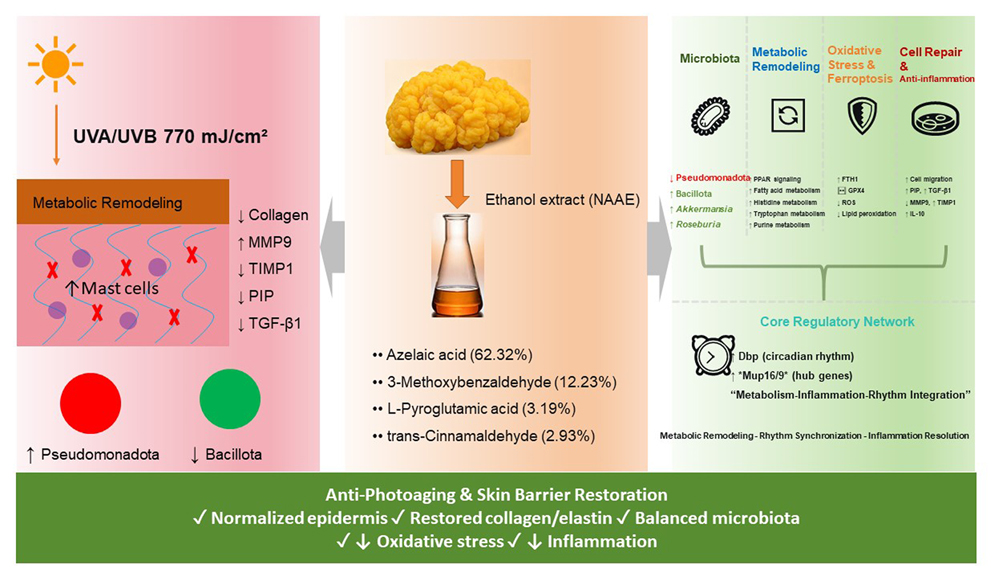
Skin photoaging is a complex biological process primarily driven by exposure to UVA and UVB radiation, which triggers DNA damage, oxidative stress cascades, and the breakdown of the extracellular matrix. This damage manifests as wrinkles, hyperpigmentation, and a compromised skin barrier, often exacerbated by an ecological imbalance in the skin microbiome. Due to the need for multi-targeted interventions, researchers turned to Naematelia aurantialba, a medicinal and edible fungus known for its potent antioxidant and barrier-repairing polysaccharides. The ethanol extract (NAAE) was specifically chosen for this study because it may enrich lipid-soluble antioxidants and offer superior skin penetration compared to traditional aqueous extracts, providing a potentially more effective natural solution for dermatological repair.
Methods
The researchers evaluated NAAE using HaCaT human keratinocytes and male KM mice models subjected to UVB-induced damage. Chemical profiles were characterized using UPLC-Q-TOF-MS/MS, while biological effects were measured through cell viability, migration, and ROS suppression assays. The study integrated transcriptomics, metabolomics, and 16S rRNA sequencing to analyze systemic gene expression, metabolic shifts, and microbial community changes. Finally, histopathological staining (H&E, Masson, and Toluidine Blue) was employed to quantify epidermal thickness, collagen density, and inflammatory cell infiltration.
Key Findings
- Chemical Composition: NAAE is rich in organic acids and aldehydes, with azelaic acid (62.32%) and 3-methoxybenzaldehyde identified as the primary bioactive components.
- Cytoprotection and Repair: NAAE treatment significantly enhanced cell viability and proliferation under UV stress while effectively reducing intracellular reactive oxygen species (ROS) accumulation.
- Enhanced Migration: The extract demonstrated a dose-dependent capacity to accelerate the migration of damaged HaCaT cells, outperforming the positive control (Vitamin C) in promoting wound healing.
- Tissue Regeneration: In animal models, NAAE inhibited epidermal hyperplasia, mast cell infiltration, and collagen fiber fragmentation, leading to a restoration of normal skin morphology.
- Microbial Modulation: NAAE reshapes the skin microecology through a “three-tier regulatory network” that inhibits pathogens (e.g., Pseudomonadota) and promotes beneficial bacteria (e.g., Bacillota).
- Pathway Regulation: The extract exerts its effects by activating PPAR signaling to rebuild the lipid barrier and modulating circadian rhythm genes (like Dbp) to synchronize repair processes.
The novelty of this research lies in its characterization of a “microbiome-metabolism” dual-axis mechanism, establishing a three-dimensional repair system that integrates metabolic remodeling, rhythm synchronization, and inflammation resolution. Unlike traditional treatments, NAAE addresses photoaging by simultaneously restoring transcriptional homeostasis and restructuring the skin’s microbial immune barrier. The future implications of this study are significant, as they provide a theoretical and scientific foundation for incorporating NAAE into the development of natural, plant-derived skincare products and advanced therapeutic strategies for preventing and treating UV-induced skin damage.
Link to the study: https://www.jstage.jst.go.jp/article/jos/75/8/75_jos.ess26048/_article/-char/ja/