

Skin aging is a universal biological process characterized by visible changes such as wrinkles, loss of elasticity, and increased roughness. At the cellular level, one of the primary hallmarks of this process is the progressive shortening of telomeres, which are specialized genetic structures that protect the ends of chromosomes. As telomeres reach a critical threshold length, they can trigger cell senescence, leading to reduced synthesis of the extracellular matrix. While classic hyaluronic acid (HA) is a popular anti-aging ingredient, it is rapidly degraded by the enzyme hyaluronidase, which increases during the aging process. Sodium acetylated hyaluronate (SAH) was considered a potential solution because its chemical modification confers higher resistance to hyaluronidase, potentially allowing for a more durable functional effect in the skin and the ability to influence telomere-related biological endpoints.
Methods
Researchers performed two in vitro studies evaluating telomerase activity in adult keratinocytes and telomere length in normal fibroblasts using qPCR assays. Simultaneously, a randomized, double-blind, placebo-controlled clinical trial was conducted on 44 Caucasian and Asian female volunteers who applied 0.1% SAH cream for 28 days. Anti-aging effects were measured using PRIMOS 3D and Cutometer® technology to assess wrinkle dimensions, roughness, elasticity, and firmness at baseline, day 7, and day 28.
Key Findings
- Telomere Preservation: In vitro results demonstrated that the highest concentration of SAH (0.15%) significantly increased telomerase activity and attenuated telomere shortening compared to controls.
- Wrinkle Reduction: The 0.1% SAH cream significantly reduced crow’s feet wrinkle volume as early as day 7, with significant reductions in wrinkle area observed by day 28.
- Improved Texture and Elasticity: By the end of the 28-day period, participants showed significant improvement in skin elasticity and a reduction in under-eye skin roughness.
- Inclusivity: Representative anti-aging improvements were observed in both Caucasian and Asian panels, supporting the ingredient’s efficacy across different ethnic backgrounds.
- Exploratory Trends: While wrinkle depth and skin firmness showed positive trends, these did not reach statistical significance after correction, suggesting they may require larger studies to confirm.
The novelty of this research lies in providing the first exploratory evidence that SAH can influence telomere-related endpoints while demonstrating clinical efficacy in a multi-ethnic population. This dual-action profile suggests that SAH offers both a “curative” dimension through visible clinical improvements and a “preventive” dimension via telomere preservation. Future implications include the potential for SAH to serve as a foundational active in inclusive anti-aging strategies, although further mechanistic investigations are warranted to fully understand the molecular pathways connecting SAH to telomere maintenance.
Link to the study: https://www.mdpi.com/2079-9284/13/4/207
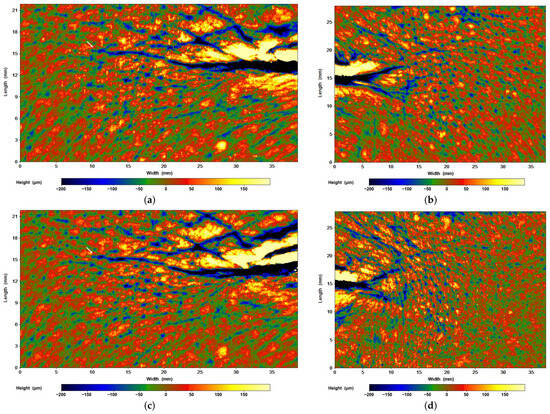
Representative visual assessment of crow’s feet wrinkles in one participant from the Asian panel, shown by rainbow contour where the colors represent heights in μm (see the legend below each measurement). The left column (a,c,e) shows the active-treated hemiface and the right column (b,d,f) the placebo-treated hemiface, measured at baseline (D0; (a,b)), day 7 (D7; (c,d)), and day 28 (D28; (e,f)). White arrows in (a,c,e) mark representative crow’s feet wrinkle areas, where an attenuation is visible from D0 to D28.