Ablative fractional laser (AFL) therapy is widely utilized in clinical dermatology to treat photodamage, scars, and skin aging by creating microthermal treatment zones that vaporize epidermal tissue and stimulate collagen remodeling. However, the procedure severely compromises skin barrier function by ablating the stratum corneum and disrupting the intercellular lipid matrix, resulting in acute transepidermal water loss (TEWL), persistent erythema, and delayed functional recovery. Current post-laser care protocols often fail to adequately address this acute dysregulation of epidermal lipid metabolism. Topical safflower seed oil (SSO) was evaluated as a targeted therapeutic solution because it is a rich natural source of essential polyunsaturated fatty acids, particularly linoleic acid (69.1%) and oleic acid (18.7%), which act as bio-active regulators of peroxisome proliferator-activated receptor (PPAR) pathways that promote epidermal lipid synthesis and structural barrier repair.
Methods
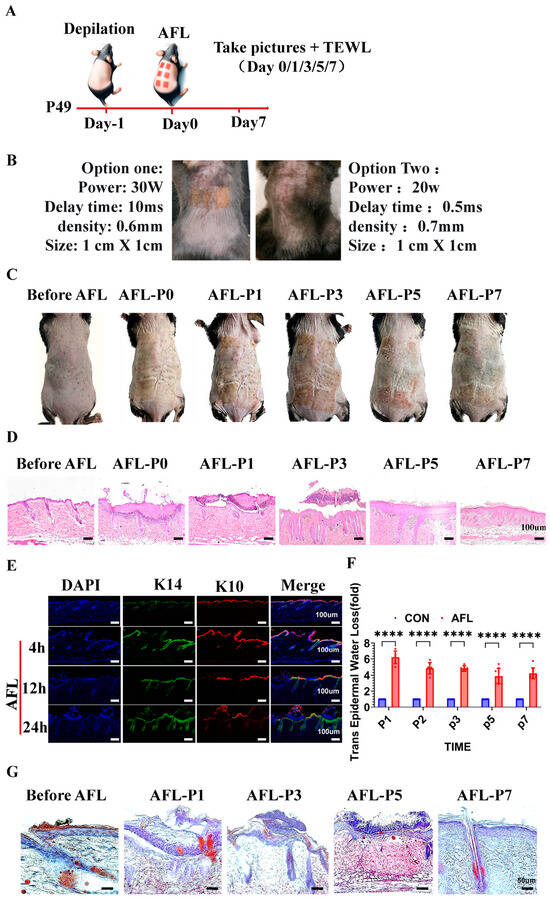
An optimized C57BL/6 murine model (20 W power, 0.5 ms pulse delay, 0.7 mm spot spacing) was established to simulate post-AFL skin injury. Chemical composition of cold-pressed SSO was qualitatively analyzed using Gas Chromatography–Mass Spectrometry (GC-MS). Injured mice received topical SSO (100 µL twice daily for 7 days), with repair tracked via TEWL monitoring, H&E, and Oil Red O lipid staining. Immunofluorescence and qRT-PCR quantified epidermal expression of PPARα, PPARβ/δ, and PPARγ isoforms. Selective antagonist assays (T0070907 for PPARγ, GW6471 for PPARα) were administered to determine receptor-specific mechanism of action.
Key Findings
- Lipid Composition: GC-MS profiling identified 42 compounds in SSO, dominated by unsaturated fatty acids (88.7% total), with linoleic acid (69.1%) and oleic acid (18.7%) as primary constituents along with glycerol esters such as 2-linoleoylglycerol (57.10%).
- Rapid TEWL Functional Restoration: Following a 4–6 fold spike in TEWL post-AFL injury, SSO application significantly suppressed TEWL elevation starting as early as 24 hours post-treatment, maintaining functional water retention through day 7.
- Recovery of Epidermal Lipid Biosynthesis: While AFL caused a near-complete loss of epidermal lipid distribution, SSO treatment fully restored continuous stratum corneum lipid deposition by day 7, without altering the natural kinetics of re-epithelialization or scab shedding.
- Targeted PPAR Upregulation: SSO application specifically enhanced mRNA and protein expression of PPARγ and PPARα in AFL-damaged epidermis, while PPARβ/δ expression remained unmodulated.
- PPARγ-Dependent Repair Pathway: Pharmacological inhibition of PPARγ via T0070907 abrogated SSO-driven lipid synthesis and elevated TEWL from day 3 onward, whereas PPARα inhibition (GW6471) showed no significant interference with SSO’s therapeutic efficacy.
This study demonstrates the novel mechanistic insight that topical SSO accelerates post-AFL skin barrier restoration through a biphasic process: providing immediate physical occlusion within 24–48 hours and subsequently driving structural lipid synthesis predominantly through the PPARγ signaling pathway. This reframes prior assumptions that natural botanical oils act solely via PPARα. Future clinical and translational implications include adopting SSO as a natural adjuvant therapy in post-laser cosmetic protocols, conducting quantitative lipidomics to detail ceramide recovery, utilizing conditional gene knockouts, and validating efficacy in human cell models.
Link to the study: https://www.mdpi.com/2079-9284/13/5/240