The cosmetic industry is currently facing a shift driven by increasing consumer demand and stricter regulatory frameworks for sustainable, bio-based, and skin-compatible ingredients. Conventional synthetic ingredients are being scrutinized, leading researchers to explore renewable alternatives that can protect the skin from UV radiation and oxidative stress, both of which generate reactive oxygen species (ROS) responsible for skin aging and damage. Kraft nanolignin (NL) was considered a potential solution because it is the second most abundant biopolymer on Earth and possesses intrinsic antioxidant and UV-shielding properties due to its phenolic hydroxyl groups and chromophoric structures. By processing lignin into nanoparticles, researchers can overcome its typical solubility issues, providing a higher surface area and better dispersion for enhanced bioactive performance in topical applications.
Methods
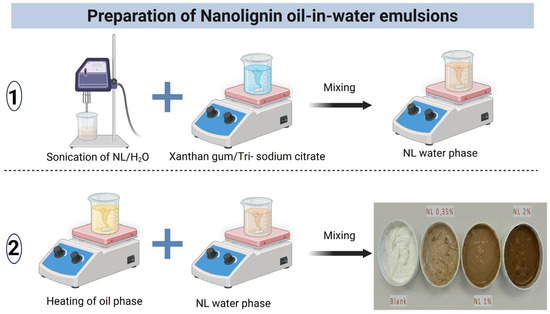
Oil-in-water (O/W) emulsions were developed by dispersing kraft nanolignin (0.35, 1, and 2% w/w) in an aqueous phase through ultrasonication before combining it with a heated oil phase under high-speed homogenization. The resulting formulations were evaluated over a 28-day storage period to monitor pH and viscosity stability. Performance was further characterized through CIELAB colorimetric analysis, DPPH radical scavenging assays for antioxidant capacity, and in vitro spectrophotometric testing to determine the Sun Protection Factor (SPF).
Key Findings
- Excellent Physicochemical Stability: All emulsions maintained a stable pH range of 4.5 to 6.0 over 28 days, which is ideal for compatibility with the skin’s natural acidic mantle.
- Significant Sun Protection: The incorporation of NL markedly enhanced the photoprotective performance of the emulsions, with the 2% NL formulation achieving an SPF value of 22.29 ± 1.719.
- Potent Antioxidant Activity: NL formulations exhibited high radical scavenging activity; notably, the 1% NL emulsion outperformed the 2% version, suggesting that higher concentrations may lead to particle aggregation that limits the accessibility of antioxidant groups.
- Adjustable Rheology and Aesthetics: The emulsions displayed non-Newtonian, shear-thinning behavior, which improves spreadability during application, while the NL concentration allowed for tunable color, resulting in a darker brown hue at higher percentages.
The novelty of this research lies in being the first systematic study to evaluate kraft nanolignin as a single, multifunctional nanoadditive—acting simultaneously as an antioxidant, UV booster, and rheology modifier—within a cosmetic O/W emulsion. These results highlight nanolignin as a formidable bio-based alternative to petroleum-derived compounds in the pursuit of “green” personal care products. Future implications include the potential to reduce reliance on complex synthetic UV filter combinations; however, extensive in vivo dermatological assessments and long-term microbiological testing remain essential steps before these formulations can be fully implemented in commercial cosmetic markets.