

Ultraviolet B (UVB) exposure is a primary trigger for skin damage, as it generates free radicals that induce oxidative stress and deplete endogenous antioxidant enzymes like Glutathione Peroxidase (GPx). This oxidative environment activates the Microphthalmia-associated Transcription Factor (MITF), which regulates the melanogenesis pathway, often leading to hyperpigmentation and aesthetic concerns. While synthetic chemicals have been used to address these issues, growing public concern over their toxicity has shifted interest toward natural herbal ingredients. Periwinkle flower extract (Catharanthus roseus) was considered a potential solution because it is rich in bioactive compounds such as alkaloids, flavonoids, and phenolics, which possess proven antioxidant and anti-inflammatory properties. These phytochemicals are believed to work synergistically to neutralize free radicals and modulate the signaling pathways responsible for UV-induced skin damage.
Methods
This experimental study utilized 30 male C57BL/6 mice divided into five groups: a normal control, a negative control (gel base), a positive control (vitamin E), and two treatment groups receiving 15% and 30% periwinkle extract gel. Following a seven-day acclimatization, the mice underwent 14 days of sub-chronic UVB exposure with subsequent topical applications. Researchers then analyzed MITF expression in skin tissue through semi-quantitative immunohistochemistry and quantified serum GPx levels using a specialized ELISA kit. Statistical significance was determined through one-way ANOVA and Kruskal-Wallis tests to evaluate the protective efficacy of the extract.
Key Findings
- Significant Antioxidant Boost: Topical application of the extract significantly increased GPx levels compared to the negative control group, with the 30% concentration showing the highest efficacy (9.15 ng/mL).
- MITF Modulation: The extract successfully modulated MITF expression, which is crucial for maintaining physiological pigmentation balance rather than completely inhibiting it.
- Optimal Dosage: The 30% extract gel provided the most optimal protective effect, approaching the physiological antioxidant levels found in normal, unexposed skin.
- Superiority to Vitamin E: In increasing serum GPx levels, the periwinkle extract proved more effective than vitamin E, likely due to its diverse phytochemical profile activating the Nrf2–ARE transcription pathway.
- Dose-Dependent Response: Both 15% and 30% concentrations showed protective effects, but the results demonstrated a clear dose-dependent improvement in skin resilience.
The novelty of this research lies in its specific focus on the MITF and glutathione-related antioxidant pathways, areas where evidence regarding Catharanthus roseus was previously limited. By demonstrating that the extract can simultaneously strengthen redox defenses and modulate melanogenic adaptation, the study highlights its significant potential as a natural photoprotective and antioxidant agent in the cosmetic industry. Future implications include the potential development of periwinkle-based formulations for treating pigmentary disorders, though further investigation using human models is necessary to translate these findings into clinical applications.
Link to the study: https://ejurnal-analiskesehatan.web.id/index.php/JAK/article/view/702/333
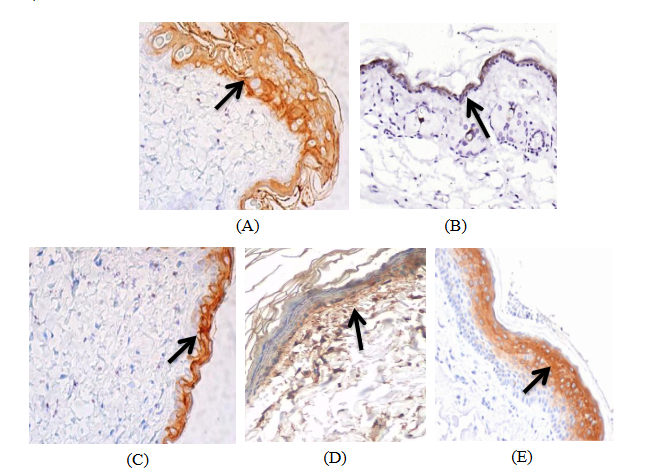
Microscopic expression of MITF in each treatment group (normal control group (A), negative control group (B), positive control group (C), treatment group 1 extract gel Catharanthus roseus 15% (D) dose, and treatment group 2 extract gels Catharanthus roseus Dosage 30% (E).