

Acne vulgaris (AV) is a chronic inflammatory skin disorder affecting pilosebaceous follicles, characterized by polymorphic lesions such as comedones, papules, pustules, and cysts. It stands as the third most prevalent skin disease globally, affecting roughly 9.4% of the population and reaching prevalence rates of 80–100% among adolescents in tropical regions like Indonesia. Beyond physical symptoms, AV imposes a severe psychological toll, frequently triggering anxiety, depression, and low self-esteem. Alarmingly, the clinical management of AV has remained largely stagnant for over thirty years, relying on conventional therapies like systemic antibiotics and isotretinoin, which suffer from failure rates as high as 80% and relapse rates of 30–40%, respectively. This lack of progress highlights an urgent need for safe, sustainable alternative treatments. Gambir (Uncaria gambir Roxb.), a plant native to Southeast Asia, was identified as an ideal candidate because its primary active compound, catechin, exhibits powerful antioxidant, anti-inflammatory, and antimicrobial properties. These bioactive catechins target the key etiopathogenesis of AV by inhibiting Propionibacterium acnes, reducing excess sebum production, and suppressing pro-inflammatory cytokines.
Methods
This quasi-experimental pilot study evaluated 22 subjects aged 16–24 with mild-to-moderate AV who applied a 1% gambir extract gel twice daily for eight weeks. Clinical severity was assessed using Lehmann’s grading criteria, while physiological skin changes in erythema and sebum were objectively measured using a Mark-Vu® skin analyzer. Patient-reported quality of life was monitored through the Dermatology Life Quality Index (DLQI). Pre- and post-treatment outcomes were statistically analyzed using Wilcoxon Signed-Rank and marginal homogeneity tests to evaluate the formulation’s therapeutic efficacy.
Key Findings
- High Clinical Efficacy: By week 8, 77.2% of subjects achieved significant clinical improvement (p < 0.001).
- Substantial Severity Reduction: Among participants with moderate AV, 83.3% improved to mild AV, while 70% of those with mild AV achieved complete remission.
- Reduced Erythema and Sebum: Objective skin analysis demonstrated a statistically significant decrease in mean erythema and sebum percentages by week 8 (p < 0.05), with measurable improvements beginning at week 4.
- Improved Quality of Life: 72.7% of subjects experienced a significant reduction in their DLQI scores by week 8 (p = 0.001), indicating a major relief in their psychological burden.
- Excellent Tolerability: The 1% gel was well tolerated, with only 9.09% (n=2) of participants experiencing mild, temporary redness during the first week, which did not interfere with daily activities.
This study’s principal novelty lies in being the first human clinical investigation of a 1% gambir extract gel, bridging the gap between prior in vitro evidence and real-world dermatological application. By demonstrating high clinical success with minimal side effects, these findings carry important future implications for shifting dermatology away from stagnant, antibiotic-heavy acne treatments toward sustainable, plant-based cosmeceuticals. However, to fully validate these preliminary outcomes, future research must prioritize larger randomized controlled trials (RCTs) featuring active control groups and longer follow-up periods.
Link to the study: https://www.mdpi.com/2079-9284/13/5/215
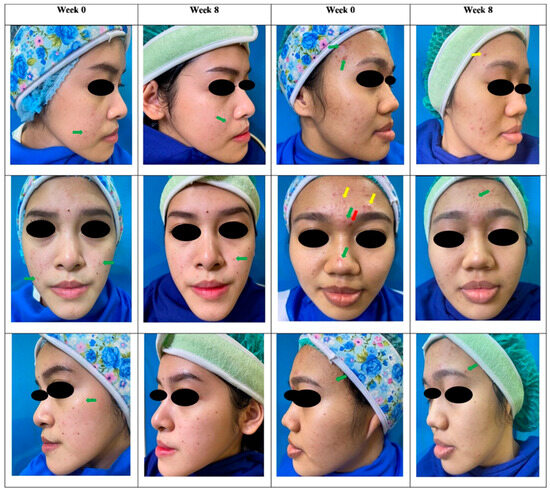
In the figure: Evaluation of patient’s clinical severity from week 0 to week 8 of treatment. Papule (→), Pustule (→), Nodule (→).