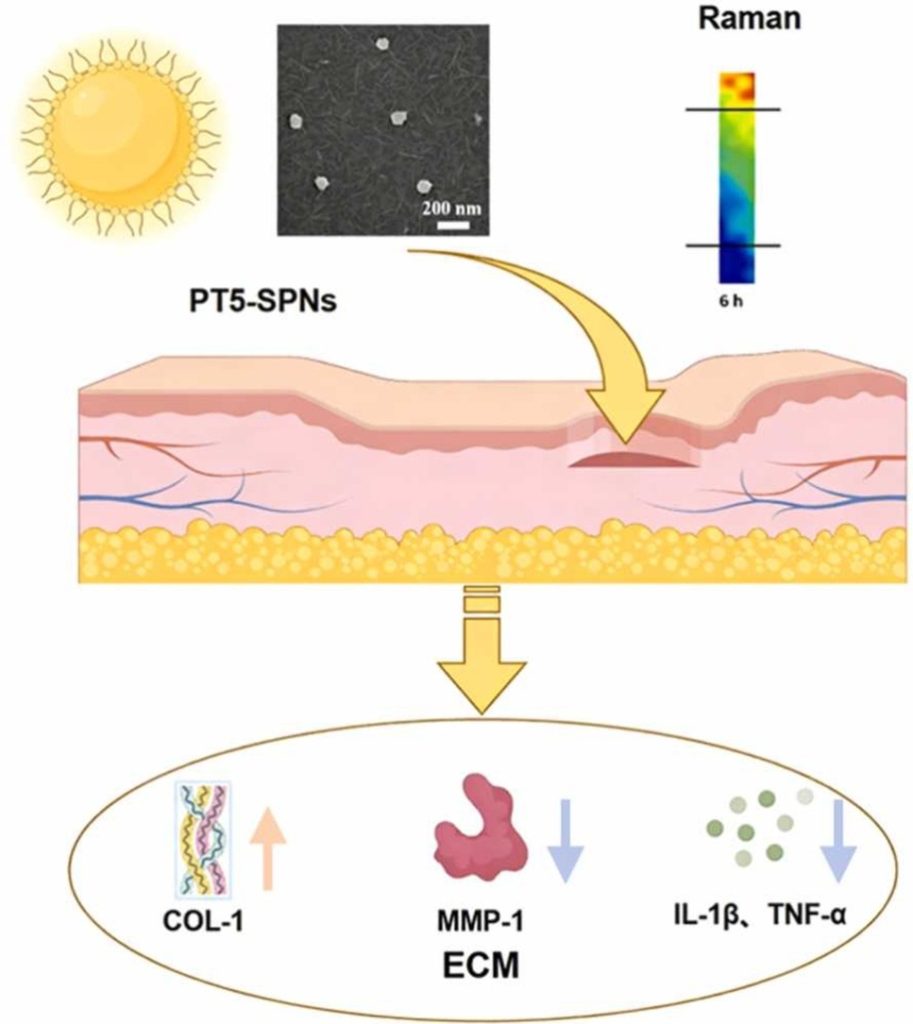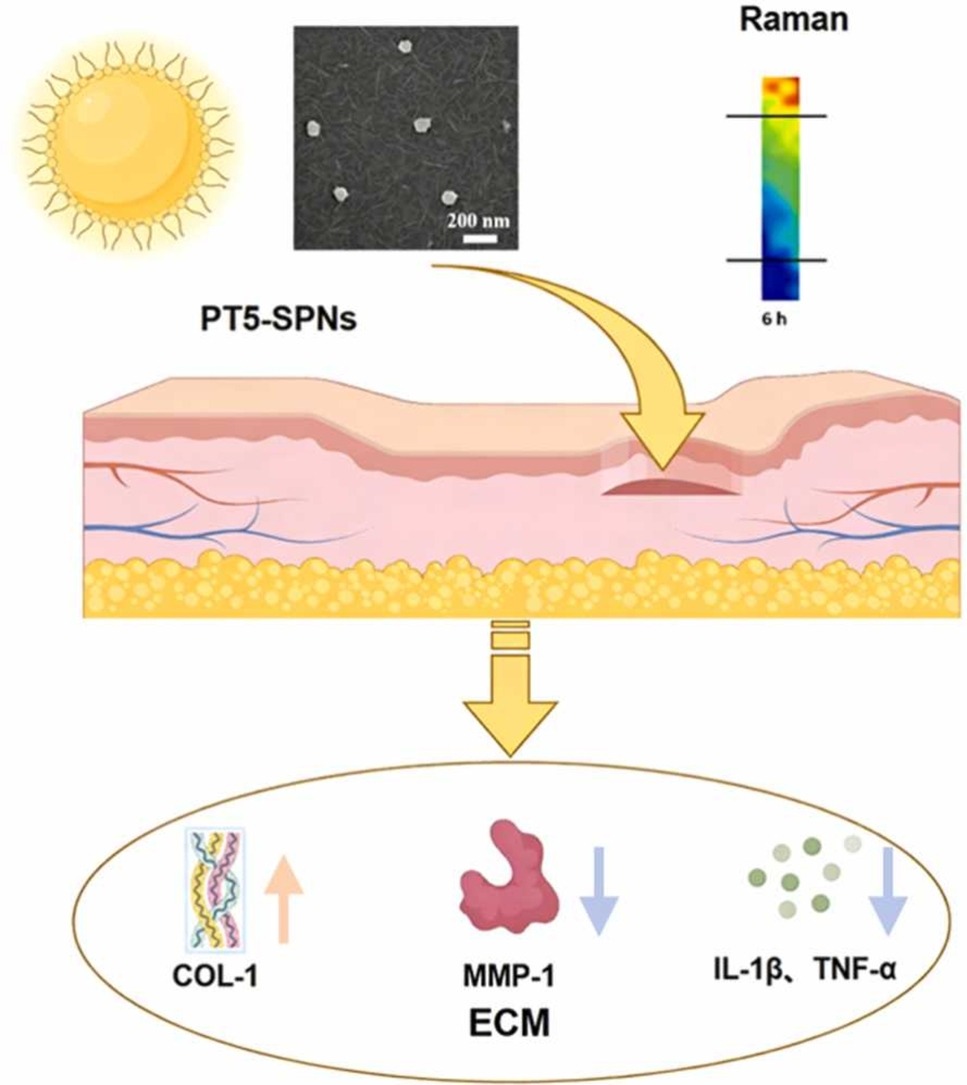

Skin aging is a multifaceted process characterized by the progressive degradation of the extracellular matrix (ECM) and a marked decline in Type I collagen synthesis, which leads to wrinkle formation and loss of skin integrity. While Palmitoyl Tripeptide-5 (PT5) is a potent bioactive ingredient designed to stimulate collagen production, its clinical efficacy is severely hampered by chemical instability and the formidable stratum corneum barrier, which restricts deep skin penetration. To address these challenges, researchers developed a reverse micellar system (PT5-SPNs) as a potential solution; unlike rigid nanoparticles, these water-in-oil (W/O) self-microemulsions offer structural flexibility and enhanced interfacial compatibility with skin lipids, facilitating more efficient transdermal transport of the peptide.
Methods
Researchers employed a phase titration-driven self-assembly strategy to construct PT5-SPNs, which were systematically characterized via Dynamic Light Scattering (DLS) and Transmission Electron Microscopy (TEM). Biological performance was rigorously evaluated using human skin fibroblasts, a zebrafish embryo model, and ex vivo porcine skin. Skin penetration behavior was directly visualized and quantified using depth-resolved confocal Raman spectroscopy.
Key Findings
- Superior Stability and Uniformity: PT5-SPNs formed uniform nanoscale spheres with an average diameter of 85.62 nm and maintained high macroscopic stability without phase separation for 90 days across various temperatures (-10 °C to 40 °C).
- Enhanced Transdermal Delivery: Confocal Raman imaging confirmed that the reverse micellar structure significantly improved both the depth and uniformity of skin penetration compared to free PT5, reaching the dermal layers.
- ECM Restoration: In inflammatory models, PT5-SPNs restored Type I collagen expression from 52.3% to 367.4% of control levels while suppressing the overexpression of the collagen-degrading enzyme MMP-1.
- Anti-Senescence Effects: The formulation markedly reduced the percentage of senescent cells from 46.3% to as low as 0.7% under stress conditions, demonstrating a stronger protective effect than the free peptide.
- Organism-Level Efficacy: In zebrafish models, PT5-SPNs significantly upregulated collagen-related genes (col1a1a and col1a2), providing in vivo evidence of its biological potency.
The novelty of this research lies in its shift away from conventional solid carriers toward a dynamic reverse micellar “spherical peptide” assembly, which utilizes lipid self-assembly to mimic the skin’s natural environment for better bioavailability. The future implications are significant, as this strategy establishes a reproducible structure-function framework that is highly compatible with existing cosmetic manufacturing processes, paving the way for large-scale industrial translation of high-performance, peptide-based anti-aging and skin repair therapeutics.
Link to the study: https://www.sciencedirect.com/science/article/pii/S2950306X26000270